Preview
 Send
Send Share
Share
 Details
 Guide
Guide

 Download
 Similars
 X-Ray
X-Ray Diaporama
 Stats
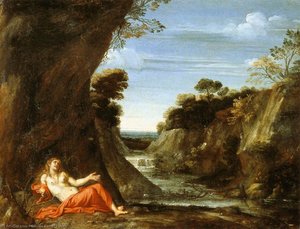
StatsLandscape With Figures
 Read More
Giclée / Art Print
Museum-quality giclée or canvas print with fast production and flexible finish options. ( Buy Hand Made Painting Switch to Digital Image)




































Pick from our preset sizes that match the artwork's original proportions.

Type the width and the height you need, to fit your frame or your wall. A print can only be cut, never made bigger than the picture, so a size with a different shape loses a part of the image. We send you a digital mockup to approve before we print anything. The picture shown on this page does not show the real cut — only the mockup does.
Worldwide Delivery () in 2 weeks instead of standard 4/5 weeks. (21 October)

Free Worldwide Express Shipping

High-Quality Linen Canvas

Full Shipping Insurance

Customs Tax Refund Guarantee

True Color Matching Guarantee

100-Day Return Policy (Defects Only)

100% Money-Back Guarantee

Bulk Discount Offer
 Glass option is only available in size under 110 CM

Landscape With Figures
Giclée / Art Print
Reproduction Size
-


Total Price
$ 81
Artist Biography
Giovan Battista Viola: The Silent Master of Italian Landscapes
Giovan Battista Viola, a name largely absent from the grand narratives of the 16th and early 17th centuries, emerges now as a pivotal figure in the development of landscape painting within Italy. Born in Bologna in 1576, he wasn’t a flamboyant personality or a court painter seeking immediate fame; instead, Viola carved his reputation through a quiet dedication to capturing the essence of the Italian countryside – a realm often overshadowed by the dramatic narratives of religious and mythological scenes that dominated the artistic landscape of his time. His legacy lies not in grand commissions or public accolades, but in a series of meticulously observed and subtly expressive landscapes that prefigure the ideals of later masters like Claude Lorrain and Nicolas Poussin.
Viola’s early life offers little in the way of biographical detail. He entered the studio of Annibale Carracci in Rome around 1601, a crucial step that exposed him to the burgeoning Baroque style and its emphasis on naturalism and dramatic light. Working alongside Francesco Albani and Domenichino on the lavish frescoes for Vincenzo Giustiniani’s palazzo, he honed his skills in composition and color, absorbing the lessons of one of Rome's most influential artists. This period marked a critical turning point; Viola began to specialize in landscapes, a field largely unexplored by Italian painters at the time – a deliberate choice that set him apart and ultimately shaped his unique artistic identity.
The Language of Light and Shadow
Viola’s paintings are characterized by an almost meditative quality. He eschewed the theatricality often associated with Baroque painting, instead focusing on creating atmospheric landscapes imbued with a sense of quiet contemplation. His palette is predominantly cool – dominated by blues, greens, and browns – reflecting the muted tones of the Italian countryside. This restrained color scheme allows him to masterfully manipulate light and shadow, creating a profound sense of depth and spatial recession. His technique relies heavily on subtle gradations of tone, achieved through meticulous layering of thin glazes, rather than bold brushstrokes. The effect is remarkably luminous, as if capturing the fleeting quality of sunlight filtering through the trees.
Unlike many of his contemporaries who depicted landscapes as mere backdrops to narrative scenes, Viola treated them as subjects in their own right. His compositions often feature a solitary figure – a shepherd, a fisherman, or a traveler – immersed within the natural world. These figures are typically rendered with a degree of anonymity, serving as silent witnesses to the beauty and tranquility of the landscape. The emphasis is always on the relationship between man and nature, suggesting a harmony and interconnectedness that was increasingly valued during this period.
Key Works and Influences
Among Viola’s most celebrated works are “Penitent Magdalen in a Landscape” (circa 1600-1622) and “Landscape with Absalom Percing an Arrow from a Lance by Joab” (c. 1600). The "Penitent Magdalen" exemplifies his ability to seamlessly integrate religious iconography into the natural world, creating a scene of profound emotional resonance. The “Landscape with Absalom” showcases his mastery of atmospheric perspective and his meticulous attention to detail – from the texture of the bark on the trees to the shimmering surface of the water. These paintings, along with numerous other landscapes now housed in collections across Europe, demonstrate a remarkable consistency in style and technique.
Viola’s artistic development was undoubtedly influenced by the work of earlier landscape painters, particularly the Flemish masters who had established a tradition of depicting naturalistic scenes. However, he adapted these influences to create a distinctly Italian style – one that prioritized atmospheric effects, subtle color harmonies, and a profound sense of tranquility. His collaboration with Domenichino on the Villa Aldobrandini frescoes further broadened his artistic horizons, exposing him to new compositional techniques and innovative approaches to landscape design.
A Forgotten Legacy
Despite his undeniable talent and significant contributions to the history of Italian painting, Giovan Battista Viola remained largely obscure for centuries. His works were often misattributed or overlooked in favor of more flamboyant contemporaries. It wasn’t until the 20th century that scholars began to recognize his importance as a pioneering landscape painter – a figure who quietly laid the groundwork for the development of the genre in Italy. Today, Viola is increasingly appreciated for his subtle beauty, atmospheric depth, and profound understanding of the natural world. His paintings offer a poignant reminder that true artistic genius doesn’t always demand attention; sometimes, it resides in the quiet contemplation of a landscape.
His influence can be seen in later artists like Claude Lorrain, whose idealized landscapes owe a clear debt to Viola's atmospheric techniques and his focus on the harmonious relationship between man and nature. Giovan Battista Viola’s legacy endures as a testament to the power of observation, restraint, and a deep appreciation for the beauty of the Italian countryside.

Giovan Battista Viola
1576 - 1622 , Italy
Quick Facts
- Full Name: Giovanni Battista Viola
- Nationality: Italian
- Date Of Birth: 1576
- Date Of Death: 1622
- Place Of Birth: Bologna, Italy
- Notable Artworks:
- Penitent Magdalen
- Gerusalemme Liberata
- Landscape with Absalom
- Artistic Movement Or Style: Early Baroque Landscape
- Artists Who Influenced This Artist: ['Annibale Carracci']
- Artists Or Movements Influenced By This Artist: ['Claude Lorrain']