Preview
 Send
Send Share
Share
 Details

 Download
 Similars
 X-Ray
X-Ray Diaporama
 Stats
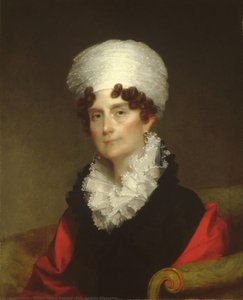
StatsHenry Rice
 Oil On Canvas
- WallArt
- Neoclassical
 1815
1815 67.0 x 55.0 cm
 Metropolitan Museum of Art
 Read More
Giclée / Art Print
Museum-quality giclée or canvas print with fast production and flexible finish options. ( Buy Hand Made Painting Switch to Digital Image)




P118B $10

P118H $10

P118W $10

P438Z $10

P508JH $12

P508YH $12

P805H $10

P805Z $10

P919BZ $10

P919G $10

P919XJ $10

P959ZH $10

P968JZ $12

W106C $8

W218G $10

W218JH $8

W218Y $10

W307PJ $10

W316G $10

W316PJ $8

W316Y $10

W398PJ $8

W4111J $10

W500HY $15

W500JH $15

W692G $12

W849H $8

W940BG $15

W953PJ $8




Pick from our preset sizes that match the artwork's original proportions.

You may enter your own dimensions to fit a specific frame or space. If your selected size does not match the original image's proportions, we will either crop the artwork or extend the image with a mirrored or solid-fill edge. A digital mockup will be sent for your approval before production begins.
Please note that the on-screen preview does not reflect the actual cropping or extension. Only the mockup will accurately show the final composition.
While custom sizes are available, we recommend selecting a dimension from the predefined list to preserve the original proportions.
Worldwide Delivery () in 2 weeks instead of standard 4/5 weeks. (10 September)

Free Worldwide Express Shipping

High-Quality Linen Canvas

Full Shipping Insurance

Customs Tax Refund Guarantee

True Color Matching Guarantee

100-Day Return Policy (Defects Only)

100% Money-Back Guarantee

Bulk Discount Offer
 Glass option is only available in size under 110 CM

Henry Rice
Giclée / Art Print
Reproduction Size
-


Total Price
$ 81
The Enigmatic Figure: Gilbert Stuart Newton’s “Henry Rice”
Gilbert Stuart Newton's 1815 portrait, "Henry Rice," is more than a simple likeness; it’s a window into the burgeoning landscape of early America and the complex relationships between settlers, indigenous peoples, and the evolving American identity. The painting captures a man of considerable presence – Henry Rice – not merely as an individual, but as a pivotal figure in Minnesota's territorial development. Newton, trained under his renowned uncle Gilbert Stuart, masterfully employs the conventions of Neoclassical portraiture, yet imbues the image with a subtle intensity that transcends mere formality.

Gilbert Stuart Newton - Self Portrait
A Man of Two Worlds: Rice’s Life and Context
Henry Rice's life was inextricably linked to the dramatic transformation occurring in the Upper Midwest. Born in Nova Scotia, he became a key player in the fur trade, forging crucial alliances with the Ho-Chunk (Winnebago) and Ojibwe tribes. His role extended far beyond simple commerce; he served as a negotiator for treaties, shaping the political and territorial boundaries of what would become Minnesota. The portrait itself reflects this duality – Rice is presented as both a respected tribal leader’s confidante and a representative of American authority. His beard and mustache, meticulously rendered by Newton, speak to his age and experience, while his direct gaze conveys an undeniable strength and shrewdness.
Newton's artistic lineage further illuminates the painting’s significance. Trained by Gilbert Stuart, a titan of American portraiture, Newton inherited a tradition of capturing character and conveying status through careful observation and refined technique. However, Newton subtly diverges from his uncle’s style, injecting a greater sense of drama and psychological depth into his subjects.
The Language of Portraiture: Technique and Symbolism
Newton's masterful use of light and shadow establishes a formal yet engaging composition. The dark background emphasizes Rice’s figure, drawing the viewer’s attention to his face and posture. Note the subtle modeling of the fabric of his suit – a detail indicative of Newton’s meticulous approach to rendering texture. The arrangement of the figures in the background—a man behind him and another further away—suggests a scene of deliberation or perhaps even a moment of quiet authority. These secondary elements add layers of narrative, hinting at Rice's role as a mediator between cultures.
The portrait’s monochromatic palette – primarily shades of gray and brown – evokes the somber tones often associated with historical portraits from this period. This choice contributes to the painting’s sense of gravitas and reinforces its depiction of a man deeply involved in matters of state and diplomacy. The inclusion of the dark background, reminiscent of a study room or office, further emphasizes Rice's role as a figure of importance and decision-making.
A Legacy Preserved: Reproduction and Interpretation
Reproductions of “Henry Rice” offer a remarkable opportunity to connect with a pivotal moment in American history. OriginalUniqueArt’s faithful reproductions capture the painting’s nuanced details and atmospheric quality, allowing viewers to appreciate Newton's artistry and the story of Henry Rice—a man who played an instrumental role in shaping the destiny of Minnesota. This portrait is not simply a depiction of a historical figure; it’s a testament to the complex interplay of cultures and the enduring legacy of early American exploration and settlement.
Artist Biography
Gilbert Stuart Newton: Life & Legacy
Early Life and Family Background
- Birth and Origins: Gilbert Stuart Newton was born on September 2, 1795, in Halifax, Nova Scotia. He was the youngest of twelve children.
- Family Connections: His father, Henry Newton, was a customs official, and his mother, Ann, held a significant artistic lineage – she was the daughter of Gilbert Stuart, the renowned American portrait painter.
- Early Years & Return to America: The family initially resided in Boston but returned to Charlestown near Boston in 1803 following his father’s death.
Artistic Training and Influences
- Initial Path & Uncle's Guidance: Though initially intended for a commercial career, Newton was apprenticed to his uncle, Gilbert Stuart, marking the beginning of his artistic journey.
- European Studies: He traveled to Europe with an elder brother and studied painting in Florence. Later visits to Paris (1817) introduced him to artists like Charles Robert Leslie, Washington Allston, and David Wilkie.
- Royal Academy & Formal Training: Newton continued his education at the Royal Academy in London after a period spent in the Netherlands.
Artistic Style and Major Themes
- Romantic Sensibilities: Newton’s work is generally categorized within the Romantic movement, characterized by emotional intensity and dramatic narratives.
- Literary & Poetic Inspirations: He became particularly known for paintings inspired by literature and poetry. Subjects drawn from works like *Don Quixote* and Shakespeare were prominent in his oeuvre.
- Portraiture & Genre Scenes: While he painted portraits, including those of notable figures such as Washington Irving, Newton also excelled in genre scenes depicting moments from literary narratives.
Key Achievements and Recognition
- Royal Academy Affiliation: Newton was elected an Honorary Academician of the National Academy of Design (1827), an Associate of the Royal Academy (1829), and a full Academician in 1832.
- Exhibitions & Patronage: He regularly exhibited at the Royal Academy from 1818 onwards, gaining recognition and attracting patrons like the Marquis of Lansdowne.
- Public Collections: His works found their way into prominent public collections, including the National Gallery and the South Kensington Museum (now V&A).
Later Life and Legacy
- Mental Health & Final Years: Shortly after his election to the Royal Academy, Newton began to suffer from mental illness. He was admitted to an asylum at Chelsea where he continued to paint until his death on August 5, 1835.
- Burial Site: He is buried in St Mary’s Church Wimbledon, London.
- Historical Significance: Though overshadowed by his uncle Gilbert Stuart, Newton carved a niche for himself as a skilled and imaginative artist of the Romantic period. His literary-inspired paintings offer insights into the cultural tastes and artistic trends of 19th-century Britain.

gilbert stuart newton
1795 - 1835
Quick Facts
- Birth_Date: 1795
- Birth_Place: Halifax, Nova Scotia
- Death_Date: 1835
- Influenced_By: Gilbert Stuart (uncle)
- Movement: Romanticism
- Name: Gilbert Stuart Newton
- Nationality: British
- Notable_Works:
- Don Quixote in his Study
- Captain Macheath upbraided by Polly and Lucy
- Yorick and the Grisette
- The Window or the Dutch Girl
- Portia and Bassanio
Related Articles

White on Canvas: 10 Masterpieces & Timeless Elegance for Your Home Decor
Explore 10 iconic white paintings by Monet, Whistler & Rothko! Discover the stories behind these serene masterpieces and their impact on art history. Find museum-quality reproductions for your home decor at .

Monochrome Visions: Exploring the Aesthetic & Historical Significance of Black & White Photography
Explore the rich history & artistic power of black and white photography. From early techniques to iconic masters like Ansel Adams, discover why monochrome continues to captivate art lovers today. Expert insights for collectors.

Monochrome Edge: The Ultimate Design Flex—Level Up Your Space with Bold Black & White Art
Master the monochrome aesthetic with high-impact Black & White art from OriginalUniqueArt.com. From custom hand-painted oils to iconic pop culture remixes, discover the ultimate design flex for your urban space. Elevate your decor with bold, premium, and timeless monochrome masterpieces.

Dark Masterpieces: 10 Iconic Paintings Dominated by Black Tones |
Explore 10 iconic paintings dominated by black tones, from Rembrandt’s chiaroscuro to Goya's dark expressions. Discover the stories behind these masterpieces & find museum-quality art reproductions for your home at .

Shadow & Soul: Why Black & White Photography Remains the Ultimate Power Move in Modern Art
Discover why black & white photography remains a powerful force in contemporary art. Explore the impact of light, shadow, and texture through a visual journey of monochrome mastery and learn how to elevate your space with timeless grayscale aesthetics.