
 Preview
 Send
Send Share
Share
 Details
 Guide
Guide

 Download
 Similars
 X-Ray
X-Ray Diaporama
 Stats
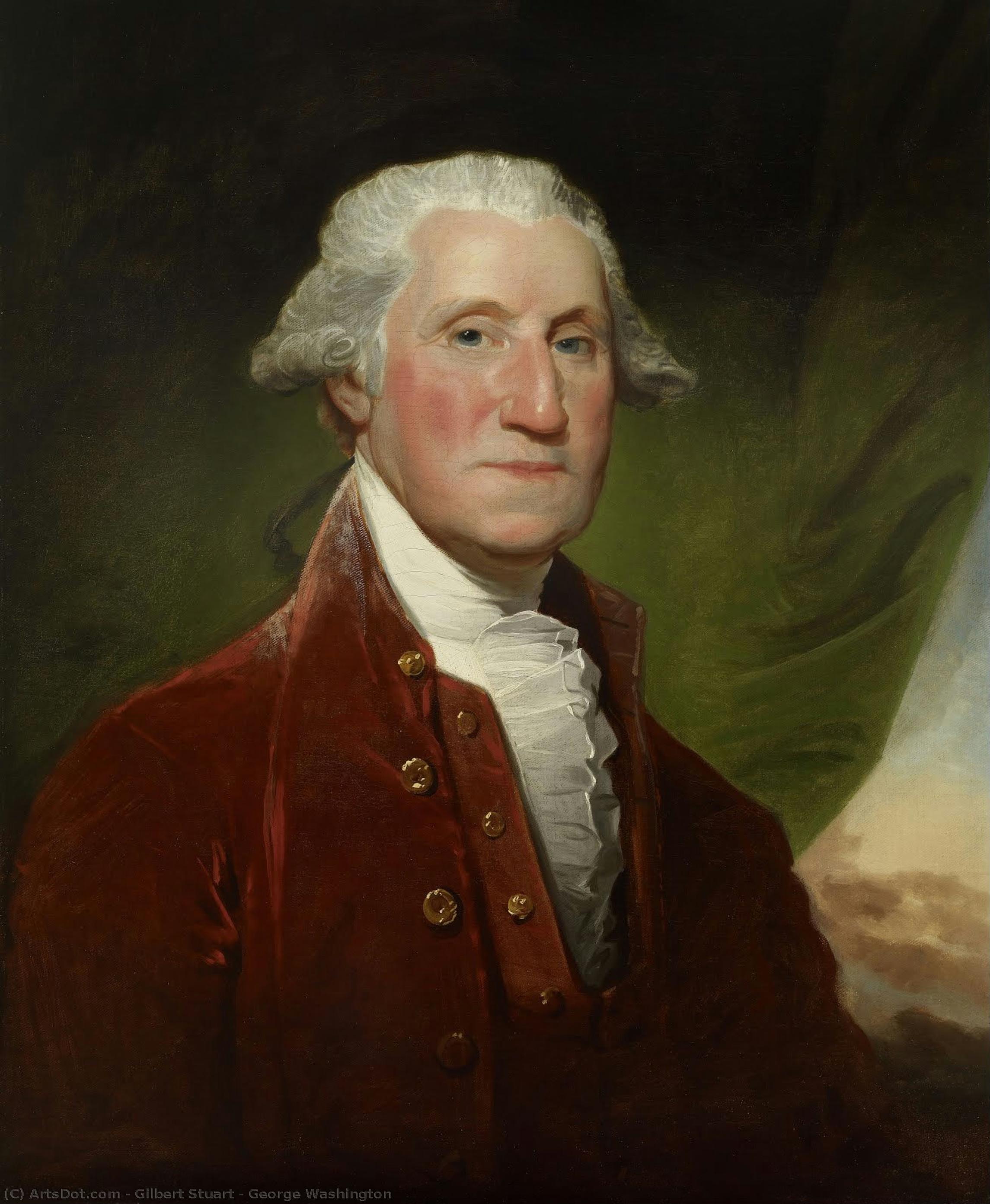
StatsGeorge Washington
 Acrylic On Canvas
- WallArt
- Neoclassical Portraiture
 1796
1796 74.0 x 61.0 cm
 The Frick Collection
 Read More
Purchase a high-resolution, enhanced digital image, far superior to the online preview.
Each file is meticulously prepared by our in-house specialists using advanced tools and expert manual retouching. We ensure every image has exceptional clarity, precise color accuracy, and fine detail.
The final file is delivered via email within 72 hours, optimized for immediate use in professional, editorial, and print environments. This is the same quality trusted by top-tier design studios, publishers, and galleries.
Digital Image
Download a high-resolution file for personal display, printing, and creative projects. ( Switch to Print Buy Hand Made Painting)
Included in Every Digital Image Order
Expert Digital Delivery, Guaranteed
When you choose OriginalUniqueArt.com, you're not just getting an image - you're receiving a professionally enhanced digital artwork, crafted with precision and backed by a satisfaction guarantee. Here's everything that comes with your order, automatically:

Fast Email Delivery
Your high-resolution digital image file will be emailed to you within 72 hours of ordering - ready for immediate use.

AI-Enhanced Digital File
Your artwork is professionally optimized using advanced AI tools and manual editing, ensuring maximum detail, clarity, and color accuracy.

Free Lifetime Re-Delivery
Accidentally deleted or lost your file? No worries - we'll resend it to you anytime, free of charge.

No Import Fees - Ever
Enjoy your artwork instantly with zero customs, duties, or delivery fees - digital downloads are always tax-free.

Color Accuracy Guarantee
We ensure your digital image reflects the original colors as closely as possible using professional tools and color management.

100-Day Satisfaction Guarantee
If you're not satisfied with your digital image, we'll revise it or refund 100% within 100 days - no questions asked.

100% Money-Back Guarantee
Not satisfied? Get a full refund within 100 days of receiving your digital file - no questions asked.

Bulk Order Discounts
Buy 3 images, save 10% - Buy 5, save 15% - Buy 10+, save 20%. Great for creative projects, galleries, and agencies.
The Weight of Authority: Gilbert Stuart’s “George Washington”
Gilbert Stuart's "George Washington," painted in 1796, isn’t merely a portrait; it’s a carefully constructed embodiment of the nascent American republic. This remarkable work, now housed within the Frick Collection in New York City, transcends the simple act of representation and delves into the very essence of leadership, virtue, and the weighty responsibility of guiding a new nation. Stuart, a master of his craft, skillfully captures Washington’s dignified presence, imbuing him with an aura of both strength and quiet contemplation – qualities desperately needed in the years following the Revolutionary War.
The painting itself is a testament to Stuart's Neoclassical training, evident in its balanced composition and restrained palette. The muted tones of brown, gray, and green create a sense of gravitas, drawing the viewer’s eye directly to Washington’s face – a study in subtle expressions that convey both resolve and humility. The artist meticulously rendered every detail, from the texture of the fabric of his coat to the delicate lines etched by time around his eyes, revealing an almost obsessive attention to realism. Yet, it's not a literal depiction; Stuart employs chiaroscuro—the dramatic contrast between light and shadow—to sculpt Washington’s form and emphasize his importance within the scene.
A Portrait of a Nation Forged in Virtue
The historical context surrounding “George Washington” is crucial to understanding its significance. Painted just a few years after the end of the Revolutionary War, the portrait coincided with a fervent desire to establish a stable and virtuous government. Stuart’s decision to portray Washington in a formal, three-quarter pose – a departure from earlier, more informal depictions – immediately elevates him to the status of an ideal statesman. The red coat, a symbol of military honor, subtly references his role as commander-in-chief, while the white collar and cravat speak to his adherence to social decorum and respect for tradition.
Interestingly, this particular version – often referred to as the “Vaughan type” – differs slightly from other known portraits of Washington. The subtle shift in the color of the coat is a key distinguishing feature, suggesting that Stuart may have been experimenting with his technique or responding to specific requests from John Vaughan, one of the painting’s patrons. The background, a simple yet evocative landscape, reinforces the idea of Washington as a man deeply connected to the land and its future.
Symbolism Woven into the Canvas
Beyond the obvious symbolism of military rank and civic virtue, “George Washington” is rich with subtle visual cues. The careful arrangement of his hands – one resting on a book, a symbol of knowledge and wisdom, and the other holding a quill pen, representing his role as a writer and communicator – speaks to his commitment to education and informed governance. The slight furrow in his brow suggests a thoughtful consideration of the challenges facing the new nation, while his steady gaze conveys an unwavering determination to uphold its ideals.
Furthermore, the painting’s scale—measuring 74 x 61 cm—contributes to its impact. It's large enough to command attention and invite prolonged contemplation, reflecting the monumental task of building a new nation. The portrait wasn’t simply intended as a likeness; it was designed to inspire confidence and instill a sense of shared purpose within the American populace.
A Timeless Legacy for Art & Design
Gilbert Stuart's “George Washington” remains an enduring masterpiece, admired for its technical brilliance, historical significance, and profound emotional resonance. It’s a painting that speaks to the ideals upon which America was founded – liberty, justice, and self-governance – and continues to captivate viewers centuries later. Today, high-quality reproductions of this iconic portrait offer art enthusiasts and interior designers alike an opportunity to bring a touch of American history and enduring artistic excellence into their homes or offices. The painting’s dignified presence and subtle complexities make it a truly timeless addition to any collection.
Questions & Answers
Is there a factsheet about "George Washington" by Gilbert Stuart for students?
The Guide page of "George Washington" by Gilbert Stuart offers a printable two-sheet factsheet: the artwork with its identity table, a decade band placing it in the artist's lifetime, other works by the artist, the measured color palette, and ready-to-copy citations in four styles.
What are the date and style of "George Washington" by Gilbert Stuart?
"George Washington" by Gilbert Stuart is dated 1796 and belongs to Neoclassical Portraiture.
Can "George Washington" by Gilbert Stuart, held at The Frick Collection, be legally reproduced?
The original "George Washington" is at The Frick Collection, and the work is in the public domain - its copyright has expired.
Artist Biography
Gilbert Stuart: A Life in Portraiture
- Born: December 3, 1755, Saunderstown, Rhode Island
- Died: July 9, 1828, Boston, Massachusetts
- Nationality: American
- Movement: Neoclassicism
- Known for: Portraiture, particularly portraits of prominent figures in early American history.
Early Life and Training
- Gilbert Stuart was born into a family with Scottish roots; his father, also named Gilbert, was an inventor who established the first snuff mill in Rhode Island.
- His artistic talent emerged at a young age, demonstrating skill even as a child.
- At 14, he painted "Dr. Hunter's Spaniels," showcasing early promise.
- He traveled to Scotland around 1771 to study under Cosmo Alexander, but returned after Alexander’s death in 1775.
- Further training occurred in London with Benjamin West, a prominent American painter residing in England, from 1775 to 1780. This period was crucial for developing his artistic style and gaining recognition within the Royal Academy.
Artistic Career and Major Works
- Stuart's career faced challenges during the American Revolution, prompting him to relocate to England in 1775.
- He achieved early success with "The Skater" (1782), a portrait that established his reputation.
- His most famous work is the unfinished portrait of George Washington, known as the Athenaeum Portrait (begun in 1796). This image has become iconic, appearing on U.S. currency and postage stamps. Stuart produced numerous copies of this portrait for patrons across America and Europe.
- He painted portraits of several other prominent figures including John Adams, Thomas Jefferson, James Madison, and many members of the Federalist elite.
- Stuart’s style was characterized by a Neoclassical approach, emphasizing realism and capturing the likeness and character of his subjects. He often employed a dramatic use of light and shadow to enhance the portraits' impact.
Influences and Development
- Cosmo Alexander provided early training in technique and composition.
- Benjamin West’s influence was significant, shaping Stuart’s understanding of portraiture and artistic principles.
- The Neoclassical movement, with its emphasis on classical forms and ideals, heavily influenced his style.
- Stuart's own observations and interactions with his subjects contributed to the psychological depth and realism in his portraits. He aimed to capture not just a likeness but also the character and personality of those he painted.
Historical Significance and Legacy
- Gilbert Stuart is considered one of America’s foremost portraitists, playing a vital role in documenting the early years of the United States.
- The Athenaeum Portrait of George Washington has become an enduring symbol of American identity and leadership.
- His portraits provide valuable historical insights into the lives and appearances of prominent figures from the late 18th and early 19th centuries.
- Stuart’s work is represented in major museums across the United States and Europe, ensuring his legacy continues to be appreciated by generations.
- He established a distinct American style of portraiture that blended European techniques with uniquely American sensibilities.

Gilbert Stuart
1755 - 1828 , United Kingdom
Quick Facts
- Full Name: Gilbert Charles Stuart
- Nationality: American
- Date Of Birth: 1755
- Date Of Death: 1828
- Place Of Birth: Southampton, United Kingdom
- Notable Artworks:
- Dr. Hunter's Spaniels
- The Skater
- Athenaeum Portrait of Washington
- Artistic Movement Or Style: Neoclassical
- Artists Who Influenced This Artist:
- Cosmo Alexander
- Benjamin West