Switch to Print
 Read More







































 For artworks or reproductions larger than 105 cm (approximately 41 inches) on any side, the frame will be shipped as a kit, disassembled. This method ensures safe delivery and prevents damage during transport.


A Symphony of Silence and Light
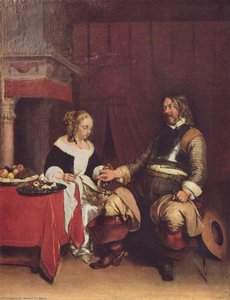
In the quiet intimacy of Gerard ter Borch’s 1667 masterpiece, The Lute Player, we are invited into a private moment that transcends the boundaries of time. This exquisite genre painting captures more than just a musical rehearsal; it captures the very essence of seventeenth-century Dutch social grace. The scene unfolds with a profound sense of stillness, where the soft resonance of the lute seems to vibrate within the very air of the room. As the woman sits comfortably in her chair, her focus is a delicate balance between the melody she creates and the quiet contemplation of the world around her. There is a palpable sense of domestic tranquility, a captured breath in the midst of a bustling era, making this work an ideal centerpiece for any collection seeking to evoke peace and intellectual depth.
Ter Borch’s mastery of chiaroscuro—the dramatic interplay between light and shadow—sculpts the figures with a lifelike presence that feels almost tactile. Influenced by the legendary Rembrandt, the artist employs a technique characterized by exceptional realism and a painstaking attention to detail. Through the meticulous layering of translucent glazes, he achieves an astonishingly luminous surface, allowing light to dance across the textures of the scene. One cannot help but be mesmerized by how the light catches the subtle sheen of fabric or the polished wood of the furniture, creating an atmosphere that is both physically grounded and spiritually ethereal. For the discerning collector or interior designer, this technique offers a visual richness that brings a sophisticated, multidimensional quality to any curated space.
The Elegance of Dutch Domesticity
Beyond its surface beauty, the painting serves as a window into the refined tastes of the Dutch bourgeois society during the Golden Age. The composition is a study in understated elegance; the positioning of the chairs and the presence of a piano in the background hint at a burgeoning musical culture and an environment enriched by both art and intellect. The woman’s engagement with her book, paired with her drifting gaze toward the lute, speaks volumes about the period's emphasis on education and soulful reflection. Every element, from the red bow in her hair to the discreetly placed objects, contributes to a narrative of a life well-lived—one where beauty and thought are inextricably linked.
This artwork does more than decorate a room; it invites conversation and emotional resonance. It embodies a sense of memento mori—a gentle reminder of the fleeting nature of time—yet it celebrates the enduring power of culture and connection. Whether placed in a sunlit study or a formal gallery setting, a high-quality reproduction of this work brings with it the prestige of the Dutch masters, offering an unparalleled glimpse into a vanished world of grace, shadow, and light.
Questions & Answers
What palette and what feeling does "The Lute Player" combine?
"The Lute Player" by Gerard ter Borch combines an earthy palette with a reflective tone.
In which year and which movement was "The Lute Player" made?
"The Lute Player" was created in 1667 as a work of the Baroque movement. Date and movement anchor the artwork in art history.
How intense are the colors in "The Lute Player" by Gerard ter Borch?
The colors in "The Lute Player" by Gerard ter Borch have a monochromatic intensity.
More about this painting
 Preview
 Send
Send Share
Share
 Details
 Guide
Guide

 Download
 Similars
 X-Ray
X-Ray Diaporama
 Q&A
Q&A Stats
Stats