Analytical Cubism · 1914
Bottle (Georges Braque, 1914)
Georges Braque (1882–1963) made Bottle. It dates from 1914. It belongs to the Analytical Cubism movement. It is made in charcoal. It measures 47 × 65 cm.
- 1914
- Charcoal
- 47 × 65 cm

 Preview

 Hand Made Oil Painting
 Send
 Share
 Fact sheet


 Download
 Similars
 X-Ray
 Diaporama
 Q&A

 Stats
Bottle, in brief
- Title
- Bottle
- Artist
- Georges Braque (1882–1963)
- Artist born in
- Argenteuil, France
- Date
- 1914
- Medium
- Charcoal
- Dimensions
- 47 × 65 cm
- Movement
- Analytical Cubism
- Period
- Modern
- Subject
- cubist composition, bottle motif, charcoal texture, multiple perspectives, geometric forms, spatial illusion
What does Bottle depict?
A Fragmented Perspective
In this 1914 work, we find ourselves looking at a scene that has been carefully dismantled and reassembled. The composition centers on a bowl and various bottles, yet they do not sit in a traditional, stable space. Instead, Georges Braque uses charcoal to break these objects into geometric planes—cubes, cylinders, and cones—that overlap and intersect. This approach rejects the illusion of depth found in older traditions. You see multiple viewpoints at once. The grainy texture of the charcoal emphasizes the fractured surfaces of the bottles and the bowl, making the physical process of the artist's eye visible on the surface.
The palette is intentionally restrained, relying on a monochrome range of black and white. This lack of color directs our attention toward form and structure rather than light or atmosphere. By stripping away the distractions of hue, the work focuses on the intellectual challenge of piecendo together the image as we perceive it.
Context and Quiet Intensity
The year 1914 brought significant upheaval to Europe with the outbreak of World War I, and this sense of instability is felt in the very way the forms are broken. Rather than turning to grand or dramatic narratives, Braque explores subtle shifts in space and form. There is a certain seriousness here, an uncompromising honesty about how we actually perceive reality through fragmented glimpses.
Within the composition, the inclusion of books adds a layer of quiet contemplation. They suggest a moment of intellectual inquiry amidst a period of great external chaos. The bottle itself carries a sense of containment and vulnerability. There is no need for loud gestures; the work achieves its impact through a steady, inward gaze. It invites us to consider how we interpret the world around us when the familiar shapes of our reality begin to shift and overlap.
High-resolution images of Bottle
Protected by copyright: these files are for personal reference, not a licence to republish.
Georges Braque, Bottle (1914).
Questions on Bottle, answered
In what year was "Bottle" by Georges Braque created?
"Bottle" by Georges Braque was created in 1914.
What is "Bottle" made with?
"Bottle" is executed in charcoal.
What size is "Bottle" by Georges Braque in real life?
The original "Bottle" by Georges Braque measures 47 x 65 cm.
What subjects appear in "Bottle" by Georges Braque?
The themes present in "Bottle" by Georges Braque include cubist composition, bottle motif, charcoal texture, multiple perspectives, geometric forms, spatial illusion, art deco influence. Together they summarize the artwork's subject matter.
Can the image of "Bottle" by Georges Braque be freely reproduced?
The copyright answer for "Bottle" by Georges Braque: the work is still protected by copyright. This determines whether reproductions of the image may be freely made.
Who is the artist behind "Bottle"?
The artist behind "Bottle" is Georges Braque. The work is catalogued under Georges Braque's name.
What art movement does "Bottle" by Georges Braque belong to?
The movement associated with "Bottle" by Georges Braque is Analytical Cubism. This classification situates the work among related artists and artworks.
Which period of Georges Braque's career does "Bottle" belong to?
"Bottle" represents the Analytical Cubism of Georges Braque.
At what age did Georges Braque make "Bottle"?
Georges Braque made "Bottle" at the age of 32. The artist was born in 1882 and the work is dated 1914.
About the artist, Georges Braque
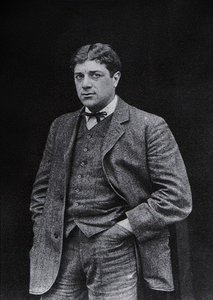
1882–1963, France
Georges Braque
Early Life, Family and Training Georges Braque was born in Argenteuil, France, in 1882. His early years were spent in Le Havre, France, within a household defined by the practicalities of decoration and color. Growing up in a family of house painters and decorators, he was immersed in the tactile realities of his trade from a young age. This upbringing provided a foundation of technical craftsmanship that would later inform his approach to the canvas.
Also by Georges Braque
 Mandola1910
 Man with a Guitar1914
 Houses At L'estaque
 Harbor in Normandy1909
Essays around Bottle
 Mastering Cubism: The Top 25 Georges Braque Artworks to KnowJourney through the revolutionary world of Georges Braque. From Analytical Cubism to iconic still lifes, explore 25 timeless masterpieces a…
 Understanding the Difference Between Analytical and Synthetic CubismMaster the differences between Analytical and Synthetic Cubism with our expert guide. Learn to identify these iconic art movements now.
 Spontaneity and Matter: Distinguishing CoBrA from Art InformelMaster the differences between CoBrA and Art Informel with our expert guide. Learn to identify these post-war movements today.