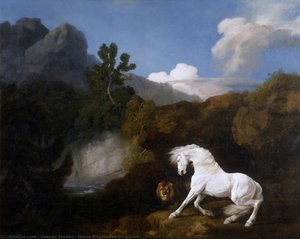
Preview
 Send
Send Share
Share
 Details
 Guide
Guide

 Download
 Similars
 X-Ray
X-Ray Diaporama
 Q&A
Q&A Stats
StatsThe Fall of Phaëton

- 97.0 x 122.0 cm


 Read More
Giclée / Art Print
Museum-quality giclée or canvas print with fast production and flexible finish options. ( Buy Hand Made Painting Switch to Digital Image)




P118B $10

P118H $10

P118W $10

P438Z $10

P508JH $12

P508YH $12

P805H $10

P805Z $10

P919BZ $10

P919G $10

P919XJ $10

P959ZH $10

P968JZ $12

W106C $8

W218G $10

W218JH $8

W218Y $10

W307PJ $10

W316G $10

W316PJ $8

W316Y $10

W398PJ $8

W4111J $10

W500HY $15

W500JH $15

W692G $12

W849H $8

W940BG $15

W953PJ $8




Pick from our preset sizes that match the artwork's original proportions.

Type the width and the height you need, to fit your frame or your wall. A print can only be cut, never made bigger than the picture, so a size with a different shape loses a part of the image. We send you a digital mockup to approve before we print anything. The picture shown on this page does not show the real cut — only the mockup does.
Worldwide Delivery () in 2 weeks instead of standard 4/5 weeks. (1 November)

Free Worldwide Express Shipping

High-Quality Linen Canvas

Full Shipping Insurance

Customs Tax Refund Guarantee

True Color Matching Guarantee

100-Day Return Policy (Defects Only)

100% Money-Back Guarantee

Bulk Discount Offer
 Glass option is only available in size under 110 CM

The Fall of Phaëton
Giclée / Art Print
Reproduction Size
-


Total Price
$ 81
A Collision of Myth and Mastery: Unveiling George Stubbs’s ‘The Fall of Phaëton’
George Stubbs's “The Fall of Phaëton,” painted in 1777, isn’t merely a depiction of a Greek myth; it’s a visceral experience. This monumental canvas, now residing within the National Trust at Saltram, transcends its narrative origins to become a profound meditation on power, destruction, and the sublime beauty of chaos. Stubbs, a revolutionary figure in 18th-century art, deliberately eschewed the idealized forms favored by his contemporaries, instead opting for an anatomical realism that bordered on the unsettling, particularly when applied to subjects as grand and terrifying as the sun god’s son attempting to wrest control from his father.
The scene unfolds with breathtaking dynamism. Phaeton, a young man consumed by ambition and perhaps hubris, is shown at the apex of his disastrous journey – driving the chariot of the sun across the heavens. His face, contorted in panic and exertion, reflects the impending doom that threatens to engulf him and all beneath. The horses themselves are rendered with astonishing detail, their muscular forms straining against the reins, each a testament to Stubbs’s meticulous study of equine anatomy. The composition is dominated by diagonals – the sweeping arc of the chariot, the downward plunge of the thunderbolts, and the frantic movement of the steeds – creating a sense of relentless forward momentum that pulls the viewer directly into the heart of the drama.
Anatomy as Revelation: Stubbs’s Scientific Approach
Stubbs's commitment to anatomical accuracy was legendary. His fascination with the inner workings of animals, fueled by his time dissecting horses at York County Hospital, informed every brushstroke. “The Fall of Phaëton” is a prime example of this approach; Stubbs didn’t simply paint a horse; he painted its very essence – the sinews beneath the skin, the skeletal structure supporting the musculature, and the intricate network of veins pulsing with life. This dedication to realism was considered radical at the time, challenging the prevailing artistic conventions that prioritized idealized beauty over scientific observation.
The painting’s color palette further enhances its dramatic effect. Stark contrasts between light and shadow – a consequence of Stubbs's masterful use of chiaroscuro – heighten the sense of urgency and impending disaster. The fiery hues of the sun chariot are juxtaposed against the deepening blues and purples of the approaching night, symbolizing the irreversible shift from day to darkness. The subtle gradations of color within each figure’s form contribute to a remarkable sense of volume and depth, drawing the viewer into the scene with an almost unsettling immediacy.
Mythic Symbolism and Emotional Resonance
Beyond its technical brilliance, “The Fall of Phaëton” is rich in symbolic meaning. The myth itself speaks to themes of unchecked ambition, divine retribution, and the consequences of defying fate. Phaeton’s downfall serves as a cautionary tale against hubris and a reminder that even those blessed with extraordinary power are ultimately subject to mortality. The figures surrounding the event – the Heliades, transformed into poplar trees in mourning for their brother, and Cycnus, hiding his face in despair – amplify this sense of loss and tragedy.
However, the painting transcends mere allegory. It evokes a profound emotional response—a mixture of awe, terror, and pity. The sheer scale of the scene, combined with Stubbs’s dramatic composition and masterful use of color, creates an overwhelming sensory experience that leaves the viewer breathless. “The Fall of Phaëton” is not simply a depiction of a myth; it's a powerful meditation on human nature, the forces of destruction, and the enduring beauty of tragedy—a timeless masterpiece that continues to captivate audiences centuries after its creation.
A Legacy Enduring: Reproductions and Artistic Inspiration
Reproductions of “The Fall of Phaëton” offer a remarkable opportunity to experience Stubbs’s artistic vision firsthand. Whether displayed in a grand salon or a more intimate setting, this painting commands attention with its dramatic intensity and technical brilliance. Collectors appreciate the work's historical significance, scientific rigor, and enduring aesthetic appeal. Interior designers often incorporate reproductions into spaces seeking to evoke a sense of grandeur, drama, and intellectual curiosity – a testament to Stubbs’s lasting influence on art history.
Questions & Answers
How can "The Fall of Phaëton" by George Stubbs be used in home decor?
"The Fall of Phaëton" by George Stubbs is recommended for statement, ideally in a living room. Use and space together guide where a reproduction fits.
What are the date and style of "The Fall of Phaëton" by George Stubbs?
"The Fall of Phaëton" was made in 1777, within the Romanticism movement.
Does "The Fall of Phaëton" show strong light-dark contrasts?
"The Fall of Phaëton" by George Stubbs shows a statement contrast between its light and dark areas.
Artist Biography
early life and training
george stubbs, a renowned english painter, was born on august 25, 1724, in liverpool, united kingdom. his early life was marked by a sparse record of his activities until the age of 35, with most information sourced from ozias humphry's memoirs, based on conversations with stubbs in 1794. stubbs began his artistic journey at the age of 15, initially working under his father, a currier or leather-dresser. he later approached hamlet winstanley, a lancashire painter and engraver, for a brief apprenticeship. this short stint allowed him to study the collection at knowsley hall.artistic development and notable works
stubbs's passion for anatomy led him to move to york in 1744, where he studied under surgeon charles atkinson at york county hospital. one of his earliest surviving works is a set of illustrations for john burton's textbook on midwifery, published in 1751. in 1756, stubbs rented a farmhouse in lincolnshire and spent 18 months dissecting horses, assisted by his common-law wife, mary spencer. this led to the publication of the anatomy of the horse in 1766, with original drawings now housed at the royal academy. stubbs's work was soon recognized by leading aristocratic patrons, including the 3rd duke of richmond, who commissioned three large pictures in 1759. this marked the beginning of his successful career, with works produced for several dukes and lords, culminating in the purchase of a house in marylebone, london.legacy and notable paintings
stubbs's most famous work, whistlejacket, a painting of a prancing horse commissioned by the 2nd marquess of rockingham, is now housed at the national gallery in london. this and two other paintings for rockingham break with convention, featuring plain backgrounds.- whistlejacket, a thoroughbred race horse rising on his hind legs, showcases stubbs's unparalleled skill in capturing the essence of horses.
- stubbs's series of paintings on a lion attacking a horse are early examples of the romantic movement, demonstrating his influence on 18th-century art.
- view stubbs's artwork at https://OriginalUniqueArt.com/@/george_stubbs
- explore the national gallery in london's collection, featuring stubbs's notable works, at /en/art/show/art-8xyffg-en/
- learn more about stubbs's life and work on wikipedia at https://en.wikipedia.org/wiki/george_stubbs
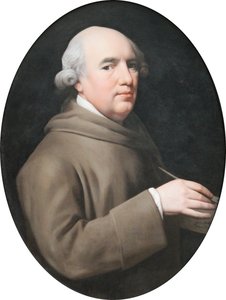
George Stubbs
1724 - 1806 , United Kingdom
Quick Facts
- Full Name: George Stubbs
- Nationality: British
- Date Of Birth: 1724
- Date Of Death: 1806
- Place Of Birth: Liverpool, United Kingdom
- Notable Artworks:
- Whistlejacket
- Lion & Horse
- A Lion and Tiger
- Artistic Movement Or Style: Romanticism, Equine Art
- Artists Who Influenced This Artist: ['Hamlet Winstanley']
- Artists Or Movements Influenced By This Artist: ['Joshua Reynolds']
Related Articles

George Stubbs: Anatomical Precision & Romantic Vision in 18th-Century British Art
Explore the captivating world of George Stubbs, the 18th-century master renowned for his anatomical precision & Romantic animal paintings. Discover his legacy and investment potential.

Echoes of Olympus: Mythological Narratives in Western Art Through the Ages
Explore the captivating history of mythological narratives in Western art! From ancient Greece to modern masterpieces, discover iconic artworks & symbolism. Expert analysis and high-quality reproductions at OriginalUniqueArt.
Timeless Legends: A Curated Guide to the Eternal Allure of Mythological Masterpieces
Embark on a sophisticated journey through the eternal allure of mythological art. Discover how master painters breathe life into ancient legends, from Greek deities to Baroque masterpieces, and learn to curate these timeless narratives within your own exquisite art collection.
The Noble Steed on Canvas: A Historical & Artistic Exploration of Horse Painting Across Cultures
Explore the rich history of horse painting! Discover masterpieces from Stubbs to Munnings & learn about symbolism, techniques & artists. Find museum-quality reproductions at OriginalUniqueArt.
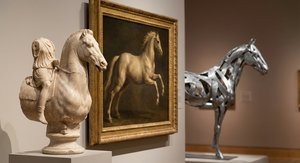
The Noble Steed: A Historical and Artistic Exploration of Horses in Fine Art
Explore the rich history of horses in fine art! From ancient depictions to Renaissance masterpieces & beyond, discover iconic artworks and artists. Learn about symbolism, techniques, and find museum-quality reproductions at OriginalUniqueArt.