
 Preview
 Send
Send Share
Share
 Details
 Guide
Guide

 Download
 Similars
 X-Ray
X-Ray Diaporama
 Q&A
Q&A Stats
StatsHorse Devoured by a Lion

- 3.0 x 69.0 cm


 Read More
Get a print-ready file that goes far beyond the web preview. Every digital image we sell comes from a high-resolution master in our stock database — usually 5,000 to 15,000 pixels wide — so you can print large, crop tightly, or reproduce fine detail with confidence.
No file leaves our studio untouched. A digital expert checks the colors against the original painting and corrects them if needed, then improves clarity and detail with professional retouching tools — always staying faithful to the artist's brushwork and style. The result is an image that looks like the painting, not like a filtered scan.
You approve before you're done: our expert sends the image by e-mail within 72 hours for your review. Not satisfied? Ask for improvements or corrections, or request a refund if the quality falls short.
This is the quality relied on by publishers, design studios, galleries and print shops.
Digital Image
Download a high-resolution file for personal display, printing, and creative projects. ( Switch to Print Buy Hand Made Painting)
Included in Every Digital Image Order
Expert Digital Delivery, Guaranteed
When you choose OriginalUniqueArt.com, you're not just getting an image - you're receiving a professionally enhanced digital artwork, crafted with precision and backed by a satisfaction guarantee. Here's everything that comes with your order, automatically:

Fast Email Delivery
Your high-resolution digital image file will be emailed to you within 72 hours of ordering - ready for immediate use.

AI-Enhanced Digital File
Your artwork is professionally optimized using advanced AI tools and manual editing, ensuring maximum detail, clarity, and color accuracy.

Free Lifetime Re-Delivery
Accidentally deleted or lost your file? No worries - we'll resend it to you anytime, free of charge.

No Import Fees - Ever
Enjoy your artwork instantly with zero customs, duties, or delivery fees - digital downloads are always tax-free.

Color Accuracy Guarantee
We ensure your digital image reflects the original colors as closely as possible using professional tools and color management.

100-Day Satisfaction Guarantee
If you're not satisfied with your digital image, we'll revise it or refund 100% within 100 days - no questions asked.

100% Money-Back Guarantee
Not satisfied? Get a full refund within 100 days of receiving your digital file - no questions asked.

Bulk Order Discounts
Buy 3 images, save 10% - Buy 5, save 15% - Buy 10+, save 20%. Great for creative projects, galleries, and agencies.
The Primal Drama of Survival
To stand before George Stubbs's "Horse Devoured by a Lion" is to be thrust into the very heart of a visceral, untamed struggle. Completed in 1763, this masterpiece transcends mere animal portraiture, capturing a moment of raw, breathtaking violence that freezes time itself. The scene is one of profound tension: a horse, caught in its final, agonizing breaths, is relentlessly overtaken by the predatory force of a lion. There is no escape within this frame, only the inevitable triumph of brute strength over vulnerability. Stubbs does not merely observe this encounter; he orchestrates it, using the rugged, rocky landscape of Creswell Crags to mirror the chaotic and unforgiving nature of the conflict unfolding in the center of the canvas.
The emotional weight of the piece lies in its ability to evoke a sense of the sublime—that specific Romantic era fascination with beauty intertwined with terror. As the viewer, one feels an instinctive pull toward the central struggle, drawn by the sheer energy radiating from the lion’s powerful jaws and the horse's desperate, yielding form. It is a painting that demands attention, making it a commanding focal point for any collection or a sophisticated statement piece in a curated interior designed to provoke thought and conversation.
Mastery of Anatomy and Light
Stubbs’s technical brilliance is rooted in his unique background as an anatomist. His years spent studying dissection under the surgeon Charles Atkinson allowed him to render musculature with a startling, scientific precision that few of his contemporaries could match. In this work, every sinew of the struggling horse and every ripple of the lion's powerful frame is articulated with breathtaking verisimilitude. This anatomical accuracy does not strip the painting of its soul; rather, it grounds the drama in a terrifying reality, making the violence feel palpably real.
The artist employs a dramatic use of light and shadow, reminiscent of the chiaroscuro techniques found in classical masters, to heighten the narrative tension. Strong contrasts illuminate the textures of the scene—the coarse, thick fur of the predator, the smooth, sweating skin of the prey, and the jagged, unforgiving surfaces of the surrounding rocks. The color palette is a sophisticated arrangement of earthy tones, where deep browns, golds, and blacks create a brooding atmosphere, punctuated by highlights that guide the eye through the composition's dynamic movement. For the discerning collector, the depth of texture achieved in this oil on canvas offers a rich, tactile experience that remains captivating even in high-quality reproduction.
A Timeless Allegory of Power
Beyond its surface-level spectacle, "Horse Devoured by a Lion" serves as a profound allegory. While inspired by classical motifs Stubbs encountered during his travels to Rome, the painting speaks to universal themes of mortality and the cyclical nature of life and death. The lion represents an unstoppable, primordial force, while the horse embodies innocence and the fragility of existence when confronted with the overwhelming power of nature. It is a meditation on the loss of control and the inevitable confrontation between strength and weakness.
For interior designers and art enthusiasts alike, this work offers more than just aesthetic beauty; it provides a narrative depth that can transform a space. Whether placed in a grand library or a contemporary gallery setting, the painting’s ability to evoke feelings of awe, horror, and reverence makes it an enduring icon of the Romantic movement. It remains a testament to Stubbs's ability to translate biological reality into a profound exploration of the human condition, making it a timeless acquisition for those who appreciate art that challenges the spirit.
Questions & Answers
Which artist and which style stand behind "Horse Devoured by a Lion"?
George Stubbs created "Horse Devoured by a Lion" within the Romanticism movement.
In what period was "Horse Devoured by a Lion" by George Stubbs made?
"Horse Devoured by a Lion" by George Stubbs dates from the Early-Modern period. The period gives the historical context of the work.
Can I see an X-ray view of "Horse Devoured by a Lion" by George Stubbs?
"Horse Devoured by a Lion" can be examined layer by layer on the artwork's X-Ray page, a viewer inspired by a conservator's light bench with eleven optical readings of the image.
Artist Biography
early life and training
george stubbs, a renowned english painter, was born on august 25, 1724, in liverpool, united kingdom. his early life was marked by a sparse record of his activities until the age of 35, with most information sourced from ozias humphry's memoirs, based on conversations with stubbs in 1794. stubbs began his artistic journey at the age of 15, initially working under his father, a currier or leather-dresser. he later approached hamlet winstanley, a lancashire painter and engraver, for a brief apprenticeship. this short stint allowed him to study the collection at knowsley hall.artistic development and notable works
stubbs's passion for anatomy led him to move to york in 1744, where he studied under surgeon charles atkinson at york county hospital. one of his earliest surviving works is a set of illustrations for john burton's textbook on midwifery, published in 1751. in 1756, stubbs rented a farmhouse in lincolnshire and spent 18 months dissecting horses, assisted by his common-law wife, mary spencer. this led to the publication of the anatomy of the horse in 1766, with original drawings now housed at the royal academy. stubbs's work was soon recognized by leading aristocratic patrons, including the 3rd duke of richmond, who commissioned three large pictures in 1759. this marked the beginning of his successful career, with works produced for several dukes and lords, culminating in the purchase of a house in marylebone, london.legacy and notable paintings
stubbs's most famous work, whistlejacket, a painting of a prancing horse commissioned by the 2nd marquess of rockingham, is now housed at the national gallery in london. this and two other paintings for rockingham break with convention, featuring plain backgrounds.- whistlejacket, a thoroughbred race horse rising on his hind legs, showcases stubbs's unparalleled skill in capturing the essence of horses.
- stubbs's series of paintings on a lion attacking a horse are early examples of the romantic movement, demonstrating his influence on 18th-century art.
- view stubbs's artwork at https://OriginalUniqueArt.com/@/george_stubbs
- explore the national gallery in london's collection, featuring stubbs's notable works, at /en/art/show/art-8xyffg-en/
- learn more about stubbs's life and work on wikipedia at https://en.wikipedia.org/wiki/george_stubbs
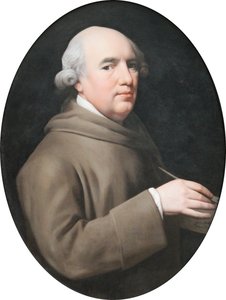
George Stubbs
1724 - 1806 , United Kingdom
Quick Facts
- Full Name: George Stubbs
- Nationality: British
- Date Of Birth: 1724
- Date Of Death: 1806
- Place Of Birth: Liverpool, United Kingdom
- Notable Artworks:
- Whistlejacket
- Lion & Horse
- A Lion and Tiger
- Artistic Movement Or Style: Romanticism, Equine Art
- Artists Who Influenced This Artist: ['Hamlet Winstanley']
- Artists Or Movements Influenced By This Artist: ['Joshua Reynolds']