

 Preview
 Send
Send Share
Share
 Details

 Download
 Similars
 X-Ray
X-Ray Diaporama
 Stats
StatsGreenland Falcon


 Read More
Purchase a high-resolution, enhanced digital image, far superior to the online preview.
Each file is meticulously prepared by our in-house specialists using advanced tools and expert manual retouching. We ensure every image has exceptional clarity, precise color accuracy, and fine detail.
The final file is delivered via email within 72 hours, optimized for immediate use in professional, editorial, and print environments. This is the same quality trusted by top-tier design studios, publishers, and galleries.
Digital Image
Download a high-resolution file for personal display, printing, and creative projects. ( Switch to Print Buy Hand Made Painting)
Included in Every Digital Image Order
Expert Digital Delivery, Guaranteed
When you choose OriginalUniqueArt.com, you're not just getting an image - you're receiving a professionally enhanced digital artwork, crafted with precision and backed by a satisfaction guarantee. Here's everything that comes with your order, automatically:

Fast Email Delivery
Your high-resolution digital image file will be emailed to you within 72 hours of ordering - ready for immediate use.

AI-Enhanced Digital File
Your artwork is professionally optimized using advanced AI tools and manual editing, ensuring maximum detail, clarity, and color accuracy.

Free Lifetime Re-Delivery
Accidentally deleted or lost your file? No worries - we'll resend it to you anytime, free of charge.

No Import Fees - Ever
Enjoy your artwork instantly with zero customs, duties, or delivery fees - digital downloads are always tax-free.

Color Accuracy Guarantee
We ensure your digital image reflects the original colors as closely as possible using professional tools and color management.

100-Day Satisfaction Guarantee
If you're not satisfied with your digital image, we'll revise it or refund 100% within 100 days - no questions asked.

100% Money-Back Guarantee
Not satisfied? Get a full refund within 100 days of receiving your digital file - no questions asked.

Bulk Order Discounts
Buy 3 images, save 10% - Buy 5, save 15% - Buy 10+, save 20%. Great for creative projects, galleries, and agencies.
The Majesty of the Hunt: Capturing the Greenland Falcon
To gaze upon this depiction of the Greenland Falcon is to be transported to a moment suspended between raw wilderness and exquisite artistry. George Stubbs, the master anatomist whose brushstrokes breathed life into the very sinews of nature, has gifted us more than just a portrait of a bird; he offers an encounter with predatory grace. The falcon itself dominates the composition, its form rendered with breathtaking verisimilitude. One can almost feel the tension coiled within its powerful musculature, observe the precise layering of feathers in shades of rich brown and pristine white. Stubbs’s dedication to naturalism is evident in every sharp contour of the beak and every alert turn of the head, suggesting a creature perpetually poised for action against the backdrop of its native domain.
A Study in Naturalism and Technique
Stubbs was not merely an artist; he was a dedicated student of anatomy, particularly that of the horse, yet his skill translated flawlessly to avifauna. The technique employed here speaks to meticulous observation. Notice how the light catches the varied textures—the slight sheen on the feathers contrasting with the matte quality of the sturdy branch beneath its talons. This attention to tactile detail elevates the piece beyond mere illustration into the realm of high art. The surrounding landscape complements this focus, a tapestry of rolling hills meeting a tranquil body of water under a sky softened by dawn or dusk’s ethereal glow. These earth tones ground the dramatic subject matter, creating a harmonious visual dialogue between the wild creature and its serene environment.
Symbolism in the Wild
In the history of art, birds of prey have always carried potent symbolism. The falcon, in particular, has long represented keen vision, nobility, and swift action—qualities admired by patrons across centuries. Here, perched with such unwavering focus, the bird embodies mastery and vigilance. Furthermore, the inclusion of the small, unexpected blue object hanging from the branch serves as a subtle counterpoint to the natural palette. It might suggest human presence, or perhaps simply an artistic flourish intended to draw the eye and add a necessary jolt of chromatic contrast against the otherwise muted, organic tones.
A Legacy for the Modern Collector
Owning a reproduction inspired by George Stubbs’s work is acquiring a piece of art history itself. It connects the modern admirer directly to the Enlightenment era's profound fascination with natural science and artistic representation. For those decorating a space that seeks depth, intellectual weight, or a connection to untamed beauty, this painting offers unparalleled sophistication. Whether placed in a grand hall where historical gravitas is desired, or within a study meant for contemplation, the Greenland Falcon remains an enduring testament to nature’s perfect engineering, captured forever by a master hand.
Artist Biography
early life and training
george stubbs, a renowned english painter, was born on august 25, 1724, in liverpool, united kingdom. his early life was marked by a sparse record of his activities until the age of 35, with most information sourced from ozias humphry's memoirs, based on conversations with stubbs in 1794. stubbs began his artistic journey at the age of 15, initially working under his father, a currier or leather-dresser. he later approached hamlet winstanley, a lancashire painter and engraver, for a brief apprenticeship. this short stint allowed him to study the collection at knowsley hall.artistic development and notable works
stubbs's passion for anatomy led him to move to york in 1744, where he studied under surgeon charles atkinson at york county hospital. one of his earliest surviving works is a set of illustrations for john burton's textbook on midwifery, published in 1751. in 1756, stubbs rented a farmhouse in lincolnshire and spent 18 months dissecting horses, assisted by his common-law wife, mary spencer. this led to the publication of the anatomy of the horse in 1766, with original drawings now housed at the royal academy. stubbs's work was soon recognized by leading aristocratic patrons, including the 3rd duke of richmond, who commissioned three large pictures in 1759. this marked the beginning of his successful career, with works produced for several dukes and lords, culminating in the purchase of a house in marylebone, london.legacy and notable paintings
stubbs's most famous work, whistlejacket, a painting of a prancing horse commissioned by the 2nd marquess of rockingham, is now housed at the national gallery in london. this and two other paintings for rockingham break with convention, featuring plain backgrounds.- whistlejacket, a thoroughbred race horse rising on his hind legs, showcases stubbs's unparalleled skill in capturing the essence of horses.
- stubbs's series of paintings on a lion attacking a horse are early examples of the romantic movement, demonstrating his influence on 18th-century art.
- view stubbs's artwork at https://OriginalUniqueArt.com/@/george_stubbs
- explore the national gallery in london's collection, featuring stubbs's notable works, at /en/art/show/art-8xyffg-en/
- learn more about stubbs's life and work on wikipedia at https://en.wikipedia.org/wiki/george_stubbs
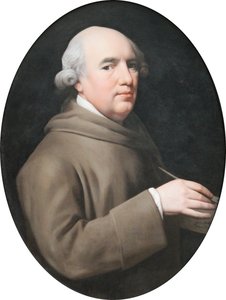
George Stubbs
1724 - 1806 , United Kingdom
Quick Facts
- Artistic Movement Or Style: Romanticism, Equine Art
- Artists Or Movements Influenced By This Artist: ['Joshua Reynolds']
- Artists Who Influenced This Artist: ['Hamlet Winstanley']
- Date Of Birth: August 25, 1724
- Date Of Death: July 10, 1806
- Full Name: George Stubbs
- Nationality: British
- Notable Artworks:
- Whistlejacket
- Lion & Horse
- A Lion and Tiger
- Place Of Birth: Liverpool, UK