
 Preview
 Send
Send Share
Share
 Details
 Guide
Guide

 Download
 Similars
 X-Ray
X-Ray Diaporama
 Q&A
Q&A Stats
StatsA Monkey

- 70.0 x 56.0 cm


 Read More
Get a print-ready file that goes far beyond the web preview. Every digital image we sell comes from a high-resolution master in our stock database — usually 5,000 to 15,000 pixels wide — so you can print large, crop tightly, or reproduce fine detail with confidence.
No file leaves our studio untouched. A digital expert checks the colors against the original painting and corrects them if needed, then improves clarity and detail with professional retouching tools — always staying faithful to the artist's brushwork and style. The result is an image that looks like the painting, not like a filtered scan.
You approve before you're done: our expert sends the image by e-mail within 72 hours for your review. Not satisfied? Ask for improvements or corrections, or request a refund if the quality falls short.
This is the quality relied on by publishers, design studios, galleries and print shops.
Digital Image
Download a high-resolution file for personal display, printing, and creative projects. ( Switch to Print Buy Hand Made Painting)
Included in Every Digital Image Order
Expert Digital Delivery, Guaranteed
When you choose OriginalUniqueArt.com, you're not just getting an image - you're receiving a professionally enhanced digital artwork, crafted with precision and backed by a satisfaction guarantee. Here's everything that comes with your order, automatically:

Fast Email Delivery
Your high-resolution digital image file will be emailed to you within 72 hours of ordering - ready for immediate use.

AI-Enhanced Digital File
Your artwork is professionally optimized using advanced AI tools and manual editing, ensuring maximum detail, clarity, and color accuracy.

Free Lifetime Re-Delivery
Accidentally deleted or lost your file? No worries - we'll resend it to you anytime, free of charge.

No Import Fees - Ever
Enjoy your artwork instantly with zero customs, duties, or delivery fees - digital downloads are always tax-free.

Color Accuracy Guarantee
We ensure your digital image reflects the original colors as closely as possible using professional tools and color management.

100-Day Satisfaction Guarantee
If you're not satisfied with your digital image, we'll revise it or refund 100% within 100 days - no questions asked.

100% Money-Back Guarantee
Not satisfied? Get a full refund within 100 days of receiving your digital file - no questions asked.

Bulk Order Discounts
Buy 3 images, save 10% - Buy 5, save 15% - Buy 10+, save 20%. Great for creative projects, galleries, and agencies.
The Enigmatic Subject: A Monkey’s Contemplative Gaze
George Stubbs' "A Monkey," painted in 1799, isn’t merely a depiction of an animal; it’s a carefully constructed tableau brimming with layered meaning. The subject itself – a monkey seated upon what appears to be a weathered rock or piece of wood – possesses an almost unnerving stillness. Its head is turned slightly away from the viewer, lending it a contemplative air, as if lost in its own thoughts. The pose, combined with the subtle tension in its muscles and the alert expression around its eyes, suggests a creature both intelligent and wary. This isn’t a playful romp through a jungle; there's an underlying sense of observation, perhaps even judgment, radiating from this primate. The artist masterfully captures a fleeting moment of awareness, inviting us to contemplate the animal’s inner world.
- Composition: The monkey is centrally positioned within a dark, shadowed environment, creating a dramatic contrast between light and shadow. This technique draws attention to the subject while simultaneously hinting at an unseen, potentially ominous, backdrop.
- Color Palette: Stubbs employs a muted palette dominated by earthy tones – browns, ochres, and grays – that evoke the feeling of a dense forest or jungle. These subdued colors contribute to the painting’s overall sense of mystery and depth.
Anatomical Mastery and the Roots of Romanticism
Stubbs was renowned for his unparalleled anatomical accuracy, particularly in his depictions of animals. “A Monkey” exemplifies this skill, showcasing a meticulous attention to detail in rendering the monkey’s fur, musculature, and skeletal structure. This dedication stemmed from his early training as an assistant to a surgeon, Charles Atkinson at York County Hospital, where he dissected horses to understand their anatomy. This scientific rigor is evident in the painting's realistic portrayal of the animal’s form—a hallmark of the burgeoning Romantic movement. The emphasis on observation and detailed representation, rather than idealized beauty, was revolutionary for its time.
The painting reflects a shift away from Neoclassical ideals that prioritized order and restraint towards a celebration of nature's power and complexity – a core tenet of Romanticism.Symbolic Layers: Fruit, Observation, and the Garden of Eden
Beyond its anatomical brilliance, “A Monkey” is rich in symbolic potential. The monkey’s grasp of two apples—one held delicately in its hand, the other resting nearby—immediately evokes the biblical story of Adam and Eve. This imagery suggests themes of temptation, knowledge, and perhaps even a critique of humanity's relationship with nature. The shadowed background further reinforces this sense of mystery and foreboding. The artist’s choice to depict the monkey in a contemplative pose, rather than engaging in playful activity, adds another layer of complexity—suggesting an awareness of its own situation and the potential consequences of its actions.
Furthermore, some scholars suggest that the painting may be a commentary on the role of artists and their relationship to nature, mirroring the themes explored in Jean Siméon Chardin’s “The Monkey Painter,” which depicts a monkey holding a paintbrush.A Legacy of Precision and Romantic Vision
“A Monkey” stands as a testament to George Stubbs' extraordinary talent and his pivotal role in shaping the course of British art. Its meticulous detail, evocative atmosphere, and symbolic depth continue to captivate viewers today. Reproductions of this iconic painting offer an opportunity to experience firsthand the artistry and intellectual curiosity that defined one of England’s greatest painters. It is a piece that invites repeated viewing, revealing new nuances with each encounter—a true masterpiece of anatomical precision and Romantic vision.
Questions & Answers
What print size of "A Monkey" by George Stubbs fits the recommended room?
In a living room, "A Monkey" is suggested at a medium print size.
From which country does the Romanticism work "A Monkey" come?
"A Monkey" was created by George Stubbs, born in United Kingdom, within the Romanticism movement. The artist's origin links the work to Romanticism as practiced by artists from United Kingdom.
What size and orientation are recommended for a print of "A Monkey" by George Stubbs?
medium size, portrait orientation: that is the print setup suggested for "A Monkey" by George Stubbs.
Artist Biography
Early Life, Family and Training
Liverpool, United Kingdom, 1724. George Stubbs enters the world as the son of John Stubbs, a currier, or leather-dresser, and Mary. His childhood is spent within the confines of the family business, handling hides and tools. This early exposure to the physical properties of animal skins provides a tactile foundation for a developing curiosity. By the age of 15, the pull toward visual representation becomes impossible to ignore. He begins his artistic path not through formal academies, but through a relentless, self-directed drive to understand the mechanics of life.
The path is uneven. A brief apprenticeship under Hamlet Winstanley, a painter and engraver from Lancashire, offers a glimpse into the professional trade, but it remains a short chapter. Stubbs seeks something more rigorous than mere imitation. He moves toward York, where the focus shifts from surface appearance to internal structure. Under the guidance of surgeon Charles Atkinson at York County Hospital, he begins a deep study of anatomy. This period of dissection transforms his approach, turning the artist into a student of the skeletal and muscular systems.
He remains largely self-taught, building his technical proficiency by observing the work of 18th-century contemporaries. He absorbs the methods of great artists like Joshua Reynolds and Thomas Gainsborough, yet his focus remains anchored in the scientific. He does not merely want to paint a subject; he wants to understand the tension of the sinew and the placement of the bone beneath the skin. This intersection of the surgical and the aesthetic defines his early development.
Patrons, Workshop and Commissions
Success arrives through the doors of the English aristocracy. By 1759, the 3rd Duke of Richmond commissions three large pictures, a move that secures Stubbs's professional standing. His ability to render the physical reality of animals quickly attracts the attention of leading aristocratic patrons. He moves from the periphery of the art world into the inner circles of the elite, producing works for several dukes and lords. This steady stream of high-status commissions provides the financial stability required to establish a permanent presence in the capital. He eventually purchases a house in Marylebone, London, where he remains for the rest of his life.
The demand for his specific expertise extends to the highest levels of society, as he enjoys royal patronage. His reputation is built on the ability to satisfy the specific desires of owners who view their horses as symbols of status. These patrons seek more than mere likenesses; they require the anatomical precision that Stubbs provides. His workshop becomes a site of significant production, catering to the tastes of a class obsessed with equestrian excellence and the breeding of fine animals.
Technique and Style
Stubbs operates at the intersection of scientific inquiry and fine art. His approach relies on a pioneering realism rooted in the physical reality of the animal form. By combining anatomical exactitude with expressive details, he moves beyond mere likeness to capture the mechanics of life. He uses subtle gradations of shadow to breathe life into every sinew and tendon, rendering the underlying structure of his subjects with a clarity that reflects his deep study of anatomy.
This obsession with the mechanics of movement often manifests in scenes of high tension. He becomes preoccupied with the theme of a wild horse threatened by a lion, a subject he explores through various iterations. These depictions of a lion attacking a horse represent early and significant examples of the Romantic movement. In these works, the focus shifts from the static portrait to the visceral energy of survival, utilizing the tension of musculature to drive the composition.
Key Works and Masterpieces
The year 1766 marks a definitive shift in the intersection of art and science. Stubbs publishes The Anatomy of the Horse, a groundbreaking treatise that moves beyond mere observation. The book contains 18 detailed illustrations, the result of years spent dissecting carcasses to understand the mechanics of life. This work establishes him as an authority on equine structure, providing a visual language for the musculature and tendons that define a living animal.
In the same year, the focus shifts from the internal to the visceral. A Lion Attacking a Stag captures a moment of raw, unscripted survival. The tension is palpable in the rendering of the predator and prey. This theme of conflict—the wild horse threatened by a lion—becomes a recurring obsession, appearing in various iterations throughout his career. It is a study of power and movement that bridges the gap between scientific documentation and the burgeoning Romantic movement.
The height of his equestrian portraiture arrives with Whistlejacket. Commissioned by the 2nd Marquess of Rockingham, the painting depicts a prancing horse against a plain background, breaking from the conventions of the time. The subject's presence is immediate. Around 1780, he produces The Marquess of Rockingham's Arabian Stallion, further cementing his status in the high-society circles of the era. His ability to capture the essence of a specific animal remains his most enduring contribution to the genre.
- Whistlejacket
- The Anatomy of the Horse (1766)
- A Lion Attacking a Stag (1766)
- The Marquess of Rockingham's Arabian Stallion (about 1780)
Where to See the Works Today
The legacy of Stubbs’s anatomical precision survives in the halls of major international institutions. In London, the National Gallery houses Whistlejacket, a large-scale portrait of a thoroughbred race horse. The Tate Gallery also maintains several of his paintings within its collection. These works offer a direct look at the precision that defined his career.
Across the Atlantic, the Yale Center for British Art in New Haven holds a significant number of his works. This collection provides a concentrated view of his output. In the United Kingdom, the Walker Art Gallery in Liverpool preserves his paintings, returning his imagery to the region of his birth. His influence extends beyond the canvas into the scientific realm; his book, The Anatomy of the Horse, remains a fundamental work of reference for the study of equine anatomy.
- Whistlejacket - National Gallery, London
- Lion Devouring a Horse - Tate Gallery, London
- Molly Long-legs with her Jockey - Walker Art Gallery, Liverpool
- The Milbanke and Melbourne Families - National Gallery, London
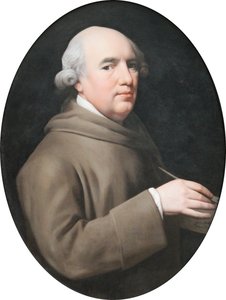
George Stubbs
1724 - 1806 , United Kingdom
Quick Facts
- Artistic Movement Or Style: Romantic movement
- Artists Or Movements Influenced By This Artist: ['Romantic movement']
- Artists Who Influenced This Artist:
- Joshua Reynolds
- Thomas Gainsborough
- Full Name: George Stubbs
- Nationality: English
- Notable Artworks:
- Whistlejacket
- The Anatomy of the Horse
- A Lion Attacking a Horse
- Place Of Birth: Liverpool, United Kingdom
- Date Of Birth: 1724
- Date Of Death: 1806