Preview
 Send
Send Share
Share
 Details
 Guide
Guide

 Download
 Similars
 X-Ray
X-Ray Diaporama
 Stats
StatsJohn Tyler
 Oil On Canvas
- WallArt
- Academic Realism
 1859
1859 74.0 x 92.0 cm
 National Portrait Gallery
 Read More
Hand Made Oil Reproduction
Hand-painted oil on canvas in your size and frame, made to order by our artists. ( Switch to Print Switch to Digital Image)




P118B $10

P118H $10

P118W $10

P438Z $10

P508JH $12

P508YH $12

P805H $10

P805Z $10

P919BZ $10

P919G $10

P919XJ $10

P959ZH $10

P968JZ $12

W106C $8

W218G $10

W218JH $8

W218Y $10

W307PJ $10

W316G $10

W316PJ $8

W316Y $10

W398PJ $8

W4111J $10

W500HY $15

W500JH $15

W692G $12

W849H $8

W940BG $15

W953PJ $8




Pick from our preset sizes that match the artwork's original proportions.

Type the width and the height you need, to fit your frame or your wall. This is hand-painted, so for a size with a different shape the artist can paint a bit more around the picture, or cut a bit — you choose. We send you a digital mockup to approve before the painting starts. The picture shown on this page does not show the real result — only the mockup does.
After order, OriginalUniqueArt.com team will email client for instructions and provide a mockup preview
Worldwide Delivery () in 3/4 weeks instead of standard 5 weeks. (27 October). No compromise on quality.

Free Worldwide Express Shipping

High-Quality Linen Canvas

Full Shipping Insurance

Customs Tax Refund Guarantee

True Color Matching Guarantee

100-Day Return Policy (Defects Only)

100% Money-Back Guarantee

Bulk Discount Offer
 Glass option is only available in size under 110 CM

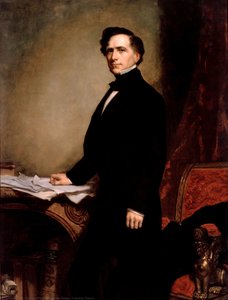
John Tyler
Reproduction Medium
Reproduction Size
-


Total Price
$ 300
A Portrait of Statesmanship: George Peter Alexander Healy’s John Tyler
George Peter Alexander Healy's 1859 portrait of John Tyler is more than just a likeness; it’s a carefully constructed tableau of American political thought and the complexities of leadership during a pivotal era. Painted against a subtly textured, dark background—a deliberate choice that draws attention to the subject—the image captures Tyler not as a flamboyant figurehead, but as a man wrestling with weighty responsibilities and the legacy of his presidency. Healy’s masterful use of light and shadow sculpts Tyler's face, emphasizing the lines etched by years of service and reflecting an underlying seriousness, while his posture – seated slightly forward, hands clasped loosely – conveys both contemplation and quiet strength.
Healy, a prolific portraitist who served as official painter to several U.S. presidents, was renowned for his ability to imbue his subjects with personality and historical significance. His style leaned heavily towards the academic tradition of the mid-19th century, characterized by meticulous detail, realistic rendering, and a classical approach to composition. This is evident in Tyler’s attire – a dark suit and tie, indicative of the formality expected of a prominent statesman – and the carefully arranged details of his surroundings, suggesting a space of quiet deliberation.
The Weight of History and the Seeds of Discord
Painted just five years after Tyler's controversial presidency concluded, the portrait resonates with the political tensions that defined the period. Tyler’s tenure was marked by significant discord – his staunch defense of states’ rights clashed dramatically with the growing momentum for national unity, culminating in the outbreak of the Civil War. The painting subtly acknowledges this historical context; the muted palette and somber mood reflect the anxieties and uncertainties surrounding the nation's future. The slight downturn of Tyler’s mouth hints at the burdens he carried as a president who navigated treacherous political waters and ultimately presided over the secession of Southern states.
Interestingly, Healy’s decision to depict Tyler in a relatively solitary setting—away from any overt symbols of power or authority—is particularly revealing. He avoids presenting Tyler as a triumphant leader, instead focusing on his internal state. This suggests that Healy was interested not just in capturing Tyler's physical appearance but also in conveying the weight of responsibility and the moral dilemmas inherent in leadership during a time of profound national division.
Symbolism and the American Ideal
Beyond the individual portrait, the painting offers glimpses into broader themes of American identity. The dark background can be interpreted as representing the challenges and uncertainties facing the nation—the shadows of slavery, the divisions between North and South, and the looming threat of war. Tyler’s posture, with his hands clasped loosely, embodies a sense of quiet resolve – a willingness to confront these difficulties with dignity and integrity. The painting subtly speaks to the American ideal of leadership: not through grand gestures or forceful pronouncements, but through thoughtful deliberation and a commitment to serving the nation.
A Window into an Era
George Peter Alexander Healy’s portrait of John Tyler is a compelling testament to the complexities of 19th-century America. It's a work that invites viewers to contemplate not only the life and career of a lesser-known president but also the broader historical forces shaping the nation at the time. Reproductions of this powerful image offer a valuable window into a turbulent era, reminding us of the challenges faced by those who sought to guide the country through its most difficult moments – and offering a poignant reflection on the enduring qualities of leadership and resilience.
Questions & Answers
How was "John Tyler" made, and how big is it?
The original "John Tyler" by George Peter Alexander Healy is an oil on canvas work measuring 74 x 92 cm. Technique and size describe the original object.
Why is the copyright status of "John Tyler" what it is?
"John Tyler" by George Peter Alexander Healy is in the public domain - its copyright has expired. Copyright terms are measured from the artist's death, and George Peter Alexander Healy died in 1894.
Which room is "John Tyler" by George Peter Alexander Healy recommended for, given its colors?
With its earthy palette, "John Tyler" by George Peter Alexander Healy is recommended for a living room. The colors are part of the reason for this suggestion.
Artist Biography
A Life Etched in Likeness: The World of George Peter Alexander Healy
George Peter Alexander Healy, a name synonymous with 19th-century American portraiture, was more than just a painter of faces; he was a chronicler of an era. Born in Boston on July 15, 1813, his early life was marked by the hardships that often accompany sudden loss. The death of his father, a merchant marine captain, cast a shadow over his childhood, forcing young Healy to contribute to the family’s livelihood from a tender age. Yet, even amidst these challenges, an artistic spark ignited within him. Encouraged by Jane Stuart, daughter of the renowned Gilbert Stuart, he was introduced to the world of formal training and mentorship under Thomas Sully, whose guidance proved invaluable in shaping his nascent talent. This early exposure laid the foundation for a career that would see him capture the visages of presidents, dignitaries, and prominent figures who defined a nation grappling with change and growth.European Refinement and Artistic Flourishing
In 1834, Healy embarked on an extended sojourn to Europe, a journey spanning sixteen years that would prove pivotal in his artistic development. He immersed himself in the vibrant art scenes of Paris and Rome, studying under masters like Antoine-Jean Gros and Thomas Couture. These formative experiences exposed him to academic traditions, refined his technique, and broadened his aesthetic sensibilities. The influence of French realism is palpable in his work, a testament to the impact of his European education. His dedication and skill were recognized with a third-class medal at the Paris Salon in 1840, a significant achievement that signaled his rising prominence within the artistic community. Further validation came in 1843 when he was elected an honorary academician into the National Academy of Design, solidifying his position as a respected artist on both sides of the Atlantic. This period wasn’t merely about technical skill; it was about absorbing the cultural currents and intellectual ferment that defined Europe at the time, elements which would later infuse his portraits with depth and nuance.Capturing an Era: Portraits of Power and Influence
Upon his return to the United States, Healy quickly established himself as a leading portraitist. His ability to capture not just physical likeness but also the character and essence of his sitters made him highly sought after by those in positions of power. He painted portraits of an astonishing array of prominent individuals, including John C. Calhoun and James Buchanan, but it was his series of presidential portraits that truly cemented his legacy. Commissioned for the Corcoran Gallery in Washington, D.C., Healy immortalized every U.S. president from John Quincy Adams to Ulysses S. Grant, creating a visual record of American leadership during a period of immense transformation. These weren’t simply flattering depictions; they were insightful studies of personality and authority, offering glimpses into the lives and minds of those who shaped the nation's destiny. His portrait of Lincoln, in particular, stands as an iconic representation of the 16th president, capturing his solemnity and unwavering resolve during a time of national crisis.Beyond Likeness: Historical Narratives on Canvas
While celebrated for his portraits, Healy’s artistic ambition extended beyond mere representation. He sought to capture moments of historical significance, imbuing his canvases with narrative power. His most ambitious undertaking in this regard was *The Peacemakers* (1868), a large-scale painting depicting a strategy session between Abraham Lincoln and his advisors following the end of the Civil War. This work is not just a depiction of a meeting; it’s a poignant meditation on peace, reconciliation, and the weight of leadership. It showcases Healy's ability to orchestrate complex compositions and convey emotional depth through carefully considered gestures and expressions. *The Peacemakers* remains a powerful testament to his skill as a historical painter, offering a visual window into a pivotal moment in American history.A Lasting Legacy: Remembrance and Reflection
George Peter Alexander Healy returned to Chicago in 1892, spending his final years surrounded by family. He passed away on June 24, 1894, leaving behind an extensive body of work that continues to captivate and inspire. His autobiography, *Reminiscences of a Portrait Painter*, published posthumously, provides invaluable insights into his life, artistic philosophy, and the world he inhabited. Healy’s legacy rests not only on the sheer volume of his output but also on the quality and historical significance of his paintings. He was a master of realism, a keen observer of human nature, and a skilled storyteller who used his art to document the lives and times of those who shaped America. His portraits remain treasured artifacts, offering enduring glimpses into the past and reminding us of the individuals who left their mark on history. Healy’s contribution to American art is undeniable—a testament to the power of portraiture to transcend mere likeness and capture the very soul of an era.
George Peter Alexander Healy
1813 - 1894 , United States of America
Quick Facts
- Full Name: George Peter Alexander Healy
- Nationality: American
- Date Of Birth: 1813
- Date Of Death: 1894
- Place Of Birth: Boston, United States of America
- Notable Artworks:
- The Peacemakers
- John C. Calhoun
- James Buchanan
- Abraham Lincoln
- Artistic Movement Or Style: Realism
- Artists Who Influenced This Artist:
- Antoine-Jean Gros
- Thomas Couture
- Thomas Sully
Related Articles

John Constable's Masterpieces: Explore 25 Iconic Landscapes for Your Home
Journey through John Constable's 25 most celebrated landscapes. Explore Romanticism, Dedham Vale & his masterful use of light in iconic paintings like 'Hay Wain'. Find museum-quality art reproductions and elevate your home decor on OriginalUniqueArt.com.

John Singer Sargent's 25 Masterpieces: Portraits & Beyond | OriginalUniqueArt
Explore 25 iconic John Singer Sargent paintings – from dazzling portraits to Impressionist landscapes. Discover the stories behind Madame X, El Jaleo & more! Find museum-quality art reproductions and elevate your home decor with OriginalUniqueArt.com.

Georges Seurat's Masterpieces: 25 Paintings That Defined Pointillism | OriginalUniqueArt
Explore 25 iconic Georges Seurat paintings & discover the brilliance of Pointillism. From 'La Grande Jatte' to his harbor scenes, delve into art history with OriginalUniqueArt.com. Find museum-quality reproductions for your home decor. Explore the full collection online!

Georges Braque's Masterpieces: 25 Paintings That Defined Cubism & Modern Art | OriginalUniqueArt
Explore 25 iconic Georges Braque paintings that revolutionized Cubism & modern art. Discover the stories behind his masterpieces, from Fauvism to Analytical Cubism. Find museum-quality reproductions & elevate your home decor with OriginalUniqueArt.com.
John George Brown: Capturing American Life & Sentiment in 19th-Century Genre Painting
Explore the captivating genre paintings of John George Brown, celebrated for his realistic depictions of 19th-century American life. Discover his legacy & find museum-quality reproductions at OriginalUniqueArt.