Preview
 Send
Send Share
Share
 Details
 Guide
Guide

 Download
 Similars
 X-Ray
X-Ray Diaporama
 Q&A
Q&A Stats
StatsReclining nude

- 2245.0 x 1340.0 cm


 Read More
Giclée / Art Print
Museum-quality giclée or canvas print with fast production and flexible finish options. ( Buy Hand Made Painting Switch to Digital Image)




P118B $10

P118H $10

P118W $10

P438Z $10

P508JH $12

P508YH $12

P805H $10

P805Z $10

P919BZ $10

P919G $10

P919XJ $10

P959ZH $10

P968JZ $12

W106C $8

W218G $10

W218JH $8

W218Y $10

W307PJ $10

W316G $10

W316PJ $8

W316Y $10

W398PJ $8

W4111J $10

W500HY $15

W500JH $15

W692G $12

W849H $8

W940BG $15

W953PJ $8




Pick from our preset sizes that match the artwork's original proportions.

Type the width and the height you need, to fit your frame or your wall. A print can only be cut, never made bigger than the picture, so a size with a different shape loses a part of the image. We send you a digital mockup to approve before we print anything. The picture shown on this page does not show the real cut — only the mockup does.
Worldwide Delivery () in 2 weeks instead of standard 4/5 weeks. (1 November)

Free Worldwide Express Shipping

High-Quality Linen Canvas

Full Shipping Insurance

Customs Tax Refund Guarantee

True Color Matching Guarantee

100-Day Return Policy (Defects Only)

100% Money-Back Guarantee

Bulk Discount Offer
 Glass option is only available in size under 110 CM

Reclining nude
Giclée / Art Print
Reproduction Size
-


Total Price
$ 81
The Raw Beauty of Reality: Breitner’s Unfiltered Vision
In the late nineteenth century, a quiet revolution was brewing within the studios of the Hague, led by an artist who refused to look away from the unvarnished truth. George Hendrik Breitner, a master of capturing the soul of everyday existence, presents us in Reclining Nude (1887) with a profound rejection of the era's polished academic ideals. While his contemporaries at the Art Academy sought to transform every subject into a statuesque Greek deity, Breitner remained fiercely committed to the person standing before him. This painting is not an exercise in idealized perfection, but rather a deeply intimate encounter with a single, breathing moment of rest.
The scene unfolds with a striking sense of immediacy, drawing the viewer into a private sanctuary. A woman lies reclined upon a bed, her form draped in the soft, heavy textures of red sheets that pulse with a vibrant, warm energy against the more muted tones of the composition. There is an undeniable weight to the atmosphere; the way the fabric bunches and folds suggests a tactile reality that one can almost feel. As she rests, her posture—relaxed, perhaps even caught in the threshold between sleep and wakefulness—invites a sense of quiet companionship, making the viewer feel less like a distant observer and more like a silent witness to a fleeting moment of human vulnerability.
A Masterclass in Texture and Impressionistic Light
Technically, Reclining Nude serves as a brilliant bridge between the tonal harmonies of the Hague School and the burgeoning energy of Impressionism. Breitner utilizes a masterful application of impasto, where the paint itself becomes a sculptural element on the canvas. The thick, visible brushstrokes do more than just define shape; they capture the play of light across the skin and the rugged topography of the bedding. This technique lends the work an organic, breathing quality that is essential to its emotional resonance.
The color palette is a sophisticated study in contrast. The bold, crimson hues of the sheets act as a dramatic anchor for the piece, providing a striking counterpoint to the softer, more naturalistic flesh tones of the subject. This interplay of warmth and shadow creates a sense of depth that pulls the eye inward, toward the center of the frame where the woman’s form rests. For collectors and interior designers alike, this painting offers a rare balance: it possesses the dramatic presence required for a focal point in a grand room, yet maintains an intimate, soulful quietude that complements more serene living spaces.
An Enduring Legacy for the Modern Collector
To possess a reproduction of Breitner’s work is to hold a piece of art history that celebrates authenticity over artifice. This painting stands as a testament to the artist's belief that true beauty lies not in a manufactured ideal, but in the honest depiction of life as it is lived. It is a work that resonates deeply with the modern sensibility—a period where we increasingly value raw emotion and unpretentious truth.
Whether placed in a contemporary gallery setting or integrated into a classic, richly textured interior, Reclining Nude brings with it an aura of sophisticated introspection. It is more than mere decoration; it is an invitation to pause, to breathe, and to appreciate the profound beauty found in the simplest, most human moments of our existence.
Questions & Answers
What kind of colors does "Reclining nude" use?
The palette of "Reclining nude" by George Heidrik Breitner is described as earthy. It is a compact description of the work's colors.
What luminance does "Reclining nude" by George Heidrik Breitner have?
"Reclining nude" by George Heidrik Breitner has a dark luminance. Luminance describes how much light the colors appear to reflect.
For whom is "Reclining nude" by George Heidrik Breitner a good gift?
"Reclining nude" by George Heidrik Breitner is recommended as a gift for valentine's day, especially for relaxation. A reproduction of the artwork can be given as a present.
Artist Biography
The Soul of Amsterdam: The Life and Vision of George Hendrik Breitner
George Hendrik Breitner stands as one of the most distinctive voices in Dutch art at the turn of the century, renowned for his unflinching depictions of everyday life within the bustling cityscape of Amsterdam. Born in Rotterdam in 1857 amidst challenging circumstances—his father’s bankruptcy profoundly impacting his family—Breitner eschewed a traditional academic path, prioritizing instead a self-directed artistic journey that would eventually redefine Dutch realism. This unconventional upbringing instilled in him an unwavering commitment to observation and a profound empathy for the struggles faced by ordinary people, themes that permeate throughout his entire oeuvre.
His early years were marked by a raw, burgeoning talent that led him to the Hague Academy of Fine Arts in 1876. Under the mentorship of Willem Maris, a pivotal figure in the Hague School, Breitner began to master the nuances of tonal harmony and atmospheric perspective. However, his spirit was too restless for the confines of strict academicism; his radical, sometimes brusque behavior even led to his expulsion from the Academy of Visual Arts in 1880. Rather than stifling him, this friction fueled a stylistic evolution characterized by bold brushstrokes and an expressive use of color that sought to convey raw emotion rather than mere precise representation.
A Cinematic Eye: The Intersection of Painting and Photography
As Breitner moved to Amsterdam in 1886, his artistic vision underwent a profound transformation, as he began to capture the very pulse of the city. He became the leading exponent of Amsterdam Impressionism, a movement that sought to translate the fleeting energy of urban life onto canvas. What set Breitner apart from his contemporaries was his innovative embrace of photography. Beginning in 1889, he meticulously documented Amsterdam's streets and inhabitants through the lens of his camera, using the medium as a crucial tool for study and inspiration.
This photographic eye deeply influenced his painterly technique. He adopted a deliberate frontal viewpoint and utilized cropped figures—elements borrowed from the spontaneous nature of photography—to distill the essence of urban life into striking, modern images. His works often mirror the stylistic innovations of French Impressionism but maintain a uniquely Dutch grit. Whether capturing the snowy, serene canals in The Singelbrug near the Paleisstraat or the chaotic energy of urban change in Demolition in the Oudezijds Achterburgwal, Breitner’s work possesses a cinematic quality that brings the late 19th-century streets to life.
Legacy of the Urban Impressionist
Breitner's repertoire was remarkably diverse, extending far beyond the cobblestone streets. While he is most celebrated for his urban landscapes, his fascination with movement and form led him to explore various subjects with equal intensity:
- Military and Equestrian Studies: Drawing from his early days sketching at the City Riding School, he produced compelling works featuring horses and riders, often imbued with a sense of power and motion.
- The Human Form: His explorations of the nude, such as Reclining Nude (also known as Anne), showcased a more intimate, tender side of his artistic temperament.
- Watercolors and Etchings: Breitner was an exceptional master of lighter media, using watercolors to achieve a level of impressionistic lightness that contrasted beautifully with his heavy, textured oil paintings.
The historical significance of George Hendrik Breitner lies in his ability to bridge the gap between the traditional realism of the Hague School and the burgeoning modernism of the 20th century. He did not merely paint Amsterdam; he captured its soul, documenting a period of profound transition with a sense of poetic permanence. Today, his works remain essential treasures in collections like the Rijksmuseum, serving as a window into a vanished era of urban vitality and an enduring testament to the power of an unyielding, observant gaze.

George Heidrik Breitner
1857 - 1923 , Netherlands
Quick Facts
- Full Name: George Hendrik Breitner
- Nationality: Dutch
- Date Of Birth: 1857
- Date Of Death: 1923
- Place Of Birth: Rotterdam, Netherlands
- Notable Artworks:
- Promenade deck with three ladies
- The earring
- Demolition in the Oudezijds Achterburgwal
- Artistic Movement Or Style: Early 20th Century Realism
- Artists Who Influenced This Artist: ['Willem Maris']
- Artists Or Movements Influenced By This Artist: ['Amsterdam School']
Related Articles

Crimson Threads of Narrative: Exploring Symbolism & Representation in Artworks Featuring the Red Dress
Explore the rich symbolism of the red dress in art history! From ancient power displays to iconic portraits like Cézanne’s 'Madame Cezanne', discover the cultural and artistic significance behind this captivating color. Expert analysis & insights.
Earthy Hues & Masterpieces: Top 10 Paintings with 'Mushroom' Tones |
Explore 10 iconic paintings with captivating 'mushroom' tones! Discover Van Gogh, Monet & Rembrandt’s masterpieces—earthy palettes, rich history & artistic techniques. Find museum-quality art reproductions and curated decor ideas at
Earthy Hues & Masterpieces: Top 10 Paintings Dominated by Clay Tones |
Explore 10 iconic paintings dominated by rich clay tones – from Rembrandt's warmth to Van Gogh’s earthy landscapes. Discover art history, techniques & find museum-quality reproductions at . Explore the full collection online!
The Resonance of Earthly Tones: Exploring Nuance, History & Emotional Impact in Art
Explore the captivating world of earth tones in art! Discover historical context, emotional resonance & artistic techniques behind these timeless colors. Find inspiration for your home decor and museum-quality reproductions.
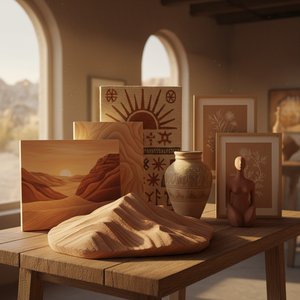
Sandstone & Sunlight: 10 Masterpieces of Earth-Toned Art |
Journey through 10 iconic paintings bathed in 'sand' tones – from Van Gogh to Monet. Explore the stories, techniques & warm palettes of these timeless masterpieces. Find museum-quality art reproductions at and bring classic beauty home.