 Read More


 For artworks or reproductions larger than 105 cm (approximately 41 inches) on any side, the frame will be shipped as a kit, disassembled. This method ensures safe delivery and prevents damage during transport.


More about this painting
Text size

() ·
A painting made for you, by hand
Hand Made Oil Reproduction
Hand-painted oil on canvas in your size and frame, made to order by our artists. ( Switch to Print Switch to Digital Image)
Collectible Description
Explore George Grosz’s ‘Nude 5,’ a watercolor study of a classical nude figure. Discover its delicate form, atmospheric depth & unique artistic style – a captivating piece from the early 20th century.
Artist Biography
A key figure of Berlin Dada, George Grosz used biting satire in works like The Pillars of Society. Explore his powerful art today.
from ·
Chapter 1
How large should it be?
Slide to change the size; the picture on the left shows the frame at its real width. The proportions of the original are kept.
Standard
custom
CM
INCH
Pick from our preset sizes that match the artwork's original proportions.
Loading sizes...

width
height
Type the width and the height you need, to fit your frame or your wall. This is hand-painted, so for a size with a different shape the artist can paint a bit more around the picture, or cut a bit — you choose. We send you a digital mockup to approve before the painting starts. The picture shown on this page does not show the real result — only the mockup does.
Chapter 2
How should it arrive?
Choose the edges of the stretched canvas
Choose your frame

White $1

Blurside $1

Extended $1

P118B $10

P118H $10

P118W $10

P438Z $10

P508JH $12

P508YH $12

P805H $10

P805Z $10

P919BZ $10

P919G $10

P919XJ $10

P959ZH $10

P968JZ $12

W106C $8

W218G $10

W218JH $8

W218Y $10

W307PJ $10

W316G $10

W316PJ $8

W316Y $10

W398PJ $8

W4111J $10

W500HY $15

W500JH $15

W692G $12

W849H $8

W940BG $15

W953PJ $8

H24-GOLD $30

H24-SILVER $30

H36-GOLD $45

H36-SILVER $45
Framed
Moulding: . Overall size with the frame: .
Chapter 3
Who paints it, and should anything change?
Examples of what can be changed: Replace face with customer photo; Add pet (e.g., replace cat with dog); Include hidden message in background; Change background landscape or elements.
After order, OriginalUniqueArt.com team will email client for instructions and provide a mockup preview
After order, OriginalUniqueArt.com team will email client for instructions and provide a mockup preview
Worldwide Delivery () in 3/4 weeks instead of standard 5 weeks. (9 November). No compromise on quality.
Chapter 4
The finishing touches
A nameplate, as in a museum?
Engraved Bronze Plaque Details
This elegant plaque features the artist's name and the title of the artwork, finely engraved for a timeless presentation.
It is made from bronze with a refined, elegant finish. The text is precisely laser-engraved for a sharp and permanent result. Measuring 9x2 cm, the plaque is compact yet easy to read. It's built to be durable and scratch-resistant, offering a professional, museum-quality look. Mounting is simple thanks to the included adhesive backing.
Transparent Acrylic Plaque Details
The plaque includes essential engraved details such as the artist's name, the title of the artwork, the date it was created, the type of media used-like oil on canvas or watercolor-a brief description of the piece, and a QR code that links to the complete artwork information.
It is crafted from clear acrylic, offering a sleek, modern appearance. The text is UV-engraved in black to ensure strong visual contrast. With a size of 10x15 cm, it ensures optimal readability. It comes equipped with two metal hooks for secure wall mounting. The plaque is designed to be weather-resistant, making it suitable for various environments, and it includes interactive features that work seamlessly with smartphone scanning.
Black Acrylic Plaque Details
This elegant plaque includes engraved information such as the artist's name, the title of the artwork, the date it was created, the type of media used (like oil on canvas or watercolor), a short description of the artwork, and a QR code for quick access to more information.
The plaque itself is made from refined black acrylic with a premium finish. The text is laser-engraved in white for high contrast and readability. Its size is 10x15 cm, designed to be easy to read. It comes with two metal hooks for professional mounting. The design is sleek and fits any interior style. It is also weather-resistant and durable, with built-in digital integration for mobile compatibility.
A protective varnish?
When do you need it?
Chapter 5
Your painting, as you ordered it
Nude 5
Reproduction Medium
Reproduction Size
-
Elite Senior Artist
More detail, finesse, and extra production time
-
Reproduction Frame
-
-
For artworks or reproductions larger than 105 cm (approximately 41 inches) on any side, the frame will be shipped as a kit, disassembled. This method ensures safe delivery and prevents damage during transport.
Professional assembly required - this is not a DIY product.
The kit must be assembled and the canvas stretched by an experienced professional framer, using wood glue (not supplied), a canvas stretching plier and clamps to hold the bars square while the glue dries. Incorrect assembly or uneven canvas tension can permanently damage the artwork and is not covered by our warranty.
All solid wood bars are included, precisely cut to size.
Assembled with the screws provided, plus wood glue for the corner joints, which is not supplied and must be sourced by your framer.
Professional tools are required and not included: a canvas stretching plier (tensioner) and clamps to hold the bars square while the glue dries.
Important:
The corner joints require wood glue, the bars must be held with clamps until the glue is fully dry, and tightening the canvas on the assembled frame requires a canvas stretching plier. None of these are included in the kit. Please arrange an experienced professional framer before ordering this size.
Nameplate
-
-
Protective Varnish
Glossy Varnish (enhances colors, protects against light/moisture)
-
Customize My Artwork
Examples of what can be changed: Replace face with customer photo; Add pet (e.g., replace cat with dog); Include hidden message in background; Change background landscape or elements.
-
Urgent
Worldwide Delivery () in 3/4 weeks instead of standard 5 weeks. (9 November). No compromise on quality.
-
Express Shipping
Worldwide Delivery () in 5 weeks. (16 November).
Included
Total Price
$ 300
Glass option is only available in size under 110 CM
Included with every order
- Free Worldwide Express Shipping
- High-Quality Linen Canvas
- Full Shipping Insurance
- Customs Tax Refund Guarantee
- True Color Matching Guarantee
- 100-Day Return Policy (Defects Only)
- 100% Money-Back Guarantee
- Bulk Discount Offer
 Preview
 Send
Send Share
Share
 Details
 Guide
Guide

 Download
 Similars
 X-Ray
X-Ray Diaporama
 Q&A
Q&A Stats
StatsIn numbers
- 29frames to choose from
- standard sizes, in its own proportions
- 5weeks to paint and deliver it
About the original

This Artwork Is Under Copyright Protection
The artwork displayed on this page is protected by copyright law, which means we cannot legally create or sell an identical reproduction. This protection is enforced under international agreements such as the Berne Convention and by national laws, including those outlined by the U.S. Copyright Law - Title 17.
As a respectful and legal alternative, we offer custom, hand-painted artworks inspired by the original. Our skilled and professional artists carefully study the original's style, mood, and artistic essence to create a new, unique piece that evokes the same feeling - while remaining an original creation in its own right.
This method fully complies with copyright regulations because it does not involve copying or duplicating the protected artwork. Instead, it is a creative reinterpretation - a new painting that is influenced by the original but not identical to it.
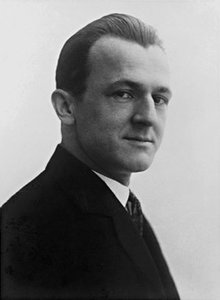
George Grosz
1893 - 1959, Germany
Quick facts about George Grosz
- Artistic Movement Or Style: Berlin Dada, New Objectivity
- Artists Who Influenced This Artist: ['Eduard von Grützner']
- Full Name: Georg Ehrenfried Groß
- Nationality: German
- Notable Artworks:
- Suicide
- The City
- The Pillars of Society
- Metropolis
- Place Of Birth: Berlin, Germany
- Date Of Birth: 1893
- Date Of Death: 1959
Artist Biography
The Life of George Grosz
Born Georg Ehrenfried Groß on July 26, 1893, in Berlin, Germany, the man who would become George Grosz entered a world of structured tradition. He was the third child born to a pub owner and a woman of devout Lutheran faith. His early years were shaped by the rhythms of a household tied to the service of others, yet a certain restless spirit seemed to stir within him from a young age. This defiance manifested clearly in 1908, when he was expelled from school for insubordination, a moment that signaled a temperament ill-suited for rigid conformity.
As he matured, his relationship with his homeland became increasingly fraught. In a deliberate act of protest against German nationalism, he altered the spelling of his name, adopting the more international George Grosz. This was more than a mere change of letters; it was a public declaration of his stance against the prevailing sentiments of the era. He would spend much of his life capturing the frantic, often decaying pulse of Berlin life through caricatural drawings and paintings, becoming a sharp observer of the 1920s. His gaze was never passive, and his work reflected a man deeply engaged with the shifting, often violent, social realities of his time.
Early Life and Artistic Training
The boy who would eventually dissect the soul of Berlin first learned the weight of loss in the Pomeranian town of Stolp, in the Free State of Prussia. His childhood was shaped by the quietude of this region until the year 1900, when his father’s death uprooted the family. Following this tragedy, he moved with his mother and sisters to the Wedding district of Berlin. This transition from the provincial air of Stolp to the dense, urban reality of Berlin would leave an indelible mark on his perception of society.
His hands found their purpose through the discipline of drawing. A local painter named Grot provided his first formal guidance, leading the young man to a weekly drawing class. It was here that the foundations of his technical skill were laid, not through the pursuit of abstract ideals, but through the rigorous imitation of others. He spent many hours producing meticulous copies of the drinking scenes rendered by Eduard von Grützner, learning to capture the textures of light and the nuances of human posture. Beyond these studies, his imagination sought out more chaotic subjects; he practiced his hand by sketching imaginary battle scenes, perhaps a precursor to the visceral intensity that would later define his vision of the world.
Political Engagement and Berlin Dada
The chaos of the November Revolution in 1918 pulled Grosz into the heart of Germany's political struggle. He found himself drawn to the Spartacist League, and by December of that same year, he had joined the Communist Party of Germany. This was a period of immense danger and movement; during the Spartakus uprising in January 1919, he was arrested, yet he managed to escape the authorities by using fake identification documents. His convictions were not merely theoretical, though they would eventually shift. After spending five months in the Soviet Union, he found himself disillusioned and chose to leave the KPD in 1922.
As the Weimar Republic struggled to find its footing, Grosz became a central figure in the Berlin Dada group. He did not merely participate in the movement; he used its rebellious spirit to fuel a fierce social critique. His art became a weapon against the corruption he witnessed in the streets of Berlin. He sought to expose the hypocrisy of the military and the bourgeoisie through a lens of sharp, often grotesque, satire. This period of his life was defined by a refusal to remain a passive observer of the societal decay surrounding him.
The New Objectivity Movement
As the fervor of the Dada movement began to settle, Grosz found himself gravitating toward the Neue Sachlichkeit, or New Objectivity. This was a period where his art shed the pure absurdity of his earlier years to embrace a more biting, unsentimental realism. He became a prominent figure within this group, using his brush and pen to strip away the illusions of the Weimar Republic. His work during these years was not interested in the ideal, but in the grit of a society teetering on the edge of chaos. This commitment to social critique was so visible that his art was even part of the painting event in the art competition at the 1928 Summer Olympics.
The intensity of his gaze did not go unnoticed by those seeking to reshape Germany. The National Socialists viewed his unflinching depictions of corruption and decay with deep hostility, eventually condemning his work as "degenerate art." This political friction followed him closely, marking him as a man of conviction in an era of rising extremism. Even as he faced such scrutiny, his personal stance remained clear; by 1942, Time magazine identified him as a pacifist, a label that spoke to the humanitarian core beneath his often grotesque caricatures.
- The Pillars of Society (1926)
- The Eclipse of the Sun (1926)
Exile and Life in America
The shadows of rising fascism in Germany eventually made his homeland untenable. In June 1932, Grosz accepted an invitation to teach the summer semester at the Art Students League of New York, a move that foreshadowed his permanent departure. By January 12, 1933, he and his family had emigrated to the United States, seeking refuge from the political turmoil that had defined his earlier years. He became a naturalized U.S. citizen in 1938, settling into a new life far from the streets of Berlin.
His years in America were marked by a steady presence in the New York art scene. He taught at the Art Students League intermittently until 1955, sharing his technical knowledge with a new generation of students. During this long period of exile, he resided in Bayside, New York, before moving to Huntington, New York, where he lived from about 1947 until his death in 1959. While his work underwent a transformation away from the aggressive political caricatures of his youth, his presence in the American landscape remained constant.
- Cain or Hitler in Hell (1944)
- Glad to Be Back (1943)
Technique and Artistic Style
His hand moved with a discipline born from years of meticulous study, having once spent his youth making careful copies of drinking scenes by Eduard von Grützner. This technical foundation allowed him to eventually shatter academic norms in favor of a much more aggressive visual language. He favored the use of oil on canvas to build his compositions, yet his spirit often sought the sharp, immediate impact of caricature. By employing exaggerated features and distorted perspectives, he forced his viewers to confront the moral decay he witnessed. He did not seek to replicate the world as it appeared to the eye, but rather as it felt to a man witnessing a society in collapse.
The artist’s toolkit was remarkably diverse, shifting as his circumstances changed. In his most biting years, he drew upon the fragmented energy of Cubism and the rapid, mechanical rhythms of Futurism to depict the chaos of urban life. He utilized collage and the expressive, jagged lines of an Expressionist style to strip away the veneer of respectability from the German bourgeoisie. Even as he moved through different movements, his work remained a weapon of social critique. In his later years, his focus drifted toward more subdued landscape watercolors, reflecting a shift in his internal landscape as he navigated life far from his native Berlin.
- Metropolis (1916–1917)
- The Pillars of Society (1926)
- Artist and Model (1928)
- Cain or Hitler in Hell (1944)
Key Works and Masterpieces
In the feverish atmosphere of the Great War, Grosz turned his gaze toward the chaotic pulse of the urban landscape. His 1916–1917 oil on canvas, Metropolis, captures this frantic energy through a red-dominated, apocalyptic vision of Berlin. He utilized the techniques of cubism and futurism, employing exaggerated perspectives and a superposition of figures to convey the rhythm of a city in turmoil. This same sense of urban chaos appears in The City, a work from 1917 that depicts a bustling cityscape filled with people engaged in their daily activities, reflecting the social commentary of the Weimar era.
As the political climate in Germany grew increasingly fractured, his brush became a tool for sharper social critique. By 1926, his work had taken on a more structured, biting quality, as seen in The Pillars of Society. This oil on canvas presents a dense, vertical landscape of satire, where mask-like faces and distorted features emerge to critique the power structures of the time. He continued this scrutiny into his later years, even as his subject matter shifted. In 1928, he produced Artist and Model, a piece that reflects the decadence and social unrest prevalent in Berlin during that decade.
Even after his departure from Germany, the shadows of his homeland continued to haunt his imagination. During his time in America, he revisited the figures of his past through a different lens. In 1944, he created Cain or Hitler in Hell, a work that utilized the visual allegory of Cain and Abel to cast German fascism in a stark, symbolic light.
Related Articles

Ephemeral Visions: Exploring the History & Emotional Resonance of Watercolor Painting
Explore the captivating history of watercolor painting, from ancient techniques to modern masters like Kandinsky & Blake. Discover essential artists, collecting tips & the emotional power of this luminous medium. Expert insights for art enthusiasts.

Mastering Cubism: The Top 25 Georges Braque Artworks
Explore 25 iconic Georges Braque masterpieces and the birth of Cubism. Discover museum-quality art on OriginalUniqueArt.com.

Georges Seurat's Masterpieces: 25 Paintings That Defined Pointillism | OriginalUniqueArt
Explore 25 iconic Georges Seurat paintings & discover the brilliance of Pointillism. From 'La Grande Jatte' to his harbor scenes, delve into art history with OriginalUniqueArt.com. Find museum-quality reproductions for your home decor. Explore the full collection online!

Watercolor Wonders: 10 Masterpieces That Redefined Art History | OriginalUniqueArt
Journey through 10 legendary watercolor masterpieces by Sargent, Turner & Homer! Explore iconic landscapes, portraits & floral art that redefined history. Find museum-quality reproductions and curated decor ideas at OriginalUniqueArt.com.
Explore artworks organized by themes, styles, and characteristics.


