

 Preview
 Send
Send Share
Share
 Details
 Guide
Guide

 Download
 Similars
 X-Ray
X-Ray Diaporama
 Stats
StatsLove and Death
 Acrylic On Canvas
- WallArt
- Symbolist Movement
 1901
1901- 19th Century
 116.0 x 235.0 cm
 Art Gallery of South Australia
 Read More
Giclée / Art Print
Museum-quality giclée or canvas print with fast production and flexible finish options. ( Buy Hand Made Painting Switch to Digital Image)




P118B $10

P118H $10

P118W $10

P438Z $10

P508JH $12

P508YH $12

P805H $10

P805Z $10

P919BZ $10

P919G $10

P919XJ $10

P959ZH $10

P968JZ $12

W106C $8

W218G $10

W218JH $8

W218Y $10

W307PJ $10

W316G $10

W316PJ $8

W316Y $10

W398PJ $8

W4111J $10

W500HY $15

W500JH $15

W692G $12

W849H $8

W940BG $15

W953PJ $8




Pick from our preset sizes that match the artwork's original proportions.

Type the width and the height you need, to fit your frame or your wall. A print can only be cut, never made bigger than the picture, so a size with a different shape loses a part of the image. We send you a digital mockup to approve before we print anything. The picture shown on this page does not show the real cut — only the mockup does.
Worldwide Delivery () in 2 weeks instead of standard 4/5 weeks. (23 October)

Free Worldwide Express Shipping

High-Quality Linen Canvas

Full Shipping Insurance

Customs Tax Refund Guarantee

True Color Matching Guarantee

100-Day Return Policy (Defects Only)

100% Money-Back Guarantee

Bulk Discount Offer
 Glass option is only available in size under 110 CM

Love and Death
Giclée / Art Print
Reproduction Size
-


Total Price
$ 81
A Dramatic Encounter Between Passion and Peril
George Frederic Watts’ “Love and Death” is not merely a painting; it is a visceral confrontation rendered in pigment, an enduring meditation on the volatile intersection of human emotion and mortality. The scene immediately arrests the viewer with its palpable tension. At the heart of the composition unfolds a dramatic tableau: a woman, clad in ethereal white, seems caught between embrace and struggle. Her long, flowing hair acts almost as a curtain around her plight, while the menacing presence of a man wielding a knife introduces an element of sharp, inescapable danger. Surrounding this central conflict are other figures—witnesses whose gazes seem to absorb the very drama unfolding before them. The atmosphere is thick with unspoken narratives, making the viewer complicit in the intensity.
Symbolism and Symbolist Echoes
As a key figure within the Symbolist movement, Watts imbued this work with layers of profound meaning that invite endless interpretation. The contrast between the purity suggested by the woman’s white gown and the sharp violence embodied by the knife speaks volumes about the fragility of life's most intense attachments. Love, in this depiction, is not a gentle caress but a force capable of inflicting deep wounds. Death, represented by the blade, looms as an inevitable counterpoint to passion. The surrounding figures often serve as allegorical elements—are they observers, participants, or perhaps embodiments of fate itself? Watts masterfully uses these symbols to elevate what might otherwise be a mere narrative moment into a universal statement about human experience.
Mastery in Technique and Composition
Examining the technique reveals the artist’s profound skill. The handling of light across the white dress contrasts sharply with the darker tones surrounding the conflict, drawing the eye inexorably toward the central drama. Watts employs a rich, dramatic palette characteristic of his period, allowing the emotional weight of the subject matter to take precedence over mere realism. The composition is dynamic; nothing rests in perfect repose. Every gesture—the man’s grip on the knife, the woman’s posture, the onlookers' stances—contributes to a swirling vortex of energy that keeps the eye moving across the canvas. This masterful arrangement ensures that even when contemplating its reproduction, one feels the original sweep and power of Watts’ brushwork.
A Timeless Emotional Resonance for Your Space
Bringing “Love and Death” into your home or gallery space is to invite a conversation piece of immense depth. It speaks to those who appreciate art that does not whisper but rather resonates with the full force of human feeling—the ecstasy, the terror, the inescapable pull between two opposing forces. For collectors and designers alike, this work offers dramatic focal power. A high-quality reproduction allows you to harness this potent emotional energy, transforming a room into a space charged with artistic contemplation. It is an heirloom piece that promises not just decoration, but deep, ongoing engagement with the sublime complexities of the human heart.
Questions & Answers
How much light do the colors of "Love and Death" appear to reflect?
"Love and Death" by George Frederic Watts has a dark luminance. Luminance describes how much light the colors appear to reflect.
What kind of colors does "Love and Death" use?
The colors of "Love and Death" form an earthy palette. This classification describes the dominant color families.
Where can I download "Love and Death" by George Frederic Watts?
A download is available for "Love and Death": the artwork's Download page offers a high-resolution digital image download.
Artist Biography
early life and education
george frederic watts, a prominent figure in the symbolist movement, was born on february 23, 1817, in marylebone, london. his early life was marked by delicate health and the loss of his mother at a young age. watts' father, a piano-maker, provided him with a conservative christian education and introduced him to the classics, including the iliad. this classical influence would later become a cornerstone of his artistic style.career
watts began his artistic journey at the age of 10, learning sculpture under william behnes. he later enrolled as a student at the royal academy schools at 18. his first exhibition at the academy in 1837 marked the beginning of his prolific career.- caractacus, a drawing submitted for a competition to design murals for the new houses of parliament, earned watts a first prize in 1843.
- his subsequent travels to italy (1843-1847) and his association with the british ambassador henry fox influenced his style, as seen in his portrait of lady holland, exhibited in 1848.
- watts' return to britain led to a commission for a fresco in the houses of parliament, which he completed between 1848 and 1853.
symbolist masterpieces
watts' most famous works include:- hope and love and life, intended as part of an epic symbolic cycle called the "house of life."
- the triumph of the red cross knight (from the faerie queene), completed in 1852-53, showcases his mastery of allegorical subjects.
- his portrait of actress ellen terry, painted in 1864, exemplifies his ability to capture the essence of his subjects.
legacy
watts' influence on the art world is undeniable. his association with the symbolist movement and his innovative use of color and form have made him a beloved figure in the history of british art. view george frederic watts' artworks on OriginalUniqueArt.commuseums featuring watts' work
- lincoln's inn, featuring his fresco justice, a hemicircle of lawgivers.
- the watts gallery – artists' village in guildford, united kingdom, dedicated to preserving watts' works and other artists.

George Frederic Watts
1817 - 1904 , United Kingdom
Quick Facts
- Full Name: George Frederic Watts
- Nationality: British
- Date Of Birth: 1817
- Date Of Death: 1904
- Place Of Birth: Marylebone, United Kingdom
- Notable Artworks:
- Hope
- Love and Life
- The Triumph of the Red Cross Knight
- Artistic Movement Or Style: Symbolist
- Artists Who Influenced This Artist:
- William Behnes
- Henry Fox
- Artists Or Movements Influenced By This Artist:
- Romanticism
- Pre-Raphaelites
Related Articles

George Frederic Watts: Symbolism, Spirituality & Victorian Ideal Beauty
Explore the captivating Symbolist art of George Frederic Watts. Discover his allegorical masterpieces, classical influences & spiritual themes. Learn about his legacy and find high-quality reproductions at OriginalUniqueArt.

George Goodwin Kilburne: Capturing Victorian Sentimentality Through Genre Painting
Explore the evocative Victorian paintings of George Goodwin Kilburne. Discover his detailed scenes of domestic life, masterful use of light, and lasting impact on British genre painting. Learn more at OriginalUniqueArt.

Georges Braque's Masterpieces: 25 Paintings That Defined Cubism & Modern Art | OriginalUniqueArt
Explore 25 iconic Georges Braque paintings that revolutionized Cubism & modern art. Discover the stories behind his masterpieces, from Fauvism to Analytical Cubism. Find museum-quality reproductions & elevate your home decor with OriginalUniqueArt.com.

Georges Seurat's Masterpieces: 25 Paintings That Defined Pointillism | OriginalUniqueArt
Explore 25 iconic Georges Seurat paintings & discover the brilliance of Pointillism. From 'La Grande Jatte' to his harbor scenes, delve into art history with OriginalUniqueArt.com. Find museum-quality reproductions for your home decor. Explore the full collection online!
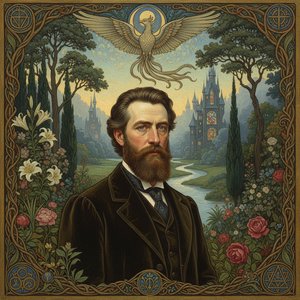
Frederick Waters Watts: A Victorian Vision of Aestheticism & Spiritual Symbolism
Explore the captivating world of Frederick Watts, a key Victorian painter blending aestheticism & spiritual symbolism. Discover his allegorical masterpieces like 'Hope' and delve into his artistic journey with OriginalUniqueArt.


