Menu
Text size

() ·

A painting made for you, by hand

C. Parson, RA

Hand Made Oil Reproduction

Hand-painted oil on canvas in your size and frame, made to order by our artists. ( Switch to Print Switch to Digital Image)

Collectible Description

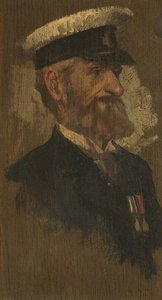
Portrait of C. Parson by George Edmund Butler (1920). Explore this evocative oil painting featuring a mature man in a realistic style, notable for its textured brushwork and earthy tones.

Artist Biography

George Edmund Butler (1872-1936): British painter of landscapes & portraits, renowned as an official WWI NZEF war artist. Explore his evocative oils & watercolours.

from ·

Chapter 1

How large should it be?

Slide to change the size; the picture on the left shows the frame at its real width. The proportions of the original are kept.

Standard
custom
CM
INCH

Pick from our preset sizes that match the artwork's original proportions.

width
height

Type the width and the height you need, to fit your frame or your wall. This is hand-painted, so for a size with a different shape the artist can paint a bit more around the picture, or cut a bit — you choose. We send you a digital mockup to approve before the painting starts. The picture shown on this page does not show the real result — only the mockup does.

Chapter 2

How should it arrive?

Choose the edges of the stretched canvas

Choose your frame

Corner sample of the WhiteWrap canvas edge finish, stretched on solid wood bars
White $1
Corner sample of the BlurSideWrap canvas edge finish, stretched on solid wood bars
Blurside $1
Corner sample of the ExtendedWrap canvas edge finish, stretched on solid wood bars
Extended $1
Corner sample of the P118B picture frame: moulded polystyrene, 5 cm wide and 3 cm thick
P118B $10
Corner sample of the P118H picture frame: moulded polystyrene, 5 cm wide and 3 cm thick
P118H $10
Corner sample of the P118W picture frame: moulded polystyrene, 5 cm wide and 3 cm thick
P118W $10
Corner sample of the P438Z picture frame: moulded polystyrene, 5.5 cm wide and 3.5 cm thick
P438Z $10
Corner sample of the P508JH picture frame: moulded polystyrene, 7 cm wide and 3.5 cm thick
P508JH $12
Corner sample of the P508YH picture frame: moulded polystyrene, 7 cm wide and 3.5 cm thick
P508YH $12
Corner sample of the P805H picture frame: moulded polystyrene, 5 cm wide and 3.5 cm thick
P805H $10
Corner sample of the P805Z picture frame: moulded polystyrene, 5 cm wide and 3.5 cm thick
P805Z $10
Corner sample of the P919BZ picture frame: moulded polystyrene, 7 cm wide and 3.5 cm thick
P919BZ $10
Corner sample of the P919G picture frame: moulded polystyrene, 7 cm wide and 3.5 cm thick
P919G $10
Corner sample of the P919XJ picture frame: moulded polystyrene, 7 cm wide and 3.5 cm thick
P919XJ $10
Corner sample of the P959ZH picture frame: moulded polystyrene, 5 cm wide and 3 cm thick
P959ZH $10
Corner sample of the P968JZ picture frame: moulded polystyrene, 6 cm wide and 4 cm thick
P968JZ $12
Corner sample of the W106C picture frame: solid wood, 5 cm wide and 3 cm thick
W106C $8
Corner sample of the W218G picture frame: solid wood, 5 cm wide and 3 cm thick
W218G $10
Corner sample of the W218JH picture frame: solid wood, 5 cm wide and 3 cm thick
W218JH $8
Corner sample of the W218Y picture frame: solid wood, 5 cm wide and 3 cm thick
W218Y $10
Corner sample of the W307PJ picture frame: solid wood, 6 cm wide and 3 cm thick
W307PJ $10
Corner sample of the W316G picture frame: solid wood, 6 cm wide and 3 cm thick
W316G $10
Corner sample of the W316PJ picture frame: solid wood, 6 cm wide and 3 cm thick
W316PJ $8
Corner sample of the W316Y picture frame: solid wood, 6 cm wide and 3 cm thick
W316Y $10
Corner sample of the W398PJ picture frame: solid wood, 5 cm wide and 3 cm thick
W398PJ $8
Corner sample of the W4111J picture frame: solid wood, 6.5 cm wide and 3.5 cm thick
W4111J $10
Corner sample of the W500HY picture frame: solid wood, 7 cm wide and 5 cm thick
W500HY $15
Corner sample of the W500JH picture frame: solid wood, 7 cm wide and 5 cm thick
W500JH $15
Corner sample of the W692G picture frame: solid wood, 8 cm wide and 4 cm thick
W692G $12
Corner sample of the W849H picture frame: solid wood, 5 cm wide and 3 cm thick
W849H $8
Corner sample of the W940BG picture frame: solid wood, 7.5 cm wide and 4.5 cm thick
W940BG $15
Corner sample of the W953PJ picture frame: solid wood, 6 cm wide and 3.5 cm thick
W953PJ $8
Corner sample of the H24-GOLD picture frame: carved wood with gesso, 10 cm wide and 6 cm thick
H24-GOLD $30
Corner sample of the H24-SILVER picture frame: carved wood with gesso, 10 cm wide and 6 cm thick
H24-SILVER $30
Corner sample of the H36-GOLD picture frame: carved wood with gesso, 15 cm wide and 6.5 cm thick
H36-GOLD $45
Corner sample of the H36-SILVER picture frame: carved wood with gesso, 15 cm wide and 6.5 cm thick
H36-SILVER $45
Frame preview
Framed

Moulding: . Overall size with the frame: .

Chapter 3

Who paints it, and should anything change?

Examples of what can be changed: Replace face with customer photo; Add pet (e.g., replace cat with dog); Include hidden message in background; Change background landscape or elements.
After order, OriginalUniqueArt.com team will email client for instructions and provide a mockup preview

Worldwide Delivery () in 3/4 weeks instead of standard 5 weeks. (29 October). No compromise on quality.

Chapter 4

The finishing touches

A nameplate, as in a museum?

Engraved Bronze Plaque Details

This elegant plaque features the artist's name and the title of the artwork, finely engraved for a timeless presentation.

It is made from bronze with a refined, elegant finish. The text is precisely laser-engraved for a sharp and permanent result. Measuring 9x2 cm, the plaque is compact yet easy to read. It's built to be durable and scratch-resistant, offering a professional, museum-quality look. Mounting is simple thanks to the included adhesive backing.

Transparent Acrylic Plaque Details

The plaque includes essential engraved details such as the artist's name, the title of the artwork, the date it was created, the type of media used-like oil on canvas or watercolor-a brief description of the piece, and a QR code that links to the complete artwork information.

It is crafted from clear acrylic, offering a sleek, modern appearance. The text is UV-engraved in black to ensure strong visual contrast. With a size of 10x15 cm, it ensures optimal readability. It comes equipped with two metal hooks for secure wall mounting. The plaque is designed to be weather-resistant, making it suitable for various environments, and it includes interactive features that work seamlessly with smartphone scanning.

Black Acrylic Plaque Details

This elegant plaque includes engraved information such as the artist's name, the title of the artwork, the date it was created, the type of media used (like oil on canvas or watercolor), a short description of the artwork, and a QR code for quick access to more information.

The plaque itself is made from refined black acrylic with a premium finish. The text is laser-engraved in white for high contrast and readability. Its size is 10x15 cm, designed to be easy to read. It comes with two metal hooks for professional mounting. The design is sleek and fits any interior style. It is also weather-resistant and durable, with built-in digital integration for mobile compatibility.

A protective varnish?

When do you need it?

Chapter 5

Your painting, as you ordered it

C. Parson, RA

Reproduction Medium

Reproduction Size

-

Elite Senior Artist

More detail, finesse, and extra production time

-

Reproduction Frame

-

-

For artworks or reproductions larger than 105 cm (approximately 41 inches) on any side, the frame will be shipped as a kit, disassembled. This method ensures safe delivery and prevents damage during transport.

Professional assembly required - this is not a DIY product.
The kit must be assembled and the canvas stretched by an experienced professional framer, using wood glue (not supplied), a canvas stretching plier and clamps to hold the bars square while the glue dries. Incorrect assembly or uneven canvas tension can permanently damage the artwork and is not covered by our warranty.

  • All solid wood bars are included, precisely cut to size.

  • Assembled with the screws provided, plus wood glue for the corner joints, which is not supplied and must be sourced by your framer.

  • Professional tools are required and not included: a canvas stretching plier (tensioner) and clamps to hold the bars square while the glue dries.

Important:
The corner joints require wood glue, the bars must be held with clamps until the glue is fully dry, and tightening the canvas on the assembled frame requires a canvas stretching plier. None of these are included in the kit. Please arrange an experienced professional framer before ordering this size.

Nameplate

-

-

Protective Varnish

Glossy Varnish (enhances colors, protects against light/moisture)

-

Customize My Artwork

Examples of what can be changed: Replace face with customer photo; Add pet (e.g., replace cat with dog); Include hidden message in background; Change background landscape or elements.

-

Urgent

Worldwide Delivery () in 3/4 weeks instead of standard 5 weeks. (29 October). No compromise on quality.

-

Express Shipping

Worldwide Delivery () in 5 weeks. (5 November).

Included

Total Price

$ 300

Total Price $ 300

Glass option is only available in size under 110 CM

Included with every order

  • Free Worldwide Express Shipping
  • High-Quality Linen Canvas
  • Full Shipping Insurance
  • Customs Tax Refund Guarantee
  • True Color Matching Guarantee
  • 100-Day Return Policy (Defects Only)
  • 100% Money-Back Guarantee
  • Bulk Discount Offer

A Window into a Victorian Soul: Unpacking George Edmund Butler's "C. Parson, RA"

George Edmund Butler’s 1920 oil painting, “C. Parson, RA,” isn’t merely a portrait; it’s a carefully constructed tableau of Victorian identity and the quiet dignity of age. The canvas presents us with a mature gentleman in profile, his face etched with the subtle narratives of experience – lines around his eyes hinting at laughter and contemplation, a slight furrow above his brow suggesting a thoughtful disposition. Butler masterfully captures this essence not through dramatic gesture or flamboyant expression, but through an astute observation of light, shadow, and the nuanced details of the subject’s appearance. The painting immediately draws you in with its restrained palette – predominantly earthy browns, ochres, and greys—a deliberate choice that evokes a sense of solidity and timelessness, mirroring the man himself.

The work was created during a period of significant transition for Britain, following the upheavals of the late Victorian era and the dawn of the 20th century. Butler’s decision to focus on a portrait of C. Parson speaks volumes about the values of the time – an appreciation for established social standing, respect for tradition, and a fascination with capturing the individual within the broader context of society. The inclusion of “RA” after Parson's name signifies his Royal Academician status, further emphasizing his position within the British elite.

A Study in Light and Texture: Butler’s Technique

Butler’s technique is characterized by a remarkable sensitivity to texture and light. He employs loose, visible brushstrokes that create a palpable sense of materiality – you can almost feel the weave of the fabric, the roughness of the tweed jacket, and the subtle sheen of the skin. The artist doesn't strive for photographic realism; instead, he uses paint as a means of conveying mood and character. Notice how the light catches on the folds of his clothing, creating areas of highlight and shadow that sculpt the face and add depth to the composition. The layering of glazes builds up rich tones and subtle gradations, contributing to the painting’s overall luminosity.

The artist's use of color is particularly noteworthy. He avoids bright, saturated hues, opting for a muted palette that reinforces the sense of age and gravitas. The browns and greys are not simply neutral; they are carefully modulated to create a complex interplay of warmth and coolness, adding visual interest and subtly suggesting the subject’s personality.

Symbolism and Victorian Values

Beyond its technical merits, “C. Parson, RA” is rich in symbolic meaning. The man's attire—a dark tweed jacket, a waistcoat, and a formal hat—are hallmarks of Victorian gentlemanly style, signifying respectability, status, and adherence to social conventions. The slightly turned-down collar and the careful arrangement of his hair further reinforce this impression. His gaze, though averted, suggests a quiet self-awareness and perhaps a hint of melancholy – a common theme in portraits of older men who have witnessed significant changes throughout their lives.

Furthermore, the painting can be interpreted as an exploration of masculinity within the Victorian context. The subject embodies a stoic ideal of strength and resilience, projecting an image of quiet authority and unwavering integrity. The portrait serves as a visual testament to the values that were held dear during this era – duty, honor, and a commitment to upholding tradition.

A Timeless Portrait: Reproduction and Beyond

Reproductions of “C. Parson, RA” offer a compelling opportunity to bring this evocative portrait into your home or office. The painting’s rich textures and subtle nuances are beautifully captured in high-quality prints, allowing you to appreciate Butler's masterful technique and the subject's quiet dignity. Whether displayed as a statement piece in a study or incorporated into a more eclectic interior design scheme, this portrait is sure to spark conversation and evoke a sense of nostalgia for a bygone era. Consider framing it in a classic style to further enhance its Victorian charm.

Questions & Answers

When was "C. Parson, RA" made?

"C. Parson, RA" dates from 1920. The date places the work within George Edmund Butler's career and its era.

How is the color composition of "C. Parson, RA" by George Edmund Butler built?

The color composition of "C. Parson, RA" by George Edmund Butler combines a serene contrast with a unified palette harmony.

Who created "C. Parson, RA" and what style is it in?

"C. Parson, RA" was created by George Edmund Butler in the Contemporary Realism style. Artist and movement identify the work's tradition.

More about this painting

Preview AR preview Switch to Print Switch to Digital Image Send
Details Guide Add to favorites Download Similars X-Ray Diaporama Q&A Stats

In numbers

  • 1920the year it was painted
  • 29frames to choose from
  • standard sizes, in its own proportions
  • 5weeks to paint and deliver it
George Edmund Butler

George Edmund Butler

1872 - 1936, United Kingdom

Quick facts about George Edmund Butler

  • Full Name: George Edmund Butler
  • Nationality: British
  • Date Of Birth: 1872
  • Date Of Death: 1936
  • Place Of Birth: Southampton, United Kingdom
  • Notable Artworks:
    • G. Sandford, 28th
    • R. Germain, 4th
    • J. Price, 28th
  • Artistic Movement Or Style: Landscape & Portraiture
  • Artists Who Influenced This Artist: ['James Nairn']

Artist Biography

A Life Bridging Continents: The Artistic Journey of George Edmund Butler

George Edmund Butler, a name perhaps less instantly recognizable than some of his contemporaries, nevertheless occupies a significant place in the landscape of early 20th-century British and New Zealand art. Born in Southampton, England, in 1872, Butler’s life was one of constant movement and artistic exploration, ultimately culminating in a poignant role as an official war artist documenting the experiences of his adopted homeland, New Zealand, during the tumultuous years of World War I. His story is not merely that of a painter; it's a narrative woven with threads of emigration, rigorous academic training, professional ambition, and a deep sense of patriotic duty. The family’s relocation to Wellington, New Zealand, in 1883, when Butler was eleven, proved formative, instilling within him a connection to the burgeoning artistic community of his new home while simultaneously setting the stage for a lifelong dialogue between European tradition and the unique light and landscapes of the Southern Hemisphere. Early studies under James Nairn at the Wellington School of Design provided a crucial foundation, nurturing a talent that quickly became apparent in his seascapes – works that captured the raw beauty and often unforgiving nature of the New Zealand coastline.

From European Academies to Artistic Recognition

Driven by an ambition to hone his skills and immerse himself in the heart of artistic innovation, Butler embarked on a period of intensive study in Europe between 1898 and 1900. This wasn’t a casual foray; it was a deliberate pursuit of mastery. He married Sarah Jane Popplestone in England before dedicating himself to rigorous training at the Lambeth School of Art, followed by the prestigious Académie Julian in Paris – where he earned honors – and finally, the Antwerp Academy, achieving the remarkable distinction of winning both a gold medal and laurel wreath. These institutions weren’t simply places of instruction; they were crucibles where Butler absorbed the prevailing artistic currents, refined his technique, and developed a sophisticated understanding of composition, color theory, and form. Upon returning to New Zealand in 1900, he exhibited his work before settling in Dunedin from 1901-1905. Despite critical acclaim, financial pressures led him to supplement his income through teaching and portrait commissions – a common struggle for artists striving to establish themselves. This period, however, was crucial in solidifying his reputation and demonstrating his versatility. In 1905, Butler made the pivotal decision to return to England, settling in Bristol where he took a position teaching art at Clifton College. It was here that his talent truly began to flourish, leading to his election into the Royal West of England Academy in 1912 – a testament to his growing stature within the British art world. His work also gained recognition at the Royal Academy of Arts and the Royal Scottish Academy, solidifying his position as a respected landscape and portrait painter.

Bearing Witness: Butler as Official War Artist

The outbreak of World War I dramatically altered the course of Butler’s career, presenting him with an opportunity to combine his artistic skill with a profound sense of national duty. His New Zealand connections and established reputation led to his appointment as an official war artist for the New Zealand Expeditionary Force (NZEF) in September 1918, holding the honorary rank of captain. This wasn’t merely about creating aesthetically pleasing depictions of battlefields; it was about documenting the realities of war – the courage, the suffering, and the sheer human cost of conflict. Butler meticulously sketched military operations, often working under incredibly challenging conditions, sometimes even while under fire. These sketches served as the foundation for larger paintings created after his return from active service. Following the armistice, he received private commissions from Robert Heaton Rhodes and Major General Sir Andrew Hamilton Russell to create a series of portraits of senior officers and evocative landscapes depicting New Zealand battlefield sites along the Western Front. The significance of these works was immediately recognized; the New Zealand government subsequently purchased them for preservation in national archives, ensuring that Butler’s visual record would endure as a powerful testament to the sacrifices made by New Zealand soldiers.

A Lasting Legacy: Art and Remembrance

George Edmund Butler never returned to New Zealand after the war. He remarried following the death of his first wife and continued painting in England until his death in Twickenham in 1936. While he may not be a household name, his contribution to both British and New Zealand art history is undeniable. His paintings and sketches offer invaluable insights into the landscapes, personalities, and events of World War I, providing a visual record that complements written accounts and personal testimonies. His work transcends mere documentation; it’s an emotional response to conflict, imbued with a sense of empathy and respect for those who served. The portraits he created are not simply likenesses; they capture the weight of responsibility and the quiet dignity of leadership during wartime. The landscapes, too, are more than just topographical representations; they evoke the atmosphere of loss and resilience that permeated the battlefields of Europe. Butler’s legacy lies in his ability to bridge continents and experiences, creating art that speaks to universal themes of courage, sacrifice, and the enduring power of the human spirit. His work continues to be studied and appreciated today, serving as a poignant reminder of a pivotal moment in history and the artists who bore witness to it.

Exploring Butler’s Oeuvre

Today, examples of George Edmund Butler's artistry can be found in museum collections and private holdings around the world. Works such as “G. Sandford, 28th” (1920) and “R. Germain, 4th” (1920), both housed at the Bristol Museum, showcase his mastery of portraiture, characterized by a keen eye for detail and a subtle understanding of character. “J. Price, 28th”, another striking example from this period, demonstrates his ability to capture personality through impasto technique and nuanced brushwork. These portraits are not merely representations of individuals; they are windows into the lives and experiences of those who lived through a transformative era.
  • Butler’s landscapes often feature dramatic skies and evocative lighting, creating a sense of atmosphere and mood.
  • His war sketches, though often small in scale, possess a remarkable immediacy and emotional impact.
  • Throughout his career, Butler demonstrated a versatility that allowed him to work effectively in both oils and watercolours.
Exploring his oeuvre reveals an artist deeply committed to capturing the beauty and complexity of the world around him – a commitment that continues to resonate with audiences today.

Quick Facts

  • Movement: Early 20th Century
  • Influences:
    • British art
    • New Zealand
  • Dimensions: 23 x 13 cm
  • Subject or theme: Portraiture
  • Year: 1920