Preview
 Send
Send Share
Share
 Details
 Guide
Guide

 Download
 Similars
 X-Ray
X-Ray Diaporama
 Stats
StatsCreamer


 Read More
Giclée / Art Print
Museum-quality giclée or canvas print with fast production and flexible finish options. ( Buy Hand Made Painting Switch to Digital Image)




P118B $10

P118H $10

P118W $10

P438Z $10

P508JH $12

P508YH $12

P805H $10

P805Z $10

P919BZ $10

P919G $10

P919XJ $10

P959ZH $10

P968JZ $12

W106C $8

W218G $10

W218JH $8

W218Y $10

W307PJ $10

W316G $10

W316PJ $8

W316Y $10

W398PJ $8

W4111J $10

W500HY $15

W500JH $15

W692G $12

W849H $8

W940BG $15

W953PJ $8




Pick from our preset sizes that match the artwork's original proportions.

Type the width and the height you need, to fit your frame or your wall. A print can only be cut, never made bigger than the picture, so a size with a different shape loses a part of the image. We send you a digital mockup to approve before we print anything. The picture shown on this page does not show the real cut — only the mockup does.
Worldwide Delivery () in 2 weeks instead of standard 4/5 weeks. (23 October)

Free Worldwide Express Shipping

High-Quality Linen Canvas

Full Shipping Insurance

Customs Tax Refund Guarantee

True Color Matching Guarantee

100-Day Return Policy (Defects Only)

100% Money-Back Guarantee

Bulk Discount Offer
 Glass option is only available in size under 110 CM

Creamer
Giclée / Art Print
Reproduction Size
-


Total Price
$ 81
George Edgar Ohr’s ‘Creamer’: A Singular Embrace of Texture and Color
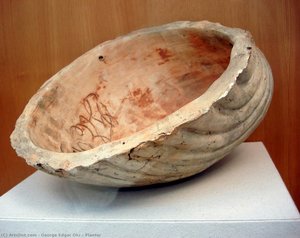
The photograph captures George Edgar Ohr’s “Creamer,” a ceramic pitcher that transcends mere utilitarian function to become an emblem of artistic rebellion against the conventions of his era. Shot with meticulous detail, it presents a stark white backdrop that amplifies the vessel's inherent qualities – its undulating surface, rich glaze hues, and palpable sense of handmade artistry. Ohr’s approach wasn’t simply about crafting a container; it was about interrogating the very nature of form and materiality, establishing him as a pioneer of abstract expressionism within the ceramic realm.A Visionary Departure from Tradition
Born in Biloxi, Mississippi, in 1857, Ohr defied the prevailing artistic trends of Victorian America with an unwavering conviction in his own creative vision. Influenced by Impressionist painters like Monet and Sisley, he nonetheless rejected their focus on meticulous realism, opting instead for a radically different aesthetic path. This decision stemmed from a profound connection to the Mississippi Delta landscape – specifically, the abundant clay deposits that fueled his artistic endeavors. Ohr believed that ceramic art should prioritize texture and color above all else, liberating it from the constraints of representational accuracy. He famously declared, “I don’t want to make things like other men,” cementing his reputation as ‘The Mad Potter.’Decoding the Glaze: Texture and Color as Expression
The photograph reveals Ohr's masterful manipulation of glaze – a technique he honed throughout his prolific career. The creamer’s surface is adorned with mottled shades of blue, brown, green, and grey, resulting in an effect akin to molten metal. These colors aren’t applied uniformly; rather, they swirl and blend organically across the ceramic body, creating a mesmerizing textural interplay. Close examination reveals subtle variations in glaze thickness, hinting at Ohr's deliberate experimentation and intuitive understanding of material properties. This technique wasn’t merely decorative; it served as a conduit for conveying emotion—a reflection of the artist’s inner landscape translated into tangible form.Symbolism Beyond Functionality
“Creamer” embodies more than just its practical purpose; it speaks to themes of spontaneity and liberation. Ohr's rejection of academic conventions mirrored his broader belief in artistic freedom, mirroring a movement that sought to break free from established norms. The vessel’s asymmetrical shape contributes to its visual dynamism, emphasizing the artist’s disregard for symmetry—a deliberate defiance of traditional compositional principles. Furthermore, the muted color palette evokes feelings of tranquility and understated elegance, inviting contemplation alongside appreciation for Ohr's exceptional craftsmanship.A Legacy of Innovation
George Edgar Ohr’s “Creamer” stands as a testament to his enduring legacy – a singular achievement that continues to inspire artists and collectors alike. Its reproduction offers an opportunity to experience the profound impact of Ohr’s groundbreaking vision, capturing not only the beauty of form and color but also the spirit of artistic rebellion. Explore this captivating piece at the Ohr–O'Keefe Museum of Art in Biloxi, Mississippi, where you can immerse yourself in the world of Ohr’s extraordinary oeuvre.Questions & Answers
Which period of George Edgar Ohr's career does "Creamer" belong to?
"Creamer" represents the Mature Period of George Edgar Ohr.
Where is the portrait format of "Creamer" recommended to be displayed?
Format (portrait) and recommended space (living room) are the two placement facts recorded for "Creamer" by George Edgar Ohr.
Is there a factsheet about "Creamer" by George Edgar Ohr for students?
The Guide page of "Creamer" by George Edgar Ohr offers a printable two-sheet factsheet: the artwork with its identity table, a decade band placing it in the artist's lifetime, other works by the artist, the measured color palette, and ready-to-copy citations in four styles.
Artist Biography
The Singular Vision of George Edgar Ohr: The Mad Potter of Biloxi
George Edgar Ohr, a name synonymous with innovation and eccentricity in the world of American ceramics, was born on July 12, 1857, in the coastal city of Biloxi, Mississippi. His parents, German immigrants seeking new opportunities, instilled in him a strong work ethic and perhaps a touch of the Old World’s artistic sensibility. However, it was the unique environment of Biloxi – a melting pot of cultures and a source of readily available clay – that truly nurtured his burgeoning talent. Ohr wasn't simply a potter; he was an explorer of form, texture, and glaze, relentlessly pushing the boundaries of what ceramic art could be. He embraced the moniker “Mad Potter of Biloxi,” not as a dismissal, but as a proud declaration of his unconventional approach and unwavering dedication to artistic freedom.
Early Influences and Artistic Awakening
Ohr’s journey into ceramics began somewhat serendipitously. After a restless youth spent trying various trades in New Orleans, he found himself apprenticed to Joseph Fortune Meyer, a potter with connections to the burgeoning Arts & Crafts movement. This apprenticeship provided Ohr with a solid foundation in traditional techniques, but it was his subsequent travels – a sixteen-state tour of American potteries – that ignited his creative spark. He absorbed diverse methods and styles, yet he wasn’t content to merely replicate; he sought to transcend convention. He returned to Biloxi determined to forge his own path, establishing his “Biloxi Art and Novelty Pottery” where he could fully realize his artistic vision. The clay from the nearby Tchoutacabouffa River became his medium, and his hands, his instruments of transformation.
A Revolution in Clay: Technique and Innovation
Ohr’s work stands apart due to its radical departure from prevailing ceramic norms. While many potters focused on functionality and symmetrical forms, Ohr embraced asymmetry, distortion, and a deliberate rejection of perfection. He pioneered techniques like twisting, crumpling, folding, and stretching the clay while still wet, creating vessels that seemed to defy gravity and challenge expectations. His glazes were equally experimental – vibrant, unpredictable, and often resembling molten metal or iridescent jewels. He wasn’t interested in simply decorating pottery; he was sculpting with color and light. He thinned his walls to an almost impossible degree, achieving a delicacy rarely seen in ceramics. This daring approach, combined with his unique glazes, resulted in pieces that were both visually stunning and structurally audacious. His work foreshadowed the abstract expressionist movement decades before it fully emerged, demonstrating a willingness to prioritize form and emotion over representational accuracy.
Years of Isolation and Rediscovery
Despite his innovative spirit, Ohr struggled for recognition during his lifetime. The public wasn’t always ready for his radical designs, and he often found himself at odds with prevailing tastes. Frustrated by the lack of appreciation and unwilling to compromise his artistic integrity, he ceased production around 1910, meticulously packing away thousands of pieces in his studio. He requested that his family leave the collection untouched for fifty years after his death, believing that future generations would be more receptive to his work. Sadly, Ohr passed away on April 7, 1918, during the influenza pandemic, largely unknown outside of Biloxi. It wasn’t until the late 1960s and early 1970s that his genius was finally recognized. James Carpenter, an antiques dealer, discovered the hidden trove of pottery and began to champion Ohr's work, introducing it to a wider audience. The rediscovery sparked a renewed interest in American ceramics and cemented Ohr’s place as a visionary artist.
Legacy and Enduring Influence
Today, George Edgar Ohr is celebrated as one of the most important figures in American ceramic history. His pioneering spirit continues to inspire artists around the world. His work can be found in major museums, including the Smithsonian Institution and the Metropolitan Museum of Art, and a dedicated museum – the Ohr–O'Keefe Museum of Art in Biloxi – stands as a testament to his enduring legacy.
- Ohr’s influence extends beyond ceramics.
- His willingness to challenge conventions resonates with artists across disciplines.
- He demonstrated that true artistic expression requires courage, independence, and an unwavering commitment to one's vision.

George Edgar Ohr
1857 - 1918 , United States of America
Quick Facts
- Full Name: George Edgar Ohr
- Nationality: American
- Date Of Birth: 1857
- Date Of Death: 1918
- Place Of Birth: Biloxi, United States of America
- Notable Artworks:
- Mug
- Teapot
- Bowl
- Creamer
- Artistic Movement Or Style: Abstract Expressionism
- Artists Who Influenced This Artist: ['Joseph Meyer']
- Artists Or Movements Influenced By This Artist: ['American Ceramics']
Related Articles
The Art of Ceramics: A Guide to Mastery, Texture, and Timeless Form for the Discerning Collector
Explore the profound elegance of ceramic art. From master glazes to sculptural forms, our expert guide offers discerning collectors deep insights into the mastery, texture, and timeless value of fine ceramics for sophisticated collections and luxury interiors.

Georges Braque's Masterpieces: 25 Paintings That Defined Cubism & Modern Art | OriginalUniqueArt
Explore 25 iconic Georges Braque paintings that revolutionized Cubism & modern art. Discover the stories behind his masterpieces, from Fauvism to Analytical Cubism. Find museum-quality reproductions & elevate your home decor with OriginalUniqueArt.com.

Abstract Expressionism's 10 Defining Masterpieces |
Explore 10 defining Abstract Expressionism masterpieces by Pollock, Rothko & de Kooning. Discover the stories behind these iconic paintings and find museum-quality art reproductions to elevate your home decor on .

The Alchemy of Clay: A Collector's Guide to the Mastery, Texture, and Timeless Form of Ceramic Art
Discover the profound beauty of ceramic art. Our expert guide explores the alchemy of clay, texture, and glaze, offering collectors deep insights into mastering earth and fire to create timeless, sculptural masterpieces for any curated collection.

Georges Seurat's Masterpieces: 25 Paintings That Defined Pointillism | OriginalUniqueArt
Explore 25 iconic Georges Seurat paintings & discover the brilliance of Pointillism. From 'La Grande Jatte' to his harbor scenes, delve into art history with OriginalUniqueArt.com. Find museum-quality reproductions for your home decor. Explore the full collection online!