Menu

() ·

A painting made for you, by hand

Roses

Hand Made Oil Reproduction

Hand-painted oil on canvas in your size and frame, made to order by our artists. ( Switch to Print Switch to Digital Image)

Collectible Description

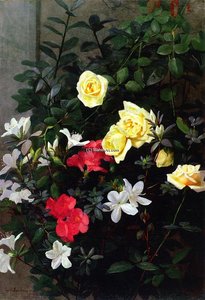
Vibrant pink and yellow roses bloom in this luminous Romantic oil painting by Victorian master George Cochran Lambdin, offering a timeless glimpse into floral beauty that you can bring to your own collection.

Artist Biography

George Cochran Lambdin (1830-1896) was an American Victorian artist renowned for his flower paintings, especially roses. He also created Civil War genre scenes & domestic life depictions. His work was widely reproduced as chromolithographs.

from ·

Chapter 1

How large should it be?

Slide to change the size; the picture on the left shows the frame at its real width. The proportions of the original are kept.

Standard
custom
CM
INCH

Pick from our preset sizes that match the artwork's original proportions.

width
height

Type the width and the height you need, to fit your frame or your wall. This is hand-painted, so for a size with a different shape the artist can paint a bit more around the picture, or cut a bit — you choose. We send you a digital mockup to approve before the painting starts. The picture shown on this page does not show the real result — only the mockup does.

Chapter 2

How should it arrive?

Choose the edges of the stretched canvas

Choose your frame

Corner sample of the WhiteWrap canvas edge finish, stretched on solid wood bars
White $1
Corner sample of the BlurSideWrap canvas edge finish, stretched on solid wood bars
Blurside $1
Corner sample of the ExtendedWrap canvas edge finish, stretched on solid wood bars
Extended $1
Corner sample of the P118B picture frame: moulded polystyrene, 5 cm wide and 3 cm thick
P118B $10
Corner sample of the P118H picture frame: moulded polystyrene, 5 cm wide and 3 cm thick
P118H $10
Corner sample of the P118W picture frame: moulded polystyrene, 5 cm wide and 3 cm thick
P118W $10
Corner sample of the P438Z picture frame: moulded polystyrene, 5.5 cm wide and 3.5 cm thick
P438Z $10
Corner sample of the P508JH picture frame: moulded polystyrene, 7 cm wide and 3.5 cm thick
P508JH $12
Corner sample of the P508YH picture frame: moulded polystyrene, 7 cm wide and 3.5 cm thick
P508YH $12
Corner sample of the P805H picture frame: moulded polystyrene, 5 cm wide and 3.5 cm thick
P805H $10
Corner sample of the P805Z picture frame: moulded polystyrene, 5 cm wide and 3.5 cm thick
P805Z $10
Corner sample of the P919BZ picture frame: moulded polystyrene, 7 cm wide and 3.5 cm thick
P919BZ $10
Corner sample of the P919G picture frame: moulded polystyrene, 7 cm wide and 3.5 cm thick
P919G $10
Corner sample of the P919XJ picture frame: moulded polystyrene, 7 cm wide and 3.5 cm thick
P919XJ $10
Corner sample of the P959ZH picture frame: moulded polystyrene, 5 cm wide and 3 cm thick
P959ZH $10
Corner sample of the P968JZ picture frame: moulded polystyrene, 6 cm wide and 4 cm thick
P968JZ $12
Corner sample of the W106C picture frame: solid wood, 5 cm wide and 3 cm thick
W106C $8
Corner sample of the W218G picture frame: solid wood, 5 cm wide and 3 cm thick
W218G $10
Corner sample of the W218JH picture frame: solid wood, 5 cm wide and 3 cm thick
W218JH $8
Corner sample of the W218Y picture frame: solid wood, 5 cm wide and 3 cm thick
W218Y $10
Corner sample of the W307PJ picture frame: solid wood, 6 cm wide and 3 cm thick
W307PJ $10
Corner sample of the W316G picture frame: solid wood, 6 cm wide and 3 cm thick
W316G $10
Corner sample of the W316PJ picture frame: solid wood, 6 cm wide and 3 cm thick
W316PJ $8
Corner sample of the W316Y picture frame: solid wood, 6 cm wide and 3 cm thick
W316Y $10
Corner sample of the W398PJ picture frame: solid wood, 5 cm wide and 3 cm thick
W398PJ $8
Corner sample of the W4111J picture frame: solid wood, 6.5 cm wide and 3.5 cm thick
W4111J $10
Corner sample of the W500HY picture frame: solid wood, 7 cm wide and 5 cm thick
W500HY $15
Corner sample of the W500JH picture frame: solid wood, 7 cm wide and 5 cm thick
W500JH $15
Corner sample of the W692G picture frame: solid wood, 8 cm wide and 4 cm thick
W692G $12
Corner sample of the W849H picture frame: solid wood, 5 cm wide and 3 cm thick
W849H $8
Corner sample of the W940BG picture frame: solid wood, 7.5 cm wide and 4.5 cm thick
W940BG $15
Corner sample of the W953PJ picture frame: solid wood, 6 cm wide and 3.5 cm thick
W953PJ $8
Corner sample of the H24-GOLD picture frame: carved wood with gesso, 10 cm wide and 6 cm thick
H24-GOLD $30
Corner sample of the H24-SILVER picture frame: carved wood with gesso, 10 cm wide and 6 cm thick
H24-SILVER $30
Corner sample of the H36-GOLD picture frame: carved wood with gesso, 15 cm wide and 6.5 cm thick
H36-GOLD $45
Corner sample of the H36-SILVER picture frame: carved wood with gesso, 15 cm wide and 6.5 cm thick
H36-SILVER $45
Frame preview
Framed

Moulding: . Overall size with the frame: .

Chapter 3

Who paints it, and should anything change?

Examples of what can be changed: Replace face with customer photo; Add pet (e.g., replace cat with dog); Include hidden message in background; Change background landscape or elements.
After order, OriginalUniqueArt.com team will email client for instructions and provide a mockup preview

Worldwide Delivery () in 3/4 weeks instead of standard 5 weeks. (30 October). No compromise on quality.

Chapter 4

The finishing touches

A nameplate, as in a museum?

Engraved Bronze Plaque Details

This elegant plaque features the artist's name and the title of the artwork, finely engraved for a timeless presentation.

It is made from bronze with a refined, elegant finish. The text is precisely laser-engraved for a sharp and permanent result. Measuring 9x2 cm, the plaque is compact yet easy to read. It's built to be durable and scratch-resistant, offering a professional, museum-quality look. Mounting is simple thanks to the included adhesive backing.

Transparent Acrylic Plaque Details

The plaque includes essential engraved details such as the artist's name, the title of the artwork, the date it was created, the type of media used-like oil on canvas or watercolor-a brief description of the piece, and a QR code that links to the complete artwork information.

It is crafted from clear acrylic, offering a sleek, modern appearance. The text is UV-engraved in black to ensure strong visual contrast. With a size of 10x15 cm, it ensures optimal readability. It comes equipped with two metal hooks for secure wall mounting. The plaque is designed to be weather-resistant, making it suitable for various environments, and it includes interactive features that work seamlessly with smartphone scanning.

Black Acrylic Plaque Details

This elegant plaque includes engraved information such as the artist's name, the title of the artwork, the date it was created, the type of media used (like oil on canvas or watercolor), a short description of the artwork, and a QR code for quick access to more information.

The plaque itself is made from refined black acrylic with a premium finish. The text is laser-engraved in white for high contrast and readability. Its size is 10x15 cm, designed to be easy to read. It comes with two metal hooks for professional mounting. The design is sleek and fits any interior style. It is also weather-resistant and durable, with built-in digital integration for mobile compatibility.

A protective varnish?

When do you need it?

Chapter 5

Your painting, as you ordered it

Roses

Reproduction Medium

Reproduction Size

-

Elite Senior Artist

More detail, finesse, and extra production time

-

Reproduction Frame

-

-

For artworks or reproductions larger than 105 cm (approximately 41 inches) on any side, the frame will be shipped as a kit, disassembled. This method ensures safe delivery and prevents damage during transport.

Professional assembly required - this is not a DIY product.
The kit must be assembled and the canvas stretched by an experienced professional framer, using wood glue (not supplied), a canvas stretching plier and clamps to hold the bars square while the glue dries. Incorrect assembly or uneven canvas tension can permanently damage the artwork and is not covered by our warranty.

  • All solid wood bars are included, precisely cut to size.

  • Assembled with the screws provided, plus wood glue for the corner joints, which is not supplied and must be sourced by your framer.

  • Professional tools are required and not included: a canvas stretching plier (tensioner) and clamps to hold the bars square while the glue dries.

Important:
The corner joints require wood glue, the bars must be held with clamps until the glue is fully dry, and tightening the canvas on the assembled frame requires a canvas stretching plier. None of these are included in the kit. Please arrange an experienced professional framer before ordering this size.

Nameplate

-

-

Protective Varnish

Glossy Varnish (enhances colors, protects against light/moisture)

-

Customize My Artwork

Examples of what can be changed: Replace face with customer photo; Add pet (e.g., replace cat with dog); Include hidden message in background; Change background landscape or elements.

-

Urgent

Worldwide Delivery () in 3/4 weeks instead of standard 5 weeks. (30 October). No compromise on quality.

-

Express Shipping

Worldwide Delivery () in 5 weeks. (6 November).

Included

Total Price

$ 300

Total Price $ 300

Glass option is only available in size under 110 CM

Included with every order

  • Free Worldwide Express Shipping
  • High-Quality Linen Canvas
  • Full Shipping Insurance
  • Customs Tax Refund Guarantee
  • True Color Matching Guarantee
  • 100-Day Return Policy (Defects Only)
  • 100% Money-Back Guarantee
  • Bulk Discount Offer

A Floral Symphony in Oil: The Timeless Allure of Lambdin’s Roses

In the quiet corners of Victorian America, where the pursuit of beauty was often intertwined with moral grace, George Cochran Lambdin captured a moment of eternal bloom. His painting Roses is not merely a botanical study but a profound meditation on the delicate balance between nature and domestic tranquility. As one gazes upon this exquisite arrangement, the eye is immediately drawn into a lush dance of pink and yellow petals, each blossom meticulously rendered to suggest both weight and fragility. The composition, featuring a cascading bouquet of at least thirteen distinct flowers, creates a sense of rhythmic movement that guides the viewer through a garden of light and shadow. Set against a deep, velvety dark background, the vibrant hues of the roses seem to pulse with life, making the colors appear almost luminous, as if caught in a sudden beam of sunlight piercing through a shaded parlor.

The technical mastery behind this work speaks to Lambdin’s rigorous training at the Pennsylvania Academy of Fine Arts. Executed in oil on wood, the painting showcases a sophisticated use of glazing—a technique where translucent layers of pigment are built upon one another to achieve an unparalleled depth. This method allows light to penetrate the surface and reflect back through the colors, imbuating the petals with a lifelike translucency that mimics the organic texture of real flora. His brushwork, while adhering to the disciplined standards of Academic tradition, possesses a Romantic softness that breathes emotion into every stem and leaf. For the discerning collector or interior designer, this interplay of light and shadow offers a sophisticated focal point that can anchor a room with both elegance and warmth.

Symbolism and the Victorian Soul

To understand Roses is to understand the heart of the nineteenth-century aesthetic. During Lambdin’s era, flowers were far more than mere decorations; they were a silent language used to communicate complex emotions and societal values. The rose, in particular, served as a universal emblem of love, purity, and remembrance. In this painting, the carefully arranged bouquet reflects the Victorian ideal of a harmonious home—a sanctuary where beauty and virtue reside together. The soft pinks suggest tenderness and affection, while the bright yellows evoke joy and friendship, creating a visual poem that celebrates the sweetness of life.

Beyond its surface beauty, the painting carries a historical weight that resonates with those who appreciate the lineage of American art. Born into the legacy of his father, the celebrated portraitist James Reid Lambdin, George Cochran Lambdin transitioned from the structured world of portraiture to the more intimate, evocative realm of botanical subjects. This shift allowed him to explore a more personal, sensory experience of the natural world. For anyone seeking to infuse their living space with a sense of history and refined taste, a high-quality reproduction of this masterpiece offers more than just decoration; it provides a window into a bygone era of grace, offering an enduring emotional impact that transcends time.

Questions & Answers

Who created "Roses" and what style is it in?

Behind "Roses" stand George Cochran Lambdin and the Victorian Romanticism movement.

Does "Roses" by George Cochran Lambdin use strong contrasts or soft harmonies?

The color composition of "Roses" by George Cochran Lambdin combines a balanced contrast with a softly mixed palette harmony.

What is the dominant color of "Roses" by George Cochran Lambdin?

The dominant color of "Roses" by George Cochran Lambdin is espresso (#3f5b54).

More about this painting

Preview AR preview Switch to Print Switch to Digital Image Send
Details Guide Add to favorites Download Similars X-Ray Diaporama Q&A Stats

In numbers

  • 1878the year it was painted
  • 29frames to choose from
  • standard sizes, in its own proportions
  • 5weeks to paint and deliver it
George Cochran Lambdin

George Cochran Lambdin

1830 - 1896, United States of America

Quick facts about George Cochran Lambdin

  • Artistic Movement Or Style: Victorian; Botanical and Genre painting
  • Artists Who Influenced This Artist: ['James Reid Lambdin']
  • Full Name: George Cochran Lambdin
  • Nationality: American
  • Place Of Birth: Pittsburgh, United States of America
  • Date Of Birth: 1830
  • Date Of Death: 1896

Artist Biography

A Florist's Vision of Victorian America

George Cochran Lambdin (1830-1896) stands as a singular figure in American art history—a painter who dedicated his artistic life to capturing the exquisite beauty of flowers, specifically roses, during the Victorian era. Born in Pittsburgh, Pennsylvania, Lambdin’s artistic journey began under the tutelage of his father, James Reid Lambdin, a celebrated portraitist whose influence undoubtedly shaped George's early sensibilities towards meticulous observation and skillful representation. Studying at the Pennsylvania Academy of Fine Arts in Philadelphia solidified his technical foundation, allowing him to hone his craft amidst a burgeoning artistic community. His early years were marked by a transition from the shadows of his father's prestigious legacy into a distinct voice that would eventually find its most profound expression in the delicate petals of botanical subjects.

Lambdin’s career unfolded against the backdrop of the American Civil War, a period that introduced a more somber and humanistic dimension to his repertoire. Recognizing the need for morale-boosting imagery amongst Union soldiers, he volunteered with the United Sentary Commission and skillfully documented camp life—scenes rendered with remarkable detail and sensitivity—often featuring depictions of soldiers interacting with their surroundings. These works weren't merely aesthetically pleasing; they served as tangible reminders of home and offered solace to those serving on the front lines. His artistic output during this era reflected a profound empathy for the human condition, mirroring the broader Victorian preoccupation with moral responsibility and social reform, as he moved between capturing grander genre scenes of women and children and the gritty realities of wartime domesticity.

The Mastery of Botanical Elegance

Despite facing health challenges in his later years, Lambdin persevered in his passion for floral painting, establishing himself in Germantown, Philadelphia. This period witnessed an astonishing transformation—Lambdin transitioned from capturing grand portraits and genre scenes to immersing himself in the subtle nuances of botanical art. He meticulously studied flower specimens, employing techniques honed by generations of artists before him, yet injecting them with a distinctly Victorian aesthetic. The resulting paintings are characterized by luminous color palettes and textured surfaces that breathe life into every bloom.

His later works, particularly his celebrated studies of roses, represent the pinnacle of his technical achievement. In these compositions, Lambdin achieved a sense of trompe l'oeil realism, where the velvety texture of a petal or the dewdrop clinging to a stem feels almost tactile. This dedication to the botanical world was likely inspired by Philadelphia itself, which at the time was affectionately known as the "City of Flowers." Through his brush, the ephemeral beauty of nature was granted a sense of permanence, turning simple floral arrangements into profound meditations on life, fragility, and the enduring grace of the natural world.

Legacy and Artistic Significance

The historical significance of George Cochran Lambdin lies in his ability to bridge the gap between the formal traditions of 19th-century portraiture and the intimate, decorative beauty of botanical still life. His work was not only celebrated in prestigious institutions like the National Academy of Design but also reached a much wider audience through reproduction. His paintings were widely reproduced as chromolithographs, allowing his vibrant floral visions to enter the homes of many, becoming part of the very fabric of Victorian domestic decor.

Today, Lambdin is remembered not just as a skilled technician, but as an artist who captured the soul of an era. His contributions can be summarized through several key artistic milestones:

  • Technical Foundation: Mastery of light and texture developed through early training under his father and studies in Europe, including Munich.
  • Versatility of Subject: A unique progression from Civil War genre scenes and portraiture to highly specialized botanical excellence.
  • Cultural Impact: The widespread dissemination of his floral imagery via chromolithography, influencing American aesthetic tastes.
  • Historical Documentation: His sensitive portrayal of camp life and domesticity during the American Civil War.

In the annals of American art, Lambdin remains a master of the delicate and the profound, leaving behind a legacy of luminous color and a timeless appreciation for the quiet splendor of the natural world.

Quick Facts

  • Movement: American Romanticism
  • Location: Private Collection
  • Notable elements or techniques: Detailed floral depiction; Warm color palette
  • Year: 1878
  • Title: Roses
  • Artist: George Cochran Lambdin

Art Quiz

There is only one correct answer for each question.

Question 1:
What artistic movement is George Cochran Lambdin’s painting ‘Roses’ primarily associated with?
Question 2:
Lambdin's involvement with the United States Sanitary Commission highlights which important aspect of his artistic career?
Question 3:
The dark background used in ‘Roses’ serves to emphasize what characteristic of the floral composition?
Question 4:
Lambdin studied at Pennsylvania Academy of Fine Arts alongside other prominent artists. What was a key influence on his artistic development during this period?
Question 5:
Considering Lambdin’s father, James Reid Lambdin, was a renowned portraitist. How might this familial connection have shaped George Cochran Lambdin's artistic approach?