
 Preview
 Send
Send Share
Share
 Details
 Guide
Guide

 Download
 Similars
 X-Ray
X-Ray Diaporama
 Stats
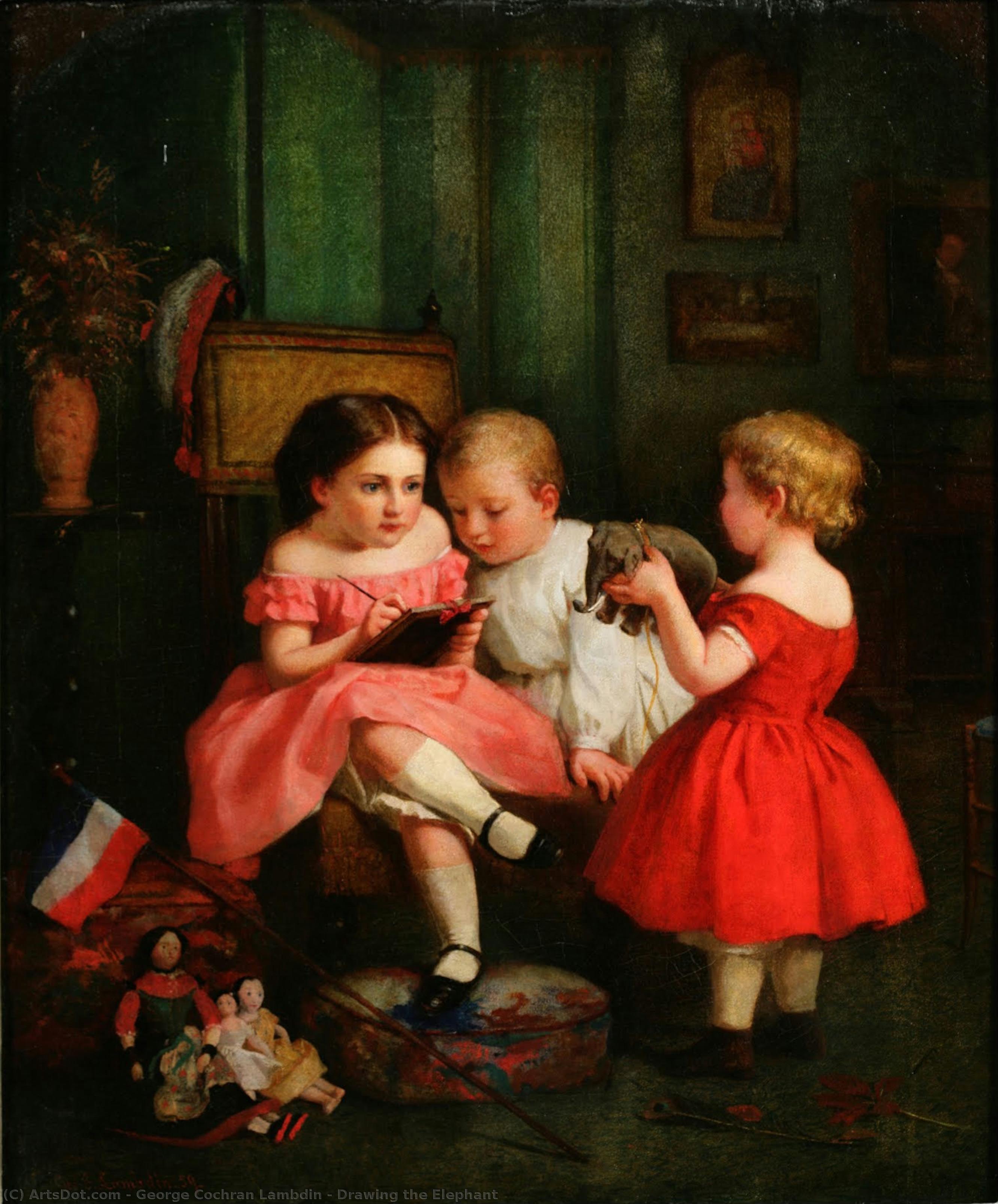
StatsDrawing the Elephant

 Read More
Get a print-ready file that goes far beyond the web preview. Every digital image we sell comes from a high-resolution master in our stock database — usually 5,000 to 15,000 pixels wide — so you can print large, crop tightly, or reproduce fine detail with confidence.
No file leaves our studio untouched. A digital expert checks the colors against the original painting and corrects them if needed, then improves clarity and detail with professional retouching tools — always staying faithful to the artist's brushwork and style. The result is an image that looks like the painting, not like a filtered scan.
You approve before you're done: our expert sends the image by e-mail within 72 hours for your review. Not satisfied? Ask for improvements or corrections, or request a refund if the quality falls short.
This is the quality relied on by publishers, design studios, galleries and print shops.
Digital Image
Download a high-resolution file for personal display, printing, and creative projects. ( Switch to Print Buy Hand Made Painting)
Included in Every Digital Image Order
Expert Digital Delivery, Guaranteed
When you choose OriginalUniqueArt.com, you're not just getting an image - you're receiving a professionally enhanced digital artwork, crafted with precision and backed by a satisfaction guarantee. Here's everything that comes with your order, automatically:

Fast Email Delivery
Your high-resolution digital image file will be emailed to you within 72 hours of ordering - ready for immediate use.

AI-Enhanced Digital File
Your artwork is professionally optimized using advanced AI tools and manual editing, ensuring maximum detail, clarity, and color accuracy.

Free Lifetime Re-Delivery
Accidentally deleted or lost your file? No worries - we'll resend it to you anytime, free of charge.

No Import Fees - Ever
Enjoy your artwork instantly with zero customs, duties, or delivery fees - digital downloads are always tax-free.

Color Accuracy Guarantee
We ensure your digital image reflects the original colors as closely as possible using professional tools and color management.

100-Day Satisfaction Guarantee
If you're not satisfied with your digital image, we'll revise it or refund 100% within 100 days - no questions asked.

100% Money-Back Guarantee
Not satisfied? Get a full refund within 100 days of receiving your digital file - no questions asked.

Bulk Order Discounts
Buy 3 images, save 10% - Buy 5, save 15% - Buy 10+, save 20%. Great for creative projects, galleries, and agencies.
Questions & Answers
At what age did George Cochran Lambdin make "Drawing the Elephant"?
When "Drawing the Elephant" was created in 1859, George Cochran Lambdin - born in 1830 - was 29 years old.
Where can I download "Drawing the Elephant" by George Cochran Lambdin?
A download is available for "Drawing the Elephant": the artwork's Download page offers a high-resolution digital image download.
What is the color identity of "Drawing the Elephant" by George Cochran Lambdin?
"Drawing the Elephant" is defined by an earthy palette led by black (#151307).
Artist Biography
A Florist's Vision of Victorian America
George Cochran Lambdin (1830-1896) stands as a singular figure in American art history—a painter who dedicated his artistic life to capturing the exquisite beauty of flowers, specifically roses, during the Victorian era. Born in Pittsburgh, Pennsylvania, Lambdin’s artistic journey began under the tutelage of his father, James Reid Lambdin, a celebrated portraitist whose influence undoubtedly shaped George's early sensibilities towards meticulous observation and skillful representation. Studying at the Pennsylvania Academy of Fine Arts in Philadelphia solidified his technical foundation, allowing him to hone his craft amidst a burgeoning artistic community. His early years were marked by a transition from the shadows of his father's prestigious legacy into a distinct voice that would eventually find its most profound expression in the delicate petals of botanical subjects.
Lambdin’s career unfolded against the backdrop of the American Civil War, a period that introduced a more somber and humanistic dimension to his repertoire. Recognizing the need for morale-boosting imagery amongst Union soldiers, he volunteered with the United Sentary Commission and skillfully documented camp life—scenes rendered with remarkable detail and sensitivity—often featuring depictions of soldiers interacting with their surroundings. These works weren't merely aesthetically pleasing; they served as tangible reminders of home and offered solace to those serving on the front lines. His artistic output during this era reflected a profound empathy for the human condition, mirroring the broader Victorian preoccupation with moral responsibility and social reform, as he moved between capturing grander genre scenes of women and children and the gritty realities of wartime domesticity.
The Mastery of Botanical Elegance
Despite facing health challenges in his later years, Lambdin persevered in his passion for floral painting, establishing himself in Germantown, Philadelphia. This period witnessed an astonishing transformation—Lambdin transitioned from capturing grand portraits and genre scenes to immersing himself in the subtle nuances of botanical art. He meticulously studied flower specimens, employing techniques honed by generations of artists before him, yet injecting them with a distinctly Victorian aesthetic. The resulting paintings are characterized by luminous color palettes and textured surfaces that breathe life into every bloom.
His later works, particularly his celebrated studies of roses, represent the pinnacle of his technical achievement. In these compositions, Lambdin achieved a sense of trompe l'oeil realism, where the velvety texture of a petal or the dewdrop clinging to a stem feels almost tactile. This dedication to the botanical world was likely inspired by Philadelphia itself, which at the time was affectionately known as the "City of Flowers." Through his brush, the ephemeral beauty of nature was granted a sense of permanence, turning simple floral arrangements into profound meditations on life, fragility, and the enduring grace of the natural world.
Legacy and Artistic Significance
The historical significance of George Cochran Lambdin lies in his ability to bridge the gap between the formal traditions of 19th-century portraiture and the intimate, decorative beauty of botanical still life. His work was not only celebrated in prestigious institutions like the National Academy of Design but also reached a much wider audience through reproduction. His paintings were widely reproduced as chromolithographs, allowing his vibrant floral visions to enter the homes of many, becoming part of the very fabric of Victorian domestic decor.
Today, Lambdin is remembered not just as a skilled technician, but as an artist who captured the soul of an era. His contributions can be summarized through several key artistic milestones:
- Technical Foundation: Mastery of light and texture developed through early training under his father and studies in Europe, including Munich.
- Versatility of Subject: A unique progression from Civil War genre scenes and portraiture to highly specialized botanical excellence.
- Cultural Impact: The widespread dissemination of his floral imagery via chromolithography, influencing American aesthetic tastes.
- Historical Documentation: His sensitive portrayal of camp life and domesticity during the American Civil War.
In the annals of American art, Lambdin remains a master of the delicate and the profound, leaving behind a legacy of luminous color and a timeless appreciation for the quiet splendor of the natural world.

George Cochran Lambdin
1830 - 1896 , United States of America
Quick Facts
- Artistic Movement Or Style: Victorian; Botanical and Genre painting
- Artists Who Influenced This Artist: ['James Reid Lambdin']
- Full Name: George Cochran Lambdin
- Nationality: American
- Place Of Birth: Pittsburgh, United States of America
- Date Of Birth: 1830
- Date Of Death: 1896