Preview
 Send
Send Share
Share
 Details

 Download
 Similars
 X-Ray
X-Ray Diaporama
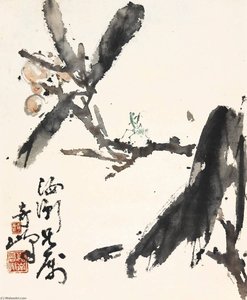
Two Water Buffaloes
 52.0 x 89.0 cm
 Read More
Giclée / Art Print
Museum-quality giclée or canvas print with fast production and flexible finish options. ( Buy Hand Made Painting Buy Image)




































Pick from our preset sizes that match the artwork's original proportions.

You may enter your own dimensions to fit a specific frame or space. If your selected size does not match the original image's proportions, we will either crop the artwork or extend the image with a mirrored or solid-fill edge. A digital mockup will be sent for your approval before production begins.
Please note that the on-screen preview does not reflect the actual cropping or extension. Only the mockup will accurately show the final composition.
While custom sizes are available, we recommend selecting a dimension from the predefined list to preserve the original proportions.
Worldwide Delivery () in 2 weeks instead of standard 4/5 weeks. (30 August)

Free Worldwide Express Shipping

High-Quality Linen Canvas

Full Shipping Insurance

Customs Tax Refund Guarantee

True Color Matching Guarantee

60-Day Return Policy (Defects Only)

100% Money-Back Guarantee

Bulk Discount Offer
 Glass option is only available in size under 110 CM

Two Water Buffaloes
Giclée / Art Print
Reproduction Size
-


Total Price
$ 81
Artist Biography
The Visionary of the Lingnan School: The Life and Art of Gao Qifeng
In the turbulent landscape of early 20th-century China, a revolutionary spirit emerged from the heart of Guangdong, forever altering the trajectory of traditional ink painting. At the center of this metamorphosis stood Gao Qifeng (1889–1933), a master whose brushwork bridged the gap between ancient Eastern traditions and the burgeoning influences of Western modernism. Born Gao Weng in Panyu, his early life was marked by profound personal loss; orphaned as a young child, he found refuge and artistic direction under the guidance of his elder brother, the renowned Gao Jianfu. This familial bond became the foundation for one of the most significant movements in Chinese art history: the Lingnan School.
Gao Qifeng’s artistic journey was never a solitary path but rather an expansive exploration of global aesthetics. His travels to Tokyo in 1907 proved transformative, as he immersed himself in the study of Japanese Nihonga techniques and Western painting principles. It was during this period that he began to master the delicate interplay of light and shadow, a departure from the more static compositions of classical Chinese landscape painting. Upon his return to China, Gao did not merely replicate foreign styles; instead, he synthesized them with the vigorous brushwork of his mentor Ju Lian and the elegant fluidity of his contemporary, Chen Shuren. This fusion created a "new national art" that felt both deeply rooted in Chinese identity and vibrantly alive with the energy of a modernizing world.
A Symphony of Power and Nature
The true magic of Gao Qifeng’s oeuvre lies in his ability to imbue the natural world with profound symbolic weight. While he was a master of the evocative landscape, he is perhaps most celebrated for his breathtaking depictions of animals. His paintings of eagles, lions, and tigers are far more than mere biological studies; they are portraits of strength, nobility, and unyielding spirit. Through meticulous detail and a sophisticated use of layered color washes, Gao captured the muscular tension of a predator or the piercing gaze of an eagle with an intensity that borders on the cinematic. These subjects served as metaphors for the resilience required during the political upheavals of his era, reflecting Confucian ideals through a lens of modern vitality.
Beyond the ferocity of his animals, Gao’s landscapes offered a serene counterpoint to his more muscular compositions. In works such as Pine or his evocative winter scenes, one can witness his mastery of atmospheric depth. By integrating Western understandings of geometry and perspective with traditional ink washes, he achieved a sense of three-dimensional space that was revolutionary for his time. His technique allowed the viewer to feel the crispness of mountain air or the heavy stillness of a snow-clad village, creating an immersive experience that transcended the flat surface of the silk or paper.
Legacy and the Dawn of Modernity
The historical significance of Gao Qifeng cannot be overstated. As a co-founder of the Lingnan School, he helped dismantle the rigid academicism that had long constrained Chinese painting, paving the way for future generations to experiment with color, light, and subject matter. His influence was not confined to the canvas; his involvement in the revolutionary Tongmenghui movement and his work with nationalist publications like The True Record demonstrated a life where art and social consciousness were inextricably linked. He taught numerous students, including luminaries such as Chao Shao-an, ensuring that the innovative spirit of the Lingnan School would endure long after his untimely death in 1933.
Today, Gao Qifeng is remembered not just as a painter, but as a pioneer who dared to reimagine tradition. His legacy remains a testament to the power of cultural synthesis—a reminder that true innovation occurs when we honor our heritage while fearlessly embracing the unknown. Through his vibrant colors and spirited brushstrokes, the essence of a transformative era continues to breathe upon the scrolls of history.

gao qifeng
1889 - 1933
Quick Facts
- Artistic Movement Or Style: Lingnan School
- Artists Or Movements Influenced By This Artist: ['Western Painting']
- Artists Who Influenced This Artist: ['Chen Shuren']
- Date Of Birth: 1889
- Date Of Death: 1933
- Full Name: Gao Qifeng
- Nationality: Chinese
- Notable Artworks:
- Fowls
- Pine
- Two Water Buffaloes
- Place Of Birth: China