

 Preview
 Send
Send Share
Share
 Details
 Guide
Guide

 Download
 Similars
 X-Ray
X-Ray Diaporama
 Stats
StatsMain Stairs, Neues Museum, about 1850, Source: Berlin und seine Kunstschätze, Payne Leipzig und Dresden, ca. 1850


 Read More
Purchase a high-resolution, enhanced digital image, far superior to the online preview.
Each file is meticulously prepared by our in-house specialists using advanced tools and expert manual retouching. We ensure every image has exceptional clarity, precise color accuracy, and fine detail.
The final file is delivered via email within 72 hours, optimized for immediate use in professional, editorial, and print environments. This is the same quality trusted by top-tier design studios, publishers, and galleries.
Digital Image
Download a high-resolution file for personal display, printing, and creative projects. ( Switch to Print Buy Hand Made Painting)
Included in Every Digital Image Order
Expert Digital Delivery, Guaranteed
When you choose OriginalUniqueArt.com, you're not just getting an image - you're receiving a professionally enhanced digital artwork, crafted with precision and backed by a satisfaction guarantee. Here's everything that comes with your order, automatically:

Fast Email Delivery
Your high-resolution digital image file will be emailed to you within 72 hours of ordering - ready for immediate use.

AI-Enhanced Digital File
Your artwork is professionally optimized using advanced AI tools and manual editing, ensuring maximum detail, clarity, and color accuracy.

Free Lifetime Re-Delivery
Accidentally deleted or lost your file? No worries - we'll resend it to you anytime, free of charge.

No Import Fees - Ever
Enjoy your artwork instantly with zero customs, duties, or delivery fees - digital downloads are always tax-free.

Color Accuracy Guarantee
We ensure your digital image reflects the original colors as closely as possible using professional tools and color management.

100-Day Satisfaction Guarantee
If you're not satisfied with your digital image, we'll revise it or refund 100% within 100 days - no questions asked.

100% Money-Back Guarantee
Not satisfied? Get a full refund within 100 days of receiving your digital file - no questions asked.

Bulk Order Discounts
Buy 3 images, save 10% - Buy 5, save 15% - Buy 10+, save 20%. Great for creative projects, galleries, and agencies.
Artist Biography
Friedrich August Stüler: Architect of Prussian Grandeur
Friedrich August Stüler, born in Berlin on January 28, 1800, and tragically passing away on March 18, 1865, remains a pivotal figure in the history of Prussian architecture. More than simply an architect, he was a conduit between the neoclassical ideals championed by Karl Friedrich Schinkel and the burgeoning aesthetic sensibilities of his time. Stüler’s career spanned decades, marked by a relentless pursuit of architectural excellence and a profound impact on the visual landscape of Berlin and beyond. His legacy is inextricably linked to the grandeur of Prussian power and the evolving tastes of its monarchy, making him a compelling subject for artistic reproduction and study.Early Influences and Training
Stüler’s journey began within the hallowed halls of the Bauakademie (School of Architecture) in Berlin, where he diligently honed his skills under the tutelage of the immensely influential Karl Friedrich Schinkel. This formative period proved crucial; Stüler absorbed not only technical expertise but also Schinkel's profound understanding of classical proportions and the expressive potential of architecture. However, Stüler’s artistic development didn’t solely rely on imitation. He embarked on extensive travels throughout Europe – to France and Italy in 1829-30, and Russia in 1831 – immersing himself in the architectural traditions of these nations. These experiences broadened his perspective, introducing him to Renaissance revival styles and inspiring a synthesis of influences that would characterize much of his later work. Crucially, he learned from Eduard Knoblauch, another prominent architect who had studied under Schinkel, further solidifying his grounding in classical principles.Masterpieces of the Prussian State
Stüler’s career truly ascended with his appointment as Hofbauinspektor (Royal Buildings Inspector) and Hofbaurat (Royal privy councillor for buildings) in 1832. This prestigious position afforded him direct access to the royal court, allowing him to undertake some of Prussia's most ambitious architectural projects. The *Neues Museum* in Berlin stands as his undisputed masterpiece – a testament to his innovative use of color and form, pushing beyond mere imitation of classical styles into a more expressive and dynamic design. The dome of the triumphal arch of the Berliner Stadtschloss, completed around 1860, is another iconic achievement, showcasing Stüler’s mastery of monumental scale and intricate detailing. Beyond these grand structures, he also designed the *alte Nationalgalerie* (Old National Gallery), a significant building reflecting his architectural style, and contributed to the design of *Hohenzollern Castle*, demonstrating his skill in creating imposing and dignified royal residences. The connecting gallery to the Altes Museum, completed in 1862, is a remarkable example of his ability to seamlessly integrate new structures with existing historical monuments.Beyond Berlin: Expanding Horizons
Stüler’s influence extended far beyond the borders of Berlin. He was commissioned to design significant buildings throughout Prussia and even ventured abroad, notably undertaking the reconstruction of the Winter Palace in Saint Petersburg (though this project ultimately fell through due to Tsar Nicholas I's preference for preserving the existing Baroque structure). His work also included designing churches, castles, and public buildings in cities like Potsdam, Koblenz, Trier, and Stockholm. His involvement in the design of the Emanuelkirche in Niemegk, though unfinished at his death, exemplifies his continued dedication to architectural innovation. The Burg Hohenzollern, completed around 1850, stands as a particularly striking example of his ability to create visually arresting and historically resonant structures.Legacy and Influence
Friedrich August Stüler’s legacy is profound and enduring. He played a crucial role in shaping the architectural landscape of Prussia during the 19th century, bridging the gap between classical tradition and evolving aesthetic sensibilities. His designs continue to be studied by architects and art historians today, admired for their elegance, grandeur, and skillful integration of historical influences. The *Neues Museum*, in particular, remains a symbol of Berlin’s cultural heritage and a testament to Stüler's visionary genius. His work stands as a powerful reminder of the transformative power of architecture to shape not only physical spaces but also the identity and aspirations of a nation.Further Exploration
For more detailed information on Stüler’s life, works, and artistic influences, consider visiting these resources:- Main Stairs, Neues Museum, about 1850, Source: Berlin und seine Kunstschätze, Payne Leipzig und Dresden, ca. 1850: Explore this artwork
- The connecting gallery to the Altes Museum, view towards the South Cupola Room, 1862: Discover this artwork
- Altes Museum: Learn more about the Altes Museum and its significance
- Friedrich August Stüler - Google Arts & Culture: Explore this resource
- Friedrich August Stüler - Wikipedia: Read the Wikipedia article
- Friedrich August Stüler: Visit our artist page for more information
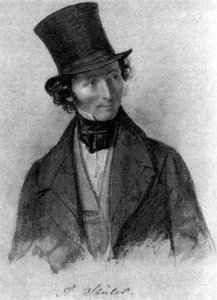
friedrich august stuler
1800 - 1865 , Germany
Quick Facts
- Artistic Movement Or Style: Neoclassical & Renaissance Revival
- Artists Or Movements Influenced By This Artist: ['Prussian Architecture']
- Artists Who Influenced This Artist: ['Karl Friedrich Schinkel']
- Date Of Birth: January 28, 1800
- Date Of Death: March 18, 1865
- Full Name: Friedrich August Stüler
- Nationality: German
- Notable Artworks:
- Neues Museum Berlin
- Hohenzollern Castle
- Alte Nationalgalerie
- Connecting Gallery
- Place Of Birth: Berlin, Germany