 Preview
 Send
Send Share
Share
 Details
 Guide
Guide

 Download
 Similars
 X-Ray
X-Ray Diaporama
 Q&A
Q&A Stats
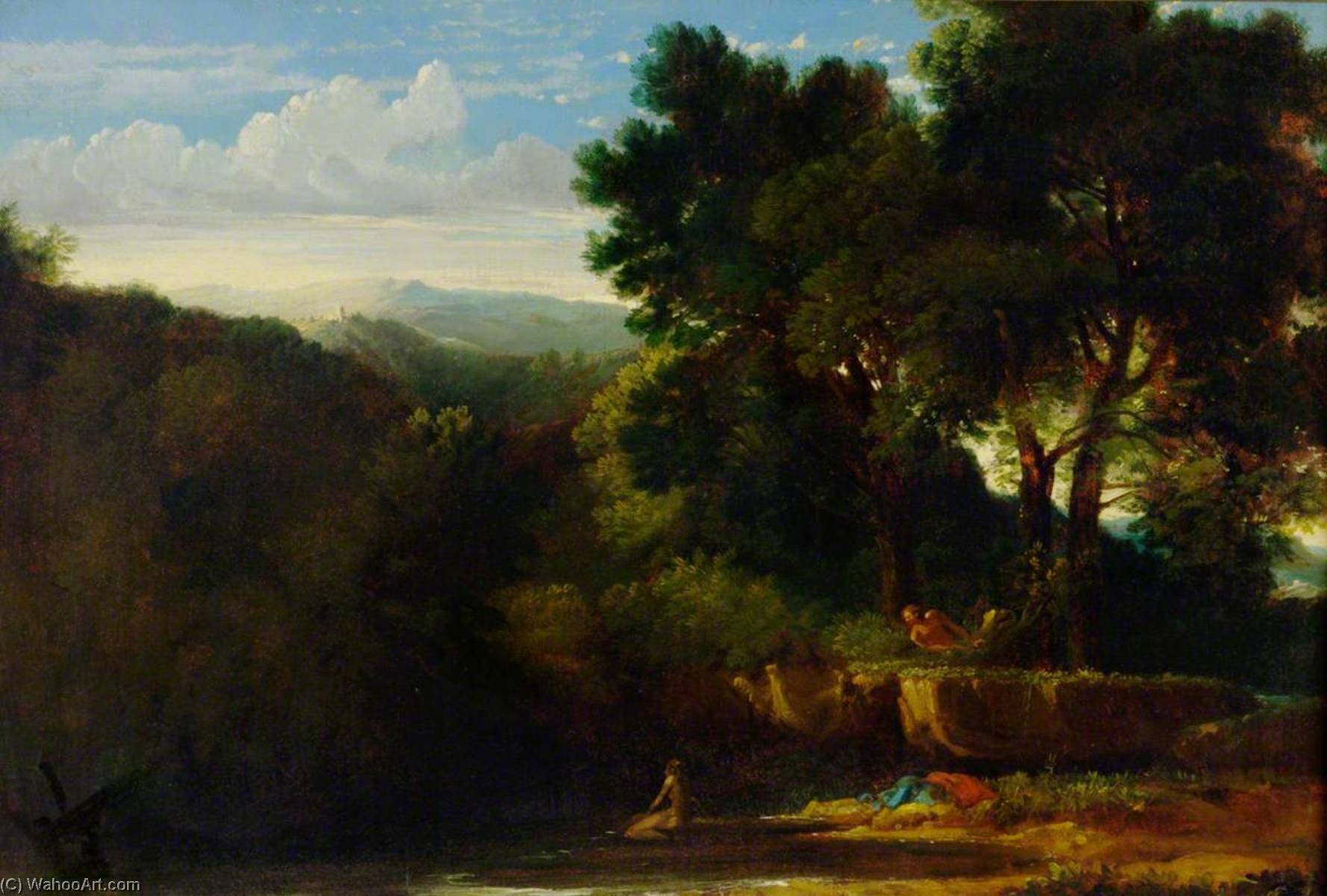
StatsTivoli

- 52.0 x 76.0 cm
 Read More
Get a print-ready file that goes far beyond the web preview. Every digital image we sell comes from a high-resolution master in our stock database — usually 5,000 to 15,000 pixels wide — so you can print large, crop tightly, or reproduce fine detail with confidence.
No file leaves our studio untouched. A digital expert checks the colors against the original painting and corrects them if needed, then improves clarity and detail with professional retouching tools — always staying faithful to the artist's brushwork and style. The result is an image that looks like the painting, not like a filtered scan.
You approve before you're done: our expert sends the image by e-mail within 72 hours for your review. Not satisfied? Ask for improvements or corrections, or request a refund if the quality falls short.
This is the quality relied on by publishers, design studios, galleries and print shops.
Digital Image
Download a high-resolution file for personal display, printing, and creative projects. ( Switch to Print Buy Hand Made Painting)
Included in Every Digital Image Order
Expert Digital Delivery, Guaranteed
When you choose OriginalUniqueArt.com, you're not just getting an image - you're receiving a professionally enhanced digital artwork, crafted with precision and backed by a satisfaction guarantee. Here's everything that comes with your order, automatically:

Fast Email Delivery
Your high-resolution digital image file will be emailed to you within 72 hours of ordering - ready for immediate use.

AI-Enhanced Digital File
Your artwork is professionally optimized using advanced AI tools and manual editing, ensuring maximum detail, clarity, and color accuracy.

Free Lifetime Re-Delivery
Accidentally deleted or lost your file? No worries - we'll resend it to you anytime, free of charge.

No Import Fees - Ever
Enjoy your artwork instantly with zero customs, duties, or delivery fees - digital downloads are always tax-free.

Color Accuracy Guarantee
We ensure your digital image reflects the original colors as closely as possible using professional tools and color management.

100-Day Satisfaction Guarantee
If you're not satisfied with your digital image, we'll revise it or refund 100% within 100 days - no questions asked.

100% Money-Back Guarantee
Not satisfied? Get a full refund within 100 days of receiving your digital file - no questions asked.

Bulk Order Discounts
Buy 3 images, save 10% - Buy 5, save 15% - Buy 10+, save 20%. Great for creative projects, galleries, and agencies.
Artist Biography
A Fleeting Glimpse of Brilliance: The Life and Art of Frederick Lee Bridell
Frederick Lee Bridell, a name perhaps less familiar than those of his celebrated contemporaries like Turner or Constable, nevertheless represents a poignant chapter in 19th-century British landscape painting. Born William Bridle in Southampton in 1830, his brief but intensely productive career was marked by a remarkable sensitivity to light and atmosphere, coupled with an ambition that propelled him from humble beginnings to the attention of prominent artistic circles. His story is one of early talent nurtured against odds, a passionate embrace of European influences, and a tragically premature end that left a legacy ripe for rediscovery. Bridell’s journey began not within the walls of an art academy, but in the practical world of labor – first as a pageboy, then as a house painter. Yet, even amidst these tasks, his innate artistic inclination shone through, encouraged by Henry Rose, a local engraver who recognized and fostered the young man's burgeoning talent. This early grounding instilled in Bridell a dedication to craft and observation that would become hallmarks of his mature style. At eighteen, adopting the more distinguished name Frederick Lee Bridell, he painted a portrait of Rose, an act signifying not merely artistic skill but also a deliberate forging of identity.From Apprenticeship to Italian Inspiration
The pivotal moment in Bridell’s formal training came with his apprenticeship to Edwin Holder, a picture dealer and restorer. This wasn't simply about learning technique; it was an immersion into the world of Old Masters. Copying works by Cuyp, Van der Velde, and Berchem provided Bridell with a foundational understanding of composition, color, and light – skills he would later synthesize into his own unique vision. Holder also facilitated travel across Europe, particularly to Germany and the Tyrol, experiences that profoundly shaped Bridell’s artistic sensibilities. The dramatic landscapes of the Tyrol, with their towering mountains and verdant valleys, ignited a passion for expansive vistas and atmospheric effects. However, it was Italy that truly captured Bridell's imagination. He arrived in Rome in 1858, drawn by the allure of ancient ruins, sun-drenched countryside, and the vibrant artistic community that flourished there. This period marked a turning point, as he moved away from portraiture and fully embraced landscape painting as his primary focus. It was in Rome that he met and married Eliza Bridell Fox, herself an accomplished artist, forging a partnership that further enriched his creative life.Patronage, Recognition, and the Shadow of Turner
Bridell’s ascent within the art world wasn't solely based on talent; it was also aided by fortunate patronage. James Wolff, a shipping magnate with a keen eye for art, became a devoted supporter, establishing a gallery at his home to showcase Bridell’s work. This provided not only financial stability but also crucial exposure to a discerning audience. The artist's ability to capture the grandeur of Italian landscapes – scenes like *The Temple of Venus* and *The Colosseum by Moonlight* – resonated with collectors and critics alike. While undeniably influenced by J.M.W. Turner’s dramatic use of light and shadow, Bridell developed a distinct style characterized by meticulous detail and a vibrant palette. He wasn't merely imitating Turner; he was building upon that legacy, infusing it with his own unique sensibility. His paintings weren’t about the sublime power of nature overwhelming humanity, but rather about harmonious integration – capturing the beauty and tranquility of the Italian countryside. The recognition extended beyond the art world; Bridell enjoyed the favor of literary figures like Elizabeth Barrett Browning, who hosted a celebration for his wedding in Rome, demonstrating the artist's growing social standing.A Legacy Cut Short
Tragically, Frederick Lee Bridell’s promising career was cut short by consumption. He died in Kensington, London, in 1863 at the young age of thirty-three. His premature death was deeply lamented by contemporaries like Sir Theodore Martin, who recognized his potential for achieving international renown. Though his life was brief, Bridell left behind a body of work that testifies to his skill and vision. While he may not be as widely celebrated as some of his peers, his paintings continue to captivate viewers with their atmospheric beauty and technical mastery. His landscapes offer a glimpse into the romanticized vision of Italy prevalent in Victorian England, while simultaneously showcasing a unique artistic voice shaped by careful observation, European influences, and a profound love for the natural world. Bridell’s legacy endures as a reminder that even fleeting moments of brilliance can leave an indelible mark on the history of art.Key Works & Enduring Appeal
- The Temple of Venus: A painting that Bridell hoped would stand alongside works by Turner and Claude in the National Gallery, showcasing his ambition and skill.
- The Coliseum at Rome by Moonlight: Held by Southampton Art Gallery, this work exemplifies Bridell’s mastery of light and shadow, capturing the romantic allure of ancient Rome.
- In the Austrian Tyrol: Demonstrates his early fascination with mountainous landscapes and dynamic lighting effects.
- Wooded Landscape: A serene depiction showcasing his ability to capture the tranquility of nature.

Frederick Lee Bridell
1830 - 1863 , United Kingdom
Quick Facts
- Full Name: Frederick Lee Bridell
- Nationality: British
- Date Of Birth: 1830
- Date Of Death: 1863
- Place Of Birth: Southampton, United Kingdom
- Notable Artworks:
- The Temple of Venus
- Coliseum by Moonlight
- In the Austrian Tyrol
- Artistic Movement Or Style: Romanticism
- Artists Who Influenced This Artist:
- J.M.W. Turner
- Cuyp
- Van der Velde
- Berchem