Preview
 Send
Send Share
Share
 Details

 Download
 Similars
 X-Ray
X-Ray Diaporama
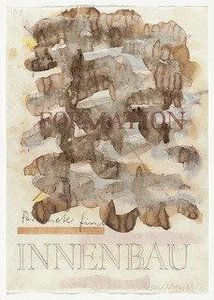
Untitled
 1969
1969 30.0 x 21.0 cm
 Read More
Giclée / Art Print
Museum-quality giclée or canvas print with fast production and flexible finish options. ( Buy Hand Made Painting Buy Image)




































Pick from our preset sizes that match the artwork's original proportions.

You may enter your own dimensions to fit a specific frame or space. If your selected size does not match the original image's proportions, we will either crop the artwork or extend the image with a mirrored or solid-fill edge. A digital mockup will be sent for your approval before production begins.
Please note that the on-screen preview does not reflect the actual cropping or extension. Only the mockup will accurately show the final composition.
While custom sizes are available, we recommend selecting a dimension from the predefined list to preserve the original proportions.
Worldwide Delivery () in 2 weeks instead of standard 4/5 weeks. (30 August)

Free Worldwide Express Shipping

High-Quality Linen Canvas

Full Shipping Insurance

Customs Tax Refund Guarantee

True Color Matching Guarantee

60-Day Return Policy (Defects Only)

100% Money-Back Guarantee

Bulk Discount Offer
 Glass option is only available in size under 110 CM

Untitled
Giclée / Art Print
Reproduction Size
-


Total Price
$ 81
Artist Biography
The Architecture of Presence: The Art of Franz Erhard Walther
To encounter the work of Franz Erhard Walther is to step into a realm where the boundaries between the observer and the observed begin to dissolve. Born on July 22, 1939, in Fulda, Germany, Walther has spent a lifetime cultivating a practice that defies the static nature of traditional sculpture. He does not merely create objects to be looked at; he engineers experiences to be inhabited. His artistic journey is one of profound intentionality, moving away from grand, sweeping narratives toward a quiet, intense exploration of materiality, process, and the very essence of human presence within a space.
Walther’s formative years were steeped in the disciplined aesthetics of architecture and design, a foundation that would later inform his structural approach to soft materials. His education was a rigorous odyssey through some of Europe's most prestigious institutions, including the Werkkunstschule Offenbach and the Städelschule. During his time at the Kunstakademie Düsseldorf in the early 1960s, he studied under the legendary Karl Otto Götz, a period that placed him alongside contemporaries such as Sigmar Polke and Gerhard Richter. It was within this fertile, experimental atmosphere that Walther began to develop his unique voice—a voice that sought not to impose meaning upon the viewer, but to provide the physical tools for the viewer to construct it themselves.
Materiality and the Poetry of Activation
At the heart of Walther’s oeuvre lies a fascination with what he calls "fabric activations." While many sculptors of his era were preoccupied with the permanence of bronze or stone, Walther turned toward the ephemeral and the tactile. His signature works often consist of geometric fabric objects—structures made of textiles, straps, and fastenings that possess an inherent invitation to be used. These are not sculptures in the classical sense; they are activatable entities. Through the use of openings, loops, and weight-bearing elements, these pieces demand a physical response, often requiring the participant to wear, step into, or manipulate the fabric to complete the work's conceptual cycle.
This approach draws deep inspiration from the Arte Povera movement, which championed the use of humble, everyday materials to challenge the polished artifice of commercial culture. Walther’s work echoes this sentiment by prioritizing the raw, sensory experience of texture and form. He views his process as a way of "sculpting silence," where the true art occurs in the unpredictable interplay between the material and the environment—the way humidity might alter a fabric's drape or how a human body might tension a strap. In this sense, his work is never truly finished; it exists in a state of perpetual becoming, shaped by time, temperature, and touch.
A Legacy of Participation and Interconnection
The historical significance of Walther’s contribution to contemporary art lies in his early and radical embrace of participatory art. Long before "relational aesthetics" became a common term in art criticism, Walther was creating works like the First Work Set (1963–1969). This collection of fifty-eight pieces was designed to place viewers in extraordinary interpersonal situations, forcing them to navigate physical relationships with both the objects and one another. His move to New York City in 1967 further expanded his horizons, allowing him to engage with the vibrant energy of Pop Art, which subtly infused his textiles with more vivid, experimental colors.
Throughout his distinguished career, which included a long-standing professorship at the University of Fine Arts in Hamburg, Walther has remained a steadfast explorer of the "work" as an ongoing process. His achievements are marked by major institutional recognition, such as the profound activation of his Werksatz (Workset) at the Tate Modern in London. This event demonstrated the true power of his vision: seeing volunteers move through and inhabit his sculptures, proving that the art resides not in the fabric itself, but in the lived connection between the body and the material. Walther’s legacy is a testament to the idea that art is not a destination, but a continuous, breathing dialogue.

Quick Facts
- Artistic Movement Or Style: Minimalist Art
- Artists Or Movements Influenced By This Artist: ['Jonathan Meese']
- Artists Who Influenced This Artist: ['Georg Herold']
- Date Of Birth: July 22, 1939
- Full Name: Franz Erhard Walther
- Nationality: German
- Notable Artworks:
- Work Drawing Collector, Mass and Distribution
- Work Drawing Object for Collection (nine)
- Place Of Birth: Fulda, Germany