Preview
 Send
Send Share
Share
 Details

 Download
 Similars
 X-Ray
X-Ray Diaporama
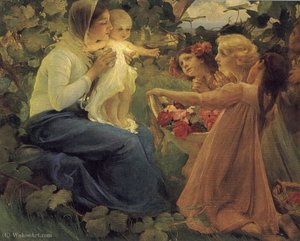
At the races
 Read More
Hand Made Oil Reproduction
Hand-painted oil on canvas in your size and frame, made to order by our artists. ( Switch to Print Switch to Image)




































Pick from our preset sizes that match the artwork's original proportions.

You may enter your own dimensions to fit a specific frame or space. If your selected size does not match the original image's proportions, we will either crop the artwork or extend the painting with additional hand-painted elements. A digital mockup will be sent for your approval before production begins.
Please note that the on-screen preview does not reflect the actual cropping or extension. Only the mockup will accurately show the final composition.
While custom sizes are available, we recommend selecting a dimension from the predefined list to preserve the original proportions.
After order, OriginalUniqueArt.com team will email client for instructions and provide a mockup preview
Worldwide Delivery () in 3/4 weeks instead of standard 5 weeks. (11 August). No compromise on quality.

Free Worldwide Express Shipping

High-Quality Linen Canvas

Full Shipping Insurance

Customs Tax Refund Guarantee

True Color Matching Guarantee

60-Day Return Policy (Defects Only)

100% Money-Back Guarantee

Bulk Discount Offer
 Glass option is only available in size under 110 CM

At the races
Reproduction Medium
Reproduction Size
-


Total Price
$ 300
Artist Biography
The Enigmatic World of Franz Dvorak: A Composer Bridging Eras
Franz Dvorak, a name perhaps less immediately recognizable than some of his Romantic contemporaries, nevertheless occupies a fascinating and vital space in the history of piano music. He wasn't a revolutionary shattering conventions, but rather a deeply sensitive artist who absorbed influences from Schubert to Brahms, forging a unique voice characterized by lyrical beauty, subtle harmonic complexity, and an almost confessional emotional depth. His life, though not marked by dramatic public events, was one dedicated entirely to the pursuit of musical expression, resulting in a body of work that continues to reward attentive listeners with its quiet power and understated elegance. Born into a musically inclined family – details surrounding his precise birthdate remain somewhat elusive, adding to the aura of mystery around him – Dvorak received early piano training which quickly revealed an exceptional talent. He wasn’t destined for a life on the concert stage; instead, he gravitated towards composition, finding solace and purpose in translating his inner world into sound.Early Influences and Development
The shadow of Franz Schubert looms large over Dvorak's early compositions. The melodic grace, harmonic richness, and intimate character of Schubert’s lieder profoundly impacted the young composer. Dvorak wasn’t simply imitating; he was internalizing a sensibility – a way of using music to explore nuanced emotions and create miniature worlds of feeling. This influence is particularly evident in his early piano art songs, pieces that often possess a delicate vulnerability and a remarkable gift for capturing atmosphere. Beyond Schubert, the works of Johannes Brahms also played a crucial role in Dvorak’s development. Brahms' mastery of counterpoint, formal structure, and emotional restraint provided a contrasting model – one that encouraged Dvorak to refine his own musical language and develop a more sophisticated approach to composition. He studied privately with several teachers throughout his formative years, but it was through self-directed exploration of the great masters that he truly honed his craft. His early attempts at larger forms—sonatas and variations—reveal a composer grappling with structure, seeking to balance Romantic expressiveness with Classical clarity.Major Achievements: Piano Art Songs and Beyond
While Dvorak composed in various genres, including chamber music and orchestral pieces, it is his piano art songs that represent the pinnacle of his achievement. These are not grand operatic gestures but rather intimate portraits of longing, loss, and quiet joy. Pieces like “At the Races,” a charming miniature depicting a bustling scene with underlying melancholy, demonstrate his ability to evoke vivid imagery through subtle harmonic shifts and delicate pianistic textures. His Schubert tributes – several sets of variations on themes by the elder composer – are particularly noteworthy. They aren’t mere exercises in homage; they represent a deeply personal engagement with Schubert's music, revealing Dvorak’s own interpretive sensibility and compositional ingenuity. He also composed a significant number of piano character pieces—nocturnes, impromptus, and mazurkas – that showcase his lyrical gift and technical proficiency. These works, though often overlooked, offer a compelling glimpse into the composer's inner world.Historical Significance and Legacy
Franz Dvorak’s historical significance lies not in groundbreaking innovation but in his ability to synthesize diverse influences into a uniquely personal style. He occupied a transitional space between the late Romantic era and the early modern period, absorbing the emotional intensity of the former while anticipating some of the harmonic subtleties of the latter. He wasn't part of any particular school or movement; he was an independent spirit who followed his own musical path.- His work provides a valuable link between Schubert and Brahms.
- Dvorak’s piano art songs offer a compelling example of Romantic intimacy.
- He represents a lesser-known but significant voice in the history of 19th-century music.

Quick Facts
- Artistic Movement Or Style: Romantic piano music
- Artists Or Movements Influenced By This Artist: Classical piano
- Artists Who Influenced This Artist: ['Franz Peter Schubert']
- Date Of Death: Living
- Full Name: Franz Dvorak
- Notable Artworks:
- At the Races
- Schubert tributes