

 Preview
 Send
Send Share
Share
 Details
 Guide
Guide

 Download
 Similars
 X-Ray
X-Ray Diaporama
 Stats
StatsThe Painter's Studio
 Oil On Canvas
- WallArt
- Dutch Golden Age Realism
 1659
1659- Late Medieval
 60.0 x 47.0 cm
 Gemäldegalerie
 Read More
Purchase a high-resolution, enhanced digital image, far superior to the online preview.
Each file is meticulously prepared by our in-house specialists using advanced tools and expert manual retouching. We ensure every image has exceptional clarity, precise color accuracy, and fine detail.
The final file is delivered via email within 72 hours, optimized for immediate use in professional, editorial, and print environments. This is the same quality trusted by top-tier design studios, publishers, and galleries.
Digital Image
Download a high-resolution file for personal display, printing, and creative projects. ( Switch to Print Buy Hand Made Painting)
Included in Every Digital Image Order
Expert Digital Delivery, Guaranteed
When you choose OriginalUniqueArt.com, you're not just getting an image - you're receiving a professionally enhanced digital artwork, crafted with precision and backed by a satisfaction guarantee. Here's everything that comes with your order, automatically:

Fast Email Delivery
Your high-resolution digital image file will be emailed to you within 72 hours of ordering - ready for immediate use.

AI-Enhanced Digital File
Your artwork is professionally optimized using advanced AI tools and manual editing, ensuring maximum detail, clarity, and color accuracy.

Free Lifetime Re-Delivery
Accidentally deleted or lost your file? No worries - we'll resend it to you anytime, free of charge.

No Import Fees - Ever
Enjoy your artwork instantly with zero customs, duties, or delivery fees - digital downloads are always tax-free.

Color Accuracy Guarantee
We ensure your digital image reflects the original colors as closely as possible using professional tools and color management.

100-Day Satisfaction Guarantee
If you're not satisfied with your digital image, we'll revise it or refund 100% within 100 days - no questions asked.

100% Money-Back Guarantee
Not satisfied? Get a full refund within 100 days of receiving your digital file - no questions asked.

Bulk Order Discounts
Buy 3 images, save 10% - Buy 5, save 15% - Buy 10+, save 20%. Great for creative projects, galleries, and agencies.
The Painter’s Studio: A Window into Dutch Golden Age Life
Gustave Courbet's "The Painter's Studio," completed in 1855, isn’t merely a depiction of an artist at work; it’s a vibrant, layered allegory of the artistic and social landscape of mid-19th century France. More than just a snapshot of a studio scene, this monumental canvas invites us into a microcosm of society – a carefully constructed tableau populated by figures representing diverse walks of life, each contributing to the dynamic energy of Courbet’s creative world. The painting immediately captivates with its rich palette and meticulous detail, hallmarks of the Realist movement that Courbet championed, rejecting the idealized forms and mythological subjects favored by earlier artistic traditions.
At first glance, the scene unfolds as a typical artist's studio – an easel holding a landscape in progress, a nude model posing gracefully, and a young boy playfully interacting with a white cat. However, a closer examination reveals a complex web of symbolism woven throughout the composition. The left side of the painting is dominated by a series of ordinary individuals: a Jewish man, an Irishwoman, and a laborer – figures representing the everyday people who served as inspiration for Courbet’s art. A partially obscured figure on the floor, often interpreted as a crucified form, serves as a poignant reminder of the sacrifices made in pursuit of artistic expression, while simultaneously acknowledging the potential demise of traditional academic art. The central focus remains firmly on Courbet himself, diligently working on his painting of the Loue River valley – a deliberate homage to his homeland and a testament to the enduring power of nature.
A Gathering of Influences: The Right Side of the Canvas
The right side of "The Painter's Studio" transforms into a gathering of Parisian elite, each figure representing a key influence on Courbet’s artistic journey. Prominent among them are Alfred Bruyas, a wealthy patron who provided crucial financial support; Champfleury, a literary critic and fellow Realist whose writings profoundly shaped Courbet’s artistic philosophy; Pierre-Joseph Proudhon, the radical philosopher and economist; and Charles Baudelaire, the celebrated poet whose aesthetic sensibilities resonated deeply with Courbet's own. The inclusion of these figures isn’t simply decorative; it underscores the interconnectedness of art, society, and intellectual discourse during this transformative period. The portraits are not idealized representations but rather carefully observed studies, capturing each individual’s unique personality and bearing – a testament to Courbet’s keen observational skills.
The Language of Detail: Technique and Symbolism
Courbet's masterful technique is evident in every brushstroke. He employs a meticulous approach, rendering textures with astonishing realism – from the velvet folds of clothing to the rough grain of wood. The use of light and shadow creates a dramatic atmosphere, drawing the viewer’s eye across the canvas and highlighting key elements within the composition. The partially finished paintings on the back wall—a deliberate act of artistic defiance—symbolize the unfinished nature of creative endeavors and the constant pursuit of perfection. These abandoned works hint at the immense scale of Courbet's ambition and his willingness to challenge conventional artistic norms.
A Legacy of Realism: Context and Interpretation
"The Painter’s Studio" stands as a pivotal work in the history of art, encapsulating the spirit of the Realist movement. It rejects romantic idealism and embraces a commitment to portraying the world as it truly is – with all its complexities, contradictions, and social inequalities. Courbet's painting wasn't merely an artistic statement; it was a bold declaration of independence from the established art establishment. The work’s enduring appeal lies in its ability to resonate with viewers across generations, prompting reflection on the nature of creativity, the role of society, and the power of art to shape our understanding of the world. Reproductions of this iconic painting offer a remarkable opportunity to bring this vibrant tableau into your own home, serving as a constant reminder of Courbet’s revolutionary vision.
Questions & Answers
Where can I see a preview of "The Painter's Studio"?
To preview a reproduction of "The Painter's Studio" by Frans van Mieris, open the artwork's Preview page.
Which room is "The Painter's Studio" by Frans van Mieris recommended for?
The recommended space for "The Painter's Studio" by Frans van Mieris is a living room. The suggestion can of course be adapted to your interior.
How many people view "The Painter's Studio"?
Statistics about "The Painter's Studio" by Frans van Mieris are on the artwork's Stats page: monthly visits of the artwork, visits of the artist's works, and country and language breakdowns of recent visitors.
Artist Biography
A Life Immersed in Detail: The World of Frans van Mieris the Elder
Frans van Mieris the Elder, a name synonymous with meticulous detail and refined artistry, occupies a significant position within the Dutch Golden Age. Born in Leiden in 1635, his path diverged from the family trade of goldsmithing—a craft practiced by his father, Jan Bastiaensz van Mieris—towards the captivating world of painting. This early inclination for drawing set the stage for a career that would define the “fijnschilder” style and offer an intimate glimpse into 17th-century Dutch society. His initial training under Abraham Toorenvliet, followed by crucial instruction from the esteemed Gerrit Dou, laid a solid foundation upon which he built his distinctive artistic voice. These formative years instilled in him not only technical skill but also an appreciation for narrative nuance and the power of subtle observation.The Rise of a ‘Fijnschilder’
Van Mieris quickly became celebrated as a master of *fijnschilder*—a Dutch term denoting “fine painting.” This technique was characterized by an almost obsessive attention to detail, smooth and polished brushwork, and a preference for small-scale canvases. It wasn't merely about replicating reality; it was about elevating it through painstaking precision. The surfaces in his paintings seem to shimmer with life – the lustrous sheen of satin, the delicate texture of velvet, the glint of metal—all rendered with astonishing accuracy. He didn’t simply paint a room; he recreated the very atmosphere within it, inviting viewers into scenes of domesticity and affluence. His subject matter frequently revolved around the lives of the wealthy: elegant gatherings, elaborate interiors, portraits that captured not just likeness but also character. Recurring motifs like oyster luncheons, doctors attending to patients, and women engaged in everyday tasks provided windows into the habits and social rituals of the upper classes. While initially heavily influenced by Gerrit Dou’s style, Van Mieris gradually developed his own unique approach. He moved away from an overabundance of detail towards a greater emphasis on interaction between figures and the unfolding narratives within his compositions. Later works sometimes display darker tonal qualities compared to the brighter palettes of his earlier paintings, reflecting a growing maturity and artistic exploration.Significant Works and Enduring Legacy
Several key works stand as testaments to Van Mieris’s skill and evolving style. Doctor's Visit (1657), considered one of his earliest dated and most important pieces, showcases his emerging independence from Dou’s influence. The painting is a masterclass in capturing the quiet tension of a medical examination, rendered with an astonishing level of realism. His Self-Portrait with a Cittern is equally compelling, demonstrating his ability to depict opulent attire while simultaneously conveying a sense of personality and introspection. Portrait of the Artist's Wife, Cunera van der Cock, exemplifies his mastery of portraiture, highlighting both technical skill and an understanding of *chiaroscuro*—the dramatic interplay of light and shadow. Beyond genre scenes and portraits, Van Mieris also ventured into allegorical paintings, such as those depicting vices like drinking, smoking, and gambling, demonstrating the breadth of his artistic capabilities. The impact of Frans van Mieris extended far beyond his own lifetime. His influence resonated within his family; his son Willem van Mieris (1662–1747) and grandson Frans van Mieris the Younger (1689–1763) both became accomplished genre painters, continuing the artistic tradition. The popularity of his style also spawned numerous imitators, most notably A. D. Snaphaan, who worked in Leipzig and enjoyed patronage from the court of Anhalt-Dessau.A Lasting Contribution to Dutch Art
Frans van Mieris played a pivotal role in shaping the *fijnschilder* movement within Dutch Golden Age painting. His dedication to meticulous detail, realistic depictions of everyday life and upper-class society, and technical brilliance contributed significantly to an era already renowned for its artistic innovation. He enjoyed patronage from prominent figures, including Archduke Leopold and Cosimo III de' Medici, a testament to the international recognition of his talent. Even today, his works continue to captivate audiences with their exquisite craftsmanship and insightful portrayal of 17th-century culture. The theft of a self-portrait from the Art Gallery of New South Wales in Sydney serves as a poignant reminder of the enduring value and appeal of his art—a legacy that continues to inspire and intrigue collectors and art enthusiasts alike. His paintings are not merely historical artifacts; they are windows into a bygone era, meticulously crafted and imbued with a timeless beauty.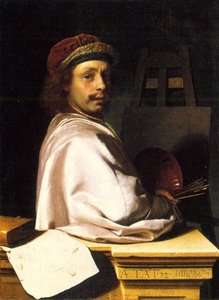
Frans van Mieris
1635 - 1681 , Netherlands
Quick Facts
- Artistic Movement Or Style: Fijnschilder, Genre painting
- Artists Or Movements Influenced By This Artist:
- Willem van Mieris
- Frans van Mieris the Younger
- A. D. Snaphaan
- Artists Who Influenced This Artist:
- Gerrit Dou
- Abraham van den Tempel
- Date Of Birth: 1635
- Date Of Death: 1681
- Full Name: Frans van Mieris the Elder
- Nationality: Dutch
- Notable Artworks:
- Doctor's Visit
- Self-Portrait with a Cittern
- Musical Company
- Duet
- Place Of Birth: Leiden, Netherlands