Switch to Print
 Read More







































 For artworks or reproductions larger than 105 cm (approximately 41 inches) on any side, the frame will be shipped as a kit, disassembled. This method ensures safe delivery and prevents damage during transport.


The Fruit Basket: A Baroque Ode to Abundance
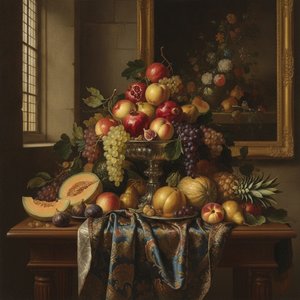
Frans Snyders’ “The Fruit Basket,” completed in 1633, transcends mere depiction; it embodies the very spirit of Baroque art—a celebration of opulent detail and dramatic visual impact. Housed within the Museo del Prado in Madrid, Spain, this oil on canvas masterpiece isn't simply a still life; it’s a carefully constructed tableau designed to stimulate contemplation and evoke a profound appreciation for earthly beauty. The painting immediately draws the eye with its vibrant palette—deep reds dominate the apples and oranges, contrasted by lush greens representing the foliage and vegetables. These colors aren’t merely decorative; they were painstakingly chosen to convey emotion and heighten the sense of realism achieved through masterful chiaroscuro lighting.- Composition & Technique: Snyders employs a pyramidal composition, anchoring the eye on the basket itself while subtly guiding it across the table towards the woman holding it. The artist’s meticulous brushwork captures the textures of fruit skins—the velvety sheen of peaches and plums alongside the rough surface of apples—creating an illusion of palpable physicality. Notice how light sculpts the forms, emphasizing volume and depth, mirroring the grandeur of Baroque artistic ideals.
- Historical Context: Created during Philip IV’s reign, “The Fruit Basket” reflects the prevailing fascination with naturalism within European art circles. The Baroque period prioritized portraying the world as it appeared to the senses—a reaction against the stylized conventions of Mannerism. Snyders' work aligns perfectly with this trend, demonstrating a commitment to capturing fleeting moments of sensory experience.
- Symbolism & Narrative: Beyond its visual splendor, “The Fruit Basket” carries symbolic weight. The basket itself represents fertility and nourishment—themes central to Baroque iconography. The woman’s gesture suggests generosity and hospitality, embodying the humanist values championed during this era. Furthermore, the inclusion of a knife hints at preparation and transformation, subtly referencing the cycle of life and death.
- Influence & Legacy: Snyders' meticulous realism profoundly impacted subsequent still life painters. His influence can be seen in works by artists like Jacob Jordaens and Willem Claeszoon Heda who adopted similar techniques to convey a sense of immediacy and grandeur. “The Fruit Basket” remains an enduring testament to Baroque artistry, inspiring admiration for its technical prowess and emotional resonance.
Questions & Answers
In what year was "The Fruit Basket" by Frans Snyders created?
"The Fruit Basket" dates from 1633. The date places the work within Frans Snyders's career and its era.
What space is suggested for "The Fruit Basket" by Frans Snyders?
The recommended space for "The Fruit Basket" by Frans Snyders is a living room. The suggestion can of course be adapted to your interior.
Where is "The Fruit Basket" by Frans Snyders on display today?
"The Fruit Basket" by Frans Snyders is on display at the Museo del Prado, Madrid, Spain. The museum listing refers to the original work, not to reproductions.
More about this painting
 Preview
 Send
Send Share
Share
 Details
 Guide
Guide

 Download
 Similars
 X-Ray
X-Ray Diaporama
 Q&A
Q&A Stats
Stats