Preview
 Send
Send Share
Share
 Details

 Download
 Similars
 X-Ray
X-Ray Diaporama
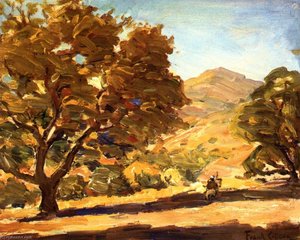
Maples

 Read More
Giclée / Art Print
Museum-quality giclée or canvas print with fast production and flexible finish options. ( Buy Hand Made Painting Buy Image)




































Pick from our preset sizes that match the artwork's original proportions.

You may enter your own dimensions to fit a specific frame or space. If your selected size does not match the original image's proportions, we will either crop the artwork or extend the image with a mirrored or solid-fill edge. A digital mockup will be sent for your approval before production begins.
Please note that the on-screen preview does not reflect the actual cropping or extension. Only the mockup will accurately show the final composition.
While custom sizes are available, we recommend selecting a dimension from the predefined list to preserve the original proportions.
Worldwide Delivery () in 2 weeks instead of standard 4/5 weeks. (24 August)

Free Worldwide Express Shipping

High-Quality Linen Canvas

Full Shipping Insurance

Customs Tax Refund Guarantee

True Color Matching Guarantee

60-Day Return Policy (Defects Only)

100% Money-Back Guarantee

Bulk Discount Offer
 Glass option is only available in size under 110 CM

Maples
Giclée / Art Print
Reproduction Size
-


Total Price
$ 81
Artist Biography
The Wandering Impressionist: The Life and Legacy of Frank Coburn
Frank Coburn was an artist who believed that the soul of a masterpiece was not found in innate genius, but in the tireless cultivation of one's own vision. Born in the industrial heart of Chicago on July 4, 1862, his early years were shaped by the bustling energy of the Midwest. While he received formal training at the prestigious Art Institute of Chicago, Coburn remained a lifelong student of the world, famously asserting that talent was something to be earned through observation and practice. This humble philosophy guided him from the structured streets of Illinois toward the sun-drenched horizons of the American West, eventually establishing him as a cornerstone of the early 20th-century Californian art scene. In 1909, a profound transformation occurred when Coburn relocated to Los Angeles. The shift from the heavy, industrial atmosphere of Chicago to the luminous, coastal light of Southern California breathed new life into his palette. He became a vital figure in the American Impressionism movement, capturing the burgeoning spirit of a region defined by its dramatic landscapes and shifting atmospheres. His work was never static; rather, it moved with the wind and the tides, much like his own nomadic lifestyle.A Studio on Wheels: Technique and the Spirit of Plein Air
What truly set Coburn apart from his contemporaries was his devotion to plein air painting—the practice of capturing nature directly from the source. He did not merely observe the landscape from a distance; he lived within it. To facilitate this, he utilized a unique mobile studio known as "El Vagabundo," a bus-like vehicle that served as both his home and his sanctuary for creation. This wandering studio allowed him to chase the fleeting moments of light that define the Impressionist aesthetic, moving between the coastal beauty of Point Fermin and the tranquil streets of Laguna Beach. His technique was deeply influenced by the masters of French Impressionism, such as Claude Monet and Camille Pissarro. From them, he learned the art of layering color to simulate the vibration of light and the delicate textures of the natural world. His brushstrokes were often vibrant and energetic, capable of conveying the hazy warmth of a Wilmington afternoon or the serene glow of a moonrise. Beyond the sweeping vistas, Coburn possessed a remarkable versatility, applying his sensitive touch to:- Intimate still lifes featuring the delicate textures of fruits and flowers.
- Soulful portraits of Native American peoples, including the Laguna Pueblo and Huichol communities.
- Evocative urban scenes that captured the evolving character of early Los Angeles.
- Detailed figure studies that explored the human form within natural settings.
Historical Significance and Enduring Impression
The twilight of Coburn’s life was marked by a profound recognition of his contributions to American art. In 1938, the same year he passed away, he was honored with a significant solo exhibition at the Bowers Museum in Santa Ana. This milestone served as a testament to a career spent documenting the changing face of California. His sister, Georgia DeLong, ensured his legacy endured by donating several of his precious works to the museum, preserving his vision for future generations. Today, Frank Coburn is remembered not just as a painter of landscapes, but as a chronicler of light and movement. His ability to blend the ruggedness of the American West with the delicate elegance of Impressionism allows his work to remain timeless. When one gaz于s upon a piece like "Laguna Beach" or "Hazy Afternoon, Wilmington," they are not merely seeing a location; they are experiencing the atmospheric poetry of a bygone era, captured by a man who found his greatest inspiration in the simple act of wandering.
frank coburn
1862 - 1938
Quick Facts
- Artistic Movement Or Style: Impressionism
- Artists Or Movements Influenced By This Artist: ['French Impressionism']
- Artists Who Influenced This Artist: ['Claude Monet']
- Date Of Birth: July 4, 1862
- Date Of Death: November 13, 1938
- Full Name: Frank Coburn
- Nationality: American
- Notable Artworks: ['Los Angeles Park Scene']
- Place Of Birth: Chicago, Illinois