Preview
 Send
Send Share
Share
 Details

 Download
 Similars
 X-Ray
X-Ray Diaporama
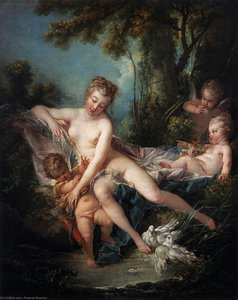
Venus at Vulcan
 Oil On Canvas
- WallArt
- Rococo
 1769
1769 273.0 x 204.0 cm
 Kimbell Art Museum
 Read More
Giclée / Art Print
Museum-quality giclée or canvas print with fast production and flexible finish options. ( Buy Hand Made Painting Buy Image)




P118B $10

P118H $10

P118W $10

P438Z $10

P508JH $12

P508YH $12

P805H $10

P805Z $10

P919BZ $10

P919G $10

P919XJ $10

P959ZH $10

P968JZ $12

W106C $8

W218G $10

W218JH $8

W218Y $10

W307PJ $10

W316G $10

W316PJ $8

W316Y $10

W398PJ $8

W4111J $10

W500HY $15

W500JH $15

W692G $12

W849H $8

W940BG $15

W953PJ $8




Pick from our preset sizes that match the artwork's original proportions.

You may enter your own dimensions to fit a specific frame or space. If your selected size does not match the original image's proportions, we will either crop the artwork or extend the image with a mirrored or solid-fill edge. A digital mockup will be sent for your approval before production begins.
Please note that the on-screen preview does not reflect the actual cropping or extension. Only the mockup will accurately show the final composition.
While custom sizes are available, we recommend selecting a dimension from the predefined list to preserve the original proportions.
Worldwide Delivery () in 2 weeks instead of standard 4/5 weeks. (15 August)

Free Worldwide Express Shipping

High-Quality Linen Canvas

Full Shipping Insurance

Customs Tax Refund Guarantee

True Color Matching Guarantee

60-Day Return Policy (Defects Only)

100% Money-Back Guarantee

Bulk Discount Offer
 Glass option is only available in size under 110 CM

Venus at Vulcan
Giclée / Art Print
Reproduction Size
-


Total Price
$ 81
Collectible Description
The Genesis of a Mythic Union
François Boucher’s “Venus at Vulcan’s Forge,” painted in 1769, isn't merely a depiction of mythological figures; it’s a vibrant embodiment of reconciliation and the potent dance between opposing forces. Rooted firmly within the opulent Rococo style that defined late 18th-century France, the painting transports us to a dramatic tableau inspired by Virgil’s *Aeneid*. Here, Venus, goddess of love and beauty, and Vulcan, god of fire and craftsmanship, find themselves caught in a passionate embrace amidst a swirling storm of celestial drama. Boucher masterfully captures this pivotal moment – not of creation, but of a deliberate union forged from the heart of conflict, suggesting that even the most formidable adversaries can be brought together through irresistible desire.
- The Narrative Core: The scene unfolds as Venus, radiant and alluring, initiates Vulcan into her world. He, in turn, is utterly captivated by her beauty, abandoning his forge and duties to succumb entirely to the force of her allure.
- A Virgilian Echo: Boucher meticulously recreates a key passage from Virgil’s epic poem, where Venus persuades Vulcan to craft weapons for her son Aeneas. This narrative thread imbues the painting with layers of classical allusion and dramatic intensity.
Rococo Grandeur and Technical Brilliance
Boucher's skill as a painter is immediately apparent in the lavish detail and dynamic composition of “Venus at Vulcan’s Forge.” The Rococo style, characterized by its emphasis on elegance, ornamentation, and emotional expression, is flawlessly executed here. The painting utilizes strong diagonals to create a sense of movement and depth, drawing the viewer's eye upwards from the chaotic ground level – littered with Roman soldiers engaged in battle – towards the serene, cloud-draped realm where Venus and Vulcan reside. The artist’s masterful brushwork builds layers of texture and luminosity, creating an almost palpable richness that invites close inspection. Notice how Boucher employs a technique known as *glazing*, applying thin, translucent layers of paint to achieve subtle color variations and atmospheric effects – particularly evident in the billowing clouds and the shimmering fabrics adorning the gods.
Technique Highlights:- Glazing: Layered translucent paints for depth and luminosity.
- Dynamic Composition: Strong diagonals create movement and visual interest.
- Rich Textures: Detailed brushwork builds a sense of volume and realism.
Symbolism Woven into the Canvas
Beyond its narrative core, “Venus at Vulcan’s Forge” is rich in symbolic meaning. The sword, prominently displayed, represents victory and the power of Vulcan's craft – a testament to his skill as a blacksmith. The flames themselves symbolize not just destruction but also creation and transformation, reflecting Vulcan’s dual role as both destroyer and builder. The angelic figures surrounding Venus and Vulcan serve as witnesses to this divine union, suggesting a higher purpose behind their passionate encounter. Even the placement of the Roman soldiers below underscores the painting's central theme: the potential for harmony between opposing forces – love and war, creation and destruction, beauty and power.
Key Symbols:- Sword: Victory, craftsmanship, power.
- Flames: Creation, transformation, destruction.
- Angelic Figures: Divine intervention, harmony.
A Legacy of Elegance and Influence
François Boucher’s “Venus at Vulcan’s Forge” stands as a quintessential example of Rococo artistry – a testament to the era's fascination with beauty, sensuality, and mythological narratives. Its influence can be seen in countless subsequent works of art, shaping the aesthetic sensibilities of generations of artists. Reproductions of this captivating painting continue to resonate today, offering a glimpse into the opulent world of 18th-century France and reminding us of the enduring power of myth, love, and artistic mastery. The painting’s vibrant colors, dynamic composition, and profound symbolism make it a truly unforgettable masterpiece.
Artist Biography
François Boucher: A Life in Rococo
François Boucher (1703-1770) was a pivotal figure in 18th-century French art, renowned as one of the most celebrated painters of the Rococo era. His work embodies the elegance, sensuality, and playful spirit that defined this influential style.
Early Life and Training
Born on September 29, 1703, in Paris, France, François Boucher’s artistic journey began under the tutelage of his father, Jean Boucher, a painter himself. At the age of seventeen, he caught the eye of François Lemoyne, leading to a brief but impactful apprenticeship. He further honed his skills with engraver Jean-François Cars before achieving a significant milestone: winning the prestigious Grand Prix de Rome in 1720.
Rise to Prominence and Artistic Development
Boucher’s time in Italy, following his win at the Grand Prix, proved formative. Upon returning to France, he was admitted to the Académie Royale de Peinture et de Sculpture in 1731. His *morceau de réception*, “Rinaldo and Armida” (1734), immediately established him as a master of the Rococo style. This period saw his artistic voice fully emerge, characterized by delicate brushwork, pastel palettes, and an emphasis on mythological and pastoral themes.
Key Works and Themes
Boucher’s oeuvre is remarkably diverse, encompassing mythology, portraiture, genre scenes, and decorative arts. Some of his most celebrated works include:
- “The Breakfast” (1739): A charming depiction of domestic life featuring his wife and children.
- “The Triumph of Venus” (1740-1751): A series of paintings showcasing Boucher’s mastery of mythological narratives.
- Numerous portraits of Madame de Pompadour, the influential mistress of King Louis XV, solidifying his position at court.
- Landscape paintings like “The Setting of the Sun”, demonstrating a lyrical and idyllic vision of nature.
Recurring themes in Boucher’s work include love, beauty, leisure, and the idealized world of mythology. His paintings often evoke a sense of playful eroticism and refined elegance.
Influence and Legacy
Boucher's influence extended far beyond painting. He designed costumes and sets for the theater, created tapestries for the Beauvais workshops, and collaborated with the Gobelins Manufactory. His appointment as *Premier Peintre du Roi* in 1765 cemented his status as the leading artist of the French Rococo.
While later critics questioned the perceived superficiality of Rococo art, Boucher’s impact on subsequent generations is undeniable. He influenced artists such as Jean-Honoré Fragonard and contributed significantly to the development of Neoclassicism through his students.
Historical Significance
François Boucher's work provides a valuable window into the tastes and values of 18th-century French society. His paintings reflect the aristocratic culture of the era, characterized by luxury, refinement, and a pursuit of pleasure. He remains a significant figure in art history, celebrated for his technical skill, artistic innovation, and enduring contribution to the Rococo style.

François Boucher
1703 - 1770 , France
Quick Facts
- Birth Date: September 29, 1703
- Birth Place: Paris, France
- Death Date: 1770
- Influenced By: François Lemoyne, Jean-François Cars
- Movement: Rococo
- Name: François Boucher
- Nationality: French
- Notable Works:
- Rinaldo and Armida
- The Breakfast
- Madame Boucher
- The Setting of the Sun
- Vulcan Presenting Venus with Arms for Aeneas
Related Articles
François Boucher: Rococo Master of Myth, Sensuality, and the French Court
Explore the captivating world of François Boucher, master of Rococo painting! Discover his iconic works, aristocratic patronage, and lasting influence on French art history. Learn more at OriginalUniqueArt.

The Rococo Aesthetic: Opulence, Rebellion & the Pursuit of Pleasure in 18th-Century Art
Explore the opulent world of Rococo art! Discover its origins, key artists like Watteau & Boucher, and lasting influence on design. Expert insights for collectors & enthusiasts.

Rococo's Radiant Legacy: 10 Masterpieces for Your Home |
Indulge in the elegance of Rococo! Explore 10 masterpieces by Fragonard, Boucher & Watteau. Discover the stories behind these iconic paintings and bring timeless art to your home with museum-quality reproductions from .
The Rococo Style: Aristocratic Leisure & the Pursuit of Delight in 18th-Century Art
Explore the opulent world of Rococo art! Discover Watteau, Boucher & Nattier's masterpieces. Expert insights for collectors seeking museum-quality reproductions and custom portraits at OriginalUniqueArt.

The Allure of Elegance in Art: A Historical & Aesthetic Exploration of Refinement & Grace
Explore the exquisite world of Rococo art! Discover its history, masters (Watteau, Boucher & more), and defining elegance. Expert insights for collectors seeking museum-quality reproductions & custom portraits.