

 Preview
 Send
Send Share
Share
 Details
 Guide
Guide

 Download
 Similars
 X-Ray
X-Ray Diaporama
 Stats
StatsJuno Asking Aeolus to Release the Winds
 Oil On Canvas
- WallArt
 1769
1769- Renaissance
 278.0 x 203.0 cm
 Kimbell Art Museum
 Read More
Hand Made Oil Reproduction
Hand-painted oil on canvas in your size and frame, made to order by our artists. ( Switch to Print Switch to Digital Image)




P118B $10

P118H $10

P118W $10

P438Z $10

P508JH $12

P508YH $12

P805H $10

P805Z $10

P919BZ $10

P919G $10

P919XJ $10

P959ZH $10

P968JZ $12

W106C $8

W218G $10

W218JH $8

W218Y $10

W307PJ $10

W316G $10

W316PJ $8

W316Y $10

W398PJ $8

W4111J $10

W500HY $15

W500JH $15

W692G $12

W849H $8

W940BG $15

W953PJ $8




Pick from our preset sizes that match the artwork's original proportions.

Type the width and the height you need, to fit your frame or your wall. This is hand-painted, so for a size with a different shape the artist can paint a bit more around the picture, or cut a bit — you choose. We send you a digital mockup to approve before the painting starts. The picture shown on this page does not show the real result — only the mockup does.
After order, OriginalUniqueArt.com team will email client for instructions and provide a mockup preview
Worldwide Delivery () in 3/4 weeks instead of standard 5 weeks. (24 October). No compromise on quality.

Free Worldwide Express Shipping

High-Quality Linen Canvas

Full Shipping Insurance

Customs Tax Refund Guarantee

True Color Matching Guarantee

100-Day Return Policy (Defects Only)

100% Money-Back Guarantee

Bulk Discount Offer
 Glass option is only available in size under 110 CM

Juno Asking Aeolus to Release the Winds
Reproduction Medium
Reproduction Size
-


Total Price
$ 300
A Dramatic Dance of Power and Jealousy: François Boucher’s Juno
François Boucher's "Juno Asking Aeolus to Release the Winds," painted in 1769, is more than just a mythological scene; it’s a meticulously crafted tableau of emotional intensity, a quintessential example of Rococo artistry at its most opulent and psychologically astute. The painting captures a pivotal moment from Virgil’s *Aeneid*, where the formidable goddess Juno, consumed by her vengeful jealousy towards Venus for her son Aeneas' impending arrival in Italy, manipulates Aeolus, the Titan god of winds, to unleash a tempestuous storm upon the Trojan fleet. Boucher doesn’t simply depict a mythological narrative; he excavates the complex emotions driving each character – Juno’s simmering rage, Aeolus’ hesitant compliance, and the subtle allure offered as a reward.
The Rococo Palette and Painterly Technique
Boucher’s mastery lies not just in his subject matter but also in his exquisite technique. Executed with a delicate yet confident hand, the painting showcases the hallmarks of the Rococo style: vibrant colors—rich reds, deep blues, and shimmering golds—applied in loose, flowing brushstrokes that create an atmosphere of luxurious sensuality. The composition is carefully balanced, drawing the eye towards the central figures while utilizing atmospheric perspective to suggest a vast, turbulent seascape beyond. Boucher’s use of *sfumato*, a technique borrowed from Leonardo da Vinci, softens the edges and creates a hazy, dreamlike quality, further enhancing the painting's emotional resonance. The meticulous detailing in the drapery, the textures of the seafoam, and the subtle expressions on the characters’ faces demonstrate Boucher’s exceptional skill as a painter.
A Mythological Tapestry: Symbolism and Narrative
The scene is laden with symbolic meaning. Juno's commanding presence, adorned in regal purple robes and radiating an aura of potent fury, immediately establishes her dominance. Aeolus, caught between his duty to the gods and the promise of a beautiful nymph, Deiopea, embodies hesitant compliance. The inclusion of the sea nymph reclining in the foreground—a figure of alluring beauty and effortless grace—represents the potential reward for Aeolus’s actions, highlighting the seductive power of desire and the consequences of succumbing to temptation. Neptune, god of the sea, subtly positioned at the bottom of the composition, serves as a reminder of the ultimate authority over the elements, ensuring that even the most powerful winds will eventually yield to his dominion. The entire scene is a carefully orchestrated drama of divine intervention and human vulnerability.
Historical Context: Boucher’s Legacy
François Boucher's rise to prominence in 18th-century France coincided with a period of significant artistic innovation and patronage. Following the death of Louis XIV, the court shifted its focus from the grandeur of the Baroque era towards the more intimate and decorative style of Rococo. Boucher was one of the leading artists of this movement, serving as a key figure in the Académie Royale de Peinture et de Sculpture. His works were highly sought after by royalty and nobility, adorning palaces and private collections throughout Europe. Boucher’s ability to seamlessly blend mythological narratives with contemporary sensibilities cemented his reputation as a master of both classical tradition and fashionable aesthetics. He was celebrated for his skill in depicting the female form, particularly in allegorical and pastoral scenes, and his influence can be seen in the works of many subsequent artists.
A Timeless Appeal: Reproduction and Interior Design
“Juno Asking Aeolus to Release the Winds” continues to captivate viewers with its dramatic composition, rich colors, and profound psychological depth. High-quality reproductions offer a stunning way to bring this masterpiece into any interior space, adding an element of timeless elegance and artistic sophistication. The painting’s themes of jealousy, power, and temptation resonate deeply, making it a compelling subject for contemplation and discussion. Consider framing the reproduction in a classic style to complement its Rococo origins, or explore larger-scale versions for impactful statement pieces within a sophisticated living room or study.
Questions & Answers
What medium is "Juno Asking Aeolus to Release the Winds" by François Boucher executed in?
The medium of "Juno Asking Aeolus to Release the Winds" by François Boucher is oil on canvas. Reproductions aim to render the appearance of this technique.
Who sells hand-painted copies of "Juno Asking Aeolus to Release the Winds" by François Boucher?
"Juno Asking Aeolus to Release the Winds" is available as a hand-painted oil reproduction on linen canvas. The order can be placed on its Hand-Painted Reproduction page, with a choice of sizes.
Where do the visitors of "Juno Asking Aeolus to Release the Winds" by François Boucher come from?
The Stats page of "Juno Asking Aeolus to Release the Winds" by François Boucher presents public visit statistics: monthly visits of this artwork, a comparison with the artist's most viewed works, and where its visitors come from.
Artist Biography
François Boucher: A Life in Rococo
François Boucher (1703-1770) was a pivotal figure in 18th-century French art, renowned as one of the most celebrated painters of the Rococo era. His work embodies the elegance, sensuality, and playful spirit that defined this influential style.
Early Life and Training
Born on September 29, 1703, in Paris, France, François Boucher’s artistic journey began under the tutelage of his father, Jean Boucher, a painter himself. At the age of seventeen, he caught the eye of François Lemoyne, leading to a brief but impactful apprenticeship. He further honed his skills with engraver Jean-François Cars before achieving a significant milestone: winning the prestigious Grand Prix de Rome in 1720.
Rise to Prominence and Artistic Development
Boucher’s time in Italy, following his win at the Grand Prix, proved formative. Upon returning to France, he was admitted to the Académie Royale de Peinture et de Sculpture in 1731. His *morceau de réception*, “Rinaldo and Armida” (1734), immediately established him as a master of the Rococo style. This period saw his artistic voice fully emerge, characterized by delicate brushwork, pastel palettes, and an emphasis on mythological and pastoral themes.
Key Works and Themes
Boucher’s oeuvre is remarkably diverse, encompassing mythology, portraiture, genre scenes, and decorative arts. Some of his most celebrated works include:
- “The Breakfast” (1739): A charming depiction of domestic life featuring his wife and children.
- “The Triumph of Venus” (1740-1751): A series of paintings showcasing Boucher’s mastery of mythological narratives.
- Numerous portraits of Madame de Pompadour, the influential mistress of King Louis XV, solidifying his position at court.
- Landscape paintings like “The Setting of the Sun”, demonstrating a lyrical and idyllic vision of nature.
Recurring themes in Boucher’s work include love, beauty, leisure, and the idealized world of mythology. His paintings often evoke a sense of playful eroticism and refined elegance.
Influence and Legacy
Boucher's influence extended far beyond painting. He designed costumes and sets for the theater, created tapestries for the Beauvais workshops, and collaborated with the Gobelins Manufactory. His appointment as *Premier Peintre du Roi* in 1765 cemented his status as the leading artist of the French Rococo.
While later critics questioned the perceived superficiality of Rococo art, Boucher’s impact on subsequent generations is undeniable. He influenced artists such as Jean-Honoré Fragonard and contributed significantly to the development of Neoclassicism through his students.
Historical Significance
François Boucher's work provides a valuable window into the tastes and values of 18th-century French society. His paintings reflect the aristocratic culture of the era, characterized by luxury, refinement, and a pursuit of pleasure. He remains a significant figure in art history, celebrated for his technical skill, artistic innovation, and enduring contribution to the Rococo style.

François Boucher
1703 - 1770 , France
Quick Facts
- Name: François Boucher
- Movement: Rococo
- Birth Date: September 29, 1703
- Death Date: 1770
- Birth Place: Paris, France
- Nationality: French
- Date Of Birth: 1703
- Date Of Death: 1770
- Influenced By: François Lemoyne, Jean-François Cars
- Notable Works:
- Rinaldo and Armida
- The Breakfast
- Madame Boucher
- The Setting of the Sun
- Vulcan Presenting Venus with Arms for Aeneas
- Place Of Birth: Paris, France
Related Articles

Rococo's Radiant Legacy: 10 Masterpieces for Your Home |
Indulge in the elegance of Rococo! Explore 10 masterpieces by Fragonard, Boucher & Watteau. Discover the stories behind these iconic paintings and bring timeless art to your home with museum-quality reproductions from .
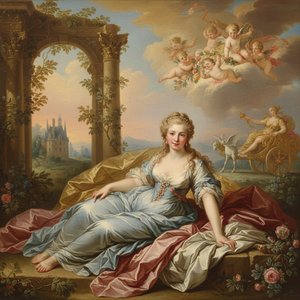
François Boucher: Rococo Master of Myth, Sensuality, and the French Court
Explore the captivating world of François Boucher, master of Rococo painting! Discover his iconic works, aristocratic patronage, and lasting influence on French art history. Learn more at OriginalUniqueArt.

The Allure of Elegance in Art: A Historical & Aesthetic Exploration of Refinement & Grace
Explore the exquisite world of Rococo art! Discover its history, masters (Watteau, Boucher & more), and defining elegance. Expert insights for collectors seeking museum-quality reproductions & custom portraits.
The Rococo Style: Aristocratic Leisure & the Pursuit of Delight in 18th-Century Art
Explore the opulent world of Rococo art! Discover Watteau, Boucher & Nattier's masterpieces. Expert insights for collectors seeking museum-quality reproductions and custom portraits at OriginalUniqueArt.

The Rococo Aesthetic: Opulence, Rebellion & the Pursuit of Pleasure in 18th-Century Art
Explore the opulent world of Rococo art! Discover its origins, key artists like Watteau & Boucher, and lasting influence on design. Expert insights for collectors & enthusiasts.


