Preview
 Send
Send Share
Share
 Details

 Download
 Similars
 X-Ray
X-Ray Diaporama
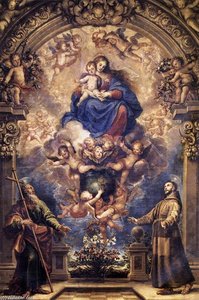
Altarpiece


 Read More
Giclée / Art Print
Museum-quality giclée or canvas print with fast production and flexible finish options. ( Buy Hand Made Painting Buy Image)




































Pick from our preset sizes that match the artwork's original proportions.

You may enter your own dimensions to fit a specific frame or space. If your selected size does not match the original image's proportions, we will either crop the artwork or extend the image with a mirrored or solid-fill edge. A digital mockup will be sent for your approval before production begins.
Please note that the on-screen preview does not reflect the actual cropping or extension. Only the mockup will accurately show the final composition.
While custom sizes are available, we recommend selecting a dimension from the predefined list to preserve the original proportions.
Worldwide Delivery () in 2 weeks instead of standard 4/5 weeks. (16 August)

Free Worldwide Express Shipping

High-Quality Linen Canvas

Full Shipping Insurance

Customs Tax Refund Guarantee

True Color Matching Guarantee

60-Day Return Policy (Defects Only)

100% Money-Back Guarantee

Bulk Discount Offer
 Glass option is only available in size under 110 CM

Altarpiece
Giclée / Art Print
Reproduction Size
-


Total Price
$ 81
Artist Biography
Francisco Rizi (1608-1685): A Baroque Master of Faith and Majesty
Francisco Rizi de Guevara, born in Madrid in 1608, stands as a pivotal figure within the Spanish Baroque artistic landscape. His life’s trajectory intertwined with the grandeur of Philip IV's court and the intellectual fervor of his era, shaping him into one of the most prolific painters of his time—a true testament to the artistic spirit of the seventeenth century. He was the son of Antonio Rizi, a Bolognese native who had accompanied Federico Zuccari into Spain, providing him with an early exposure to artistic excellence and fostering a passion for visual storytelling. Rizi’s formative years were spent under the tutelage of Vincencio Carducho, a respected artist known for his meticulous realism and humanist ideals. This mentorship instilled in Rizi a foundational understanding of technique—particularly disegno—the cornerstone of Baroque painting, emphasizing careful observation and anatomical accuracy alongside expressive color palettes. It was Carducho who recognized Rizi’s considerable talent and encouraged him to pursue ambitious projects that would solidify his reputation as a master craftsman. His ascent to prominence began with appointments to prestigious institutions – notably the Cathedral of Toledo in 1656 and later, as deputy keeper of the royal keys under Charles II—positions that afforded him unparalleled access to artistic patronage and allowed him to contribute significantly to the decorative arts of the Spanish monarchy. These roles weren’t merely symbolic; they demanded a level of artistic skill and dedication that reflected the highest standards of Baroque artistry. Furthermore, Rizi's involvement in court ceremonies and theatrical productions showcased his versatility as an artist—a rare accomplishment during this period. Rizi’s oeuvre is characterized by a remarkable breadth of subject matter, encompassing religious commissions – including monumental altarpieces and devotional paintings – portraits capturing the likenesses of royal figures and nobility, and historical scenes depicting pivotal moments in Spanish history. His artistic style evolved over time, reflecting both stylistic trends prevalent during his lifetime and Rizi’s own personal vision. He skillfully blended meticulous detail with dramatic composition, employing chiaroscuro—the interplay of light and shadow—to heighten emotional impact and convey a sense of grandeur. Among his most celebrated works are “Auto-da-fe on Plaza Mayor,” Madrid (1683), a visceral depiction of the Inquisition’s spectacle that captures the tension and solemnity of the event with remarkable precision; "Equestrian Portrait of Marie Louise d'Orléans," showcasing the queen in regal splendor atop her horse—a masterful demonstration of anatomical accuracy and expressive color—and “Annunciation,” demonstrating Rizi’s ability to convey spiritual contemplation through serene beauty. His legacy extends beyond individual paintings, influencing subsequent generations of artists and cementing his place as a cornerstone of Baroque art history. He died at El Escorial in 1685, leaving behind an enduring contribution to Spanish artistic heritage.
Francisco Rizi
1608 - 1685 , Spain
Quick Facts
- Artistic Movement Or Style: Baroque
- Artists Or Movements Influenced By This Artist: ['Philip IV']
- Artists Who Influenced This Artist: ['Vincencio Carducho']
- Date Of Birth: Madrid, Spain (1608)
- Date Of Death: El Escorial
- Full Name: Francisco Rizi de Guevara
- Nationality: Spanish
- Notable Artworks: ['Auto-da-fe on Plaza Mayor']
- Place Of Birth: Madrid