Preview
 Send
Send Share
Share
 Details

 Download
 Similars
 X-Ray
X-Ray Diaporama
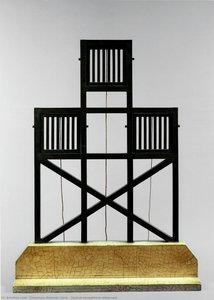
Optical semaphore telegraph
 1807
1807 5.0 x 54.0 cm
 Fundação Portuguesa das Comunicações
 Read More
Hand Made Oil Reproduction
Hand-painted oil on canvas in your size and frame, made to order by our artists. ( Buy Print Buy Image)




































Pick from our preset sizes that match the artwork's original proportions.

You may enter your own dimensions to fit a specific frame or space. If your selected size does not match the original image's proportions, we will either crop the artwork or extend the painting with additional hand-painted elements. A digital mockup will be sent for your approval before production begins.
Please note that the on-screen preview does not reflect the actual cropping or extension. Only the mockup will accurately show the final composition.
While custom sizes are available, we recommend selecting a dimension from the predefined list to preserve the original proportions.
After order, OriginalUniqueArt.com team will email client for instructions and provide a mockup preview
Worldwide Delivery () in 3/4 weeks instead of standard 5 weeks. (21 August). No compromise on quality.

Free Worldwide Express Shipping

High-Quality Linen Canvas

Full Shipping Insurance

Customs Tax Refund Guarantee

True Color Matching Guarantee

60-Day Return Policy (Defects Only)

100% Money-Back Guarantee

Bulk Discount Offer
 Glass option is only available in size under 110 CM

Optical semaphore telegraph
Reproduction Medium
Reproduction Size
-


Total Price
$ 300
Artwork Description
Artist Biography
Francisco António Ciera: Portugal’s Pioneering Cartographer and Astronomer
Francisco António Ciera (1763 – 1814) stands as a singular figure in Portuguese intellectual history—a mathematician, cartographer, astronomer, and architect who profoundly shaped the scientific landscape of his era. Born in Lisbon to an Italian mathematician father involved in royal cartographic projects, Ciera’s upbringing instilled within him a lifelong fascination with precision, observation, and the pursuit of knowledge about the natural world. This formative influence would propel him toward a distinguished career at the Real Academia de la Marina, where he became Professor of Mathematics and Astronomy—a position that cemented his role as a central figure in advancing scientific understanding during Portugal’s Napoleonic exile.- Early Life & Education: Ciera's father’s dedication to mapping Portugal served as an undeniable catalyst for his own intellectual development. He excelled at the Real Academia de la Marina, mastering complex geometric calculations and gaining invaluable experience in applying mathematical principles to practical problems—particularly those related to navigation and surveying.
- Academic Career & Membership: His appointment as lente (lecturer) at the academy followed his father’s untimely death, marking a pivotal moment in his academic trajectory. Recognizing Ciera's exceptional talent, the Real Academia de Ciencias de Lisboa welcomed him into its ranks in 1785—a testament to his scholarly prowess and establishing him as a respected voice within Portugal’s scientific community.
- The Picoto da Melriça Project: Perhaps Ciera’s most enduring legacy resides in his leadership of the Picoto da Melriça triangulation project—a monumental undertaking designed to determine Portugal's geographic center with unprecedented accuracy. This ambitious endeavor demanded meticulous fieldwork, sophisticated instrumentation, and collaborative effort among scientists from across the kingdom. The resulting monument stands as a tangible symbol of Portuguese scientific ingenuity and national pride.
Optical Telegraphy: Innovating Communication Technology
Ciera’s inventive spirit extended beyond geodesy into the realm of communication technology. Driven by a desire to improve naval efficiency and bolster Portugal's defense capabilities, he spearheaded the development of an optical telegraph system—a groundbreaking innovation that utilized mirrors and towers to transmit messages across vast distances. This pioneering effort represents a significant contribution to the history of telecommunications and foreshadowed advancements that would revolutionize global communication centuries later.- System Design & Implementation: Ciera’s optical telegraph system incorporated innovative techniques for signal transmission and reception—demonstrating his mastery of engineering principles and his commitment to practical applications of scientific knowledge.
- Strategic Significance: The deployment of these stations along Portugal's coastline served as a crucial tool for coordinating military operations during the Napoleonic Wars—highlighting Ciera’s impact on national security and bolstering Portugal’s resilience against foreign aggression.
Architectural Contributions & Artistic Vision
Beyond his scientific pursuits, Ciera possessed considerable artistic talent—primarily expressed in sculpture. He collaborated extensively with António José Vieira—a prominent Baroque sculptor—on monumental religious artworks commissioned for churches throughout Minas Gerais—most notably the Congonhas Complex, which houses three colossal sculptures depicting Saint Francis of Assisi, Saint Dominic and Saint Augustine. These sculptures are celebrated for their dramatic realism, expressive dynamism, and profound spiritual depth—reflecting Ciera’s artistic sensibilities and cementing his place as one of Portugal's foremost Baroque sculptors.- Collaboration with Vieira: Ciera’s partnership with Vieira resulted in masterpieces that embody the stylistic hallmarks of Portuguese Baroque art—characterized by elaborate ornamentation, emotive gestures, and meticulous attention to detail.
- The Congonhas Complex: The Congonhas Complex stands as a testament to Ciera's artistic vision—a monumental pilgrimage site adorned with sculptures that convey profound religious symbolism and evoke powerful emotional responses.
Legacy & Historical Significance
Francisco António Ciera’s contributions to Portuguese science, cartography, astronomy, and art endure as a beacon of intellectual curiosity and creative excellence. His unwavering dedication to advancing knowledge—coupled with his artistic genius—established him as an exemplar of the Enlightenment ideal—a figure who seamlessly blended rational inquiry with aesthetic sensibility. Today, Ciera is remembered not only for his scientific achievements but also for his enduring influence on Portuguese cultural heritage—a testament to his transformative impact on the nation’s intellectual and artistic landscape. His work continues to inspire scholars and artists alike—affirming his place as a pivotal figure in Portugal's history of innovation and artistic expression.
francisco antónio ciera
1763 - 1814 , Portugal
Quick Facts
- Artistic Movement Or Style: Baroque
- Artists Or Movements Influenced By This Artist: ['Antonio Ligabue']
- Artists Who Influenced This Artist: ['Italian Mathematicians']
- Date Of Birth: Lisbon, Portugal (1763)
- Date Of Death: 1814
- Full Name: Francisco António Ciera
- Nationality: Portuguese
- Notable Artworks: ['Picoto da Melriça Monument']
- Place Of Birth: Lisbon