Preview
 Send
Send Share
Share
 Details
 Guide
Guide

 Download
 Similars
 X-Ray
X-Ray Diaporama
 Stats
StatsEdward Taylor Scott (1883–1932)
 1920
1920- Modern
 60.0 x 50.0 cm
 Guardian News - Media Archive
 Read More
Giclée / Art Print
Museum-quality giclée or canvas print with fast production and flexible finish options. ( Buy Hand Made Painting Switch to Digital Image)




P118B $10

P118H $10

P118W $10

P438Z $10

P508JH $12

P508YH $12

P805H $10

P805Z $10

P919BZ $10

P919G $10

P919XJ $10

P959ZH $10

P968JZ $12

W106C $8

W218G $10

W218JH $8

W218Y $10

W307PJ $10

W316G $10

W316PJ $8

W316Y $10

W398PJ $8

W4111J $10

W500HY $15

W500JH $15

W692G $12

W849H $8

W940BG $15

W953PJ $8




Pick from our preset sizes that match the artwork's original proportions.

Type the width and the height you need, to fit your frame or your wall. A print can only be cut, never made bigger than the picture, so a size with a different shape loses a part of the image. We send you a digital mockup to approve before we print anything. The picture shown on this page does not show the real cut — only the mockup does.
Worldwide Delivery () in 2 weeks instead of standard 4/5 weeks. (26 October)

Free Worldwide Express Shipping

High-Quality Linen Canvas

Full Shipping Insurance

Customs Tax Refund Guarantee

True Color Matching Guarantee

100-Day Return Policy (Defects Only)

100% Money-Back Guarantee

Bulk Discount Offer
 Glass option is only available in size under 110 CM

Edward Taylor Scott (1883–1932)
Giclée / Art Print
Reproduction Size
-


Total Price
$ 81
A Glimpse into the Soul: The Portrait of Edward Taylor Scott
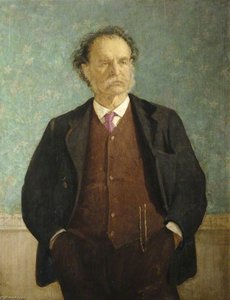
In this evocative portrait from 1920, the viewer is immediately drawn into an intimate encounter with a man of quiet distinction. Painted by Francis Dodd, the work captures Edward Taylor Scott not merely as a subject, but as a presence that commands the space through a subtle, dignified stillness. The composition centers on a gentleman dressed in the formal elegance of the early twentieth century, his crisp white shirt and striking red tie serving as vibrant focal points against the more muted tones of the background. There is an undeniable sense of character etched into his features; his gaze, directed toward the observer, possesses a penetrating quality that suggests a moment of profound reflection or perhaps a silent dialogue between the sitter and the artist.
The technique employed in this piece speaks to a masterful command of light and texture. Dodd utilizes a painterly approach that breathes life into the fabric of the clothing and the soft contours of the face, creating a tactile reality that invites the eye to linger. The interplay of shadow and illumination provides a sculptural depth to the subject, making him appear almost three-dimensional within the frame. This mastery of chiaroscuro does more than just define form; it imbues the portrait with an emotional weight, evoking a sense of nostalgia for an era defined by grace, decorum, and the quiet strength of individual identity.
Atmosphere and Compositional Harmony
Beyond the central figure, the painting unfolds into a carefully curated environment that enhances the overall narrative. The inclusion of two potted plants, positioned symmetrically on either side of the subject, introduces an organic element to the structured formality of the portrait. These botanical touches serve as more than mere decoration; they provide a sense of depth and spatial continuity, grounding the man within a lived-in, domestic, or professional sanctuary. The greenery offers a soft, natural contrast to the sharp lines of the gentleman's attire, creating a balanced harmony between the human spirit and the natural world.
For the discerning collector or interior designer, this artwork represents a timeless addition to any curated space. Its sophisticated palette and classical composition make it an ideal centerpiece for a study, a library, or a formal living area where conversation and contemplation are encouraged. As a high-quality reproduction, this piece carries the weight of history and the elegance of the 1920s into the modern home, offering an atmosphere of cultured refinement. It is a work that does not merely decorate a wall but enriches the very soul of a room, providing a window into a bygone era of poise and enduring character.
Questions & Answers
Which museum holds the original "Edward Taylor Scott (1883–1932)"?
You can see the original "Edward Taylor Scott (1883–1932)" at the Guardian News - Media Archive, London, United Kingdom.
How is the color composition of "Edward Taylor Scott (1883–1932)" by Francis Dodd built?
The color composition of "Edward Taylor Scott (1883–1932)" by Francis Dodd combines a statement contrast with a strong color unity harmony.
What color palette is used in "Edward Taylor Scott (1883–1932)" by Francis Dodd?
The colors of "Edward Taylor Scott (1883–1932)" form an earthy palette. This classification describes the dominant color families.
Artist Biography
The Life and Legacy of Francis Dodd
Francis Edgar Dodd was a distinguished British portrait painter, landscape artist, and printmaker whose work captured the profound essence of his subjects through remarkable accuracy and depth. Born in Holyhead, Wales, as the son of a Wesleyan minister, Dodd’s artistic journey began with formal training at the Glasgow School of Art. It was during his time in Glasgow that he demonstrated exceptional promise, winning the Haldane Scholarship in 1893. This prestigious achievement allowed him to traverse the cultural landscapes of France, Italy, and Spain, experiences that undoubtedly enriched his visual vocabulary and technical mastery.
Upon returning to England in 1895, Dodd settled initially in Manchester, where he cultivated significant friendships within the artistic community, before eventually moving to Blackheath in London in 1904. His career was marked by a versatile command over various media, ranging from evocative, atmospheric watercolors of urban scenes like High Street, Greenwich to meticulously detailed oil portraits. His ability to convey not just a likeness, but a palpable sense of character—whether through the stern gaze of a professional in John Russell Scott or the serene contemplation found in Marianne Frances Bernard—established him as a master of his craft.
Artistic Achievements and Historical Significance
The historical importance of Francis Dodd extends beyond the canvas into the very fabric of British institutional art. During the tumultuous years of World War I, Dodd was appointed an official war artist in 1916 by the head of the War Propaganda Bureau. Serving on the Western Front, he produced more than thirty portraits of senior military figures, documenting the human element of the conflict with a disciplined hand. This period of service solidified his reputation as an artist capable of capturing gravity and authority under the most pressing historical circumstances.
His professional accolades were numerous and reflected his standing among the elite of the British art world:
- Elected Associate of the Royal Academy of Arts in 1927.
- Achieved full Membership of the Royal Academy of Arts in 1935.
- Served as a trusted trustee of the Tate Gallery, holding the position for six years starting in 1929.
Dodd’s legacy is preserved through his contributions to significant collections, including the Imperial War Museum and the Tate, ensuring that his precise brushwork and ability to capture the light and texture of his era continue to resonate with viewers today. His work remains a vital window into the social conventions and psychological depths of the early twentieth century.

Francis Dodd
1874 - 1949 , United States of America
Quick Facts
- Artistic Movement Or Style: Portrait painter, landscape artist, printmaker
- Full Name: Francis Edgar Dodd
- Nationality: British
- Notable Artworks:
- Marianne Frances Bernard
- John Russell Scott
- High Street, Greenwich
- Place Of Birth: Holyhead, United States of America
- Date Of Birth: 1874
- Date Of Death: 1949
Related Articles

The Enduring Legacy of Formal Portraiture: Power, Identity & Artistic Exploration
Explore the rich history of formal portraiture & its enduring power to capture identity and shape perception. Discover investment-worthy artworks, expert appraisals, and custom reproduction services at OriginalUniqueArt.
The Enduring Legacy of Classicism: Principles, Evolution & Influence in Western Art
Explore the enduring legacy of Classicism in Western art! Discover its historical context, key principles, iconic masterpieces & lasting influence. Learn about Renaissance and Neoclassical movements with OriginalUniqueArt.
Neo-Classicism's Greatest Hits: 10 Masterpieces for Your Home |
Journey through Neo-Classicism's finest! Explore 10 iconic masterpieces by David, Ingres & Canova. Discover art history, techniques & timeless beauty – perfect for inspiring your home decor. Find museum-quality reproductions at

Crimson Threads of Narrative: Exploring Symbolism & Representation in Artworks Featuring the Red Dress
Explore the rich symbolism of the red dress in art history! From ancient power displays to iconic portraits like Cézanne’s 'Madame Cezanne', discover the cultural and artistic significance behind this captivating color. Expert analysis & insights.
The Enduring Gaze: Classical Portraiture & Societal Values
Explore the rich history of classical portraiture & its reflection of societal values. Discover artistic techniques, symbolism, and enduring influence on art collecting with OriginalUniqueArt.