

 Preview
 Send
Send Share
Share
 Details
 Guide
Guide

 Download
 Similars
 X-Ray
X-Ray Diaporama
 Stats
StatsSecond Version of the triptych


 Read More
Purchase a high-resolution, enhanced digital image, far superior to the online preview.
Each file is meticulously prepared by our in-house specialists using advanced tools and expert manual retouching. We ensure every image has exceptional clarity, precise color accuracy, and fine detail.
The final file is delivered via email within 72 hours, optimized for immediate use in professional, editorial, and print environments. This is the same quality trusted by top-tier design studios, publishers, and galleries.
Digital Image
Download a high-resolution file for personal display, printing, and creative projects. ( Switch to Print Buy Hand Made Painting)
Included in Every Digital Image Order
Expert Digital Delivery, Guaranteed
When you choose OriginalUniqueArt.com, you're not just getting an image - you're receiving a professionally enhanced digital artwork, crafted with precision and backed by a satisfaction guarantee. Here's everything that comes with your order, automatically:

Fast Email Delivery
Your high-resolution digital image file will be emailed to you within 72 hours of ordering - ready for immediate use.

AI-Enhanced Digital File
Your artwork is professionally optimized using advanced AI tools and manual editing, ensuring maximum detail, clarity, and color accuracy.

Free Lifetime Re-Delivery
Accidentally deleted or lost your file? No worries - we'll resend it to you anytime, free of charge.

No Import Fees - Ever
Enjoy your artwork instantly with zero customs, duties, or delivery fees - digital downloads are always tax-free.

Color Accuracy Guarantee
We ensure your digital image reflects the original colors as closely as possible using professional tools and color management.

100-Day Satisfaction Guarantee
If you're not satisfied with your digital image, we'll revise it or refund 100% within 100 days - no questions asked.

100% Money-Back Guarantee
Not satisfied? Get a full refund within 100 days of receiving your digital file - no questions asked.

Bulk Order Discounts
Buy 3 images, save 10% - Buy 5, save 15% - Buy 10+, save 20%. Great for creative projects, galleries, and agencies.
A Haunting Echo: Francis Bacon’s ‘Second Version of Triptych’ (1988)
Francis Bacon, a master of existential angst and visceral imagery, presents us with a profoundly unsettling yet captivating work in his 1988 painting, ‘Second Version of Triptych.’ This piece isn't merely a visual experience; it’s an emotional confrontation, a raw exploration of the human condition rendered with Bacon’s signature brutality and poetic sensitivity.Subject & Composition: A Stage for Vulnerability
The triptych format – a three-paneled structure historically reserved for religious altarpieces – is deliberately subverted here. Instead of divine narratives, we are presented with a distorted, vaguely humanoid figure perched upon a stark red pedestal. This central form dominates the composition, its elongated and curved body resembling a creature caught between states of being—bird, insect, or perhaps something altogether more primal. The figure’s small, rounded head features a single, piercing eye that seems to lock onto the viewer, creating an immediate sense of unease and direct address. The limited depth of field and flattened space further isolate the subject, emphasizing its vulnerability and confinement.Style & Technique: Expressionism at Its Peak
‘Second Version of Triptych’ is a quintessential example of Bacon's expressive style, deeply rooted in Surrealism but forging its own unique path. The fluid, organic lines and amorphous shapes reject traditional representation, prioritizing emotional impact over anatomical accuracy. Executed in oil paint on canvas, the technique showcases Bacon’s masterful blending of colors and subtle brushwork, creating a smooth texture that belies the turbulent emotions conveyed. The vibrant red of the pedestal provides a jarring contrast to the pale figure, drawing immediate attention and amplifying the sense of drama. This is not painting as depiction, but as an excavation of inner turmoil.Historical Context & Artistic Lineage
Created in 1988, towards the end of Bacon’s prolific career, this triptych revisits themes he explored decades earlier in his seminal work, ‘Three Studies for Figures at the Base of a Crucifixion’ (1944). It's a reworking – a second iteration—suggesting a continued grappling with these core anxieties. Bacon often revisited and re-imagined his motifs, pushing them to new extremes. He stands as a pivotal figure in post-war art, influencing generations of artists with his unflinching portrayal of the human psyche. His work emerged from the shadow of World War II, reflecting a pervasive sense of disillusionment and existential dread.Symbolism & Emotional Resonance
The symbolism within ‘Second Version of Triptych’ is deliberately ambiguous, inviting multiple interpretations. The pedestal can be seen as a stage, elevating the figure for scrutiny, or perhaps as a symbol of isolation and display. The distorted form itself represents the fragmentation of identity and the inherent fragility of human existence. The pervasive sense of unease evokes feelings of anxiety, vulnerability, and even dread. It’s a work that doesn't offer easy answers but instead compels us to confront uncomfortable truths about ourselves and our place in the world.For Collectors & Interior Designers
A reproduction of ‘Second Version of Triptych’ is more than just an aesthetic addition; it’s a statement piece. Its bold color palette and dramatic composition make it suitable for modern, minimalist interiors or spaces seeking a touch of intellectual provocation. The artwork's emotional depth adds layers of complexity to any environment, sparking conversation and contemplation. Its enduring legacy as a masterpiece of 20th-century art ensures its continued relevance and value for years to come.- Style: Expressionism, Surrealism
- Medium: Oil on Canvas
- Year: 1988
- Artist: Francis Bacon
Questions & Answers
What is the perceived brightness of "Second Version of the triptych" by Francis Bacon?
In terms of perceived brightness, "Second Version of the triptych" by Francis Bacon is bright.
Is "Second Version of the triptych" by Francis Bacon in the public domain?
"Second Version of the triptych" by Francis Bacon is still protected by copyright. This status governs how the image of the work may be reproduced.
Who made "Second Version of the triptych", and when?
The author of "Second Version of the triptych" is Francis Bacon, and the work is dated 1988.
Artist Biography
The Brutality of the Human Image
To look at a Francis Bacon canvas is to encounter a direct assault on the nervous system. He did not seek to decorate; he sought to capture the raw, often terrifying reality of existence through a distinctive and disturbing realism. While his contemporaries drifted toward the safety of abstraction, Bacon anchored himself in the human form, though he stripped that form of any dignity or comfort. His work functions as a visceral response to the mid-twentieth century, translating anxiety and physical vulnerability into smeared, violent colors and contorted limbs.
The power of his imagery stems from a refusal to look away from degradation. He utilized oils with a fluidity that allowed for the depiction of flesh that seems to be dissolving or bruising under pressure. By placing figures within geometric structures—transparent cages or architectural space-frames—he forced a sense of claustrophobia upon the viewer. These frames were not mere compositional tools; they were devices to concentrate the image and trap the subject in a state of permanent isolation.
A Life of Displacement and Design
Bacon’s path to the canvas was far from academic. Born in Dublin, Ireland, his early years were marked by instability and a difficult relationship with his parents. He moved through London, Berlin, and Paris, living a life that was often as turbulent as his later paintings. Before he was recognized as a painter, he worked as an interior designer and decorator. This period of his life produced tangible, structured objects:
- Royal Wilton rugs featuring abstract motifs.
- Cocktail shelves and room screens with geometric silhouettes.
- Calfskin pouffes and tubular steel furniture.
This background in design provided a structural foundation that would later manifest in his use of cubic, architectural framing. He was a self-taught artist who bypassed the traditional art school route, instead absorbing influences through direct observation and chance encounters. His transition from decorator to painter was catalyzed by seeing Picasso’s work in Paris, which revealed the possibilities of using organic, bone-like structures to distort the human image.
The Mechanics of Terror
Bacon’s visual language was built from a specific set of cinematic and classical references. He did not invent his horrors in a vacuum; he reconfigured existing imagery to suit a more primal purpose. The screaming face, a recurring motif, finds its roots in the visceral imagery of Sergei Eisenstein's film Battleship Potemkin. Similarly, his fascination with the distortion of the body was informed by the works of Picasso and the studies of motion by Eadweard Muybridge.
His most famous reinterpretations involved taking established authority and breaking it. In his series of works based on Velázquez’s Portrait of Pope Innocent X, he transformed a dignified papal figure into a nightmarish, screaming specter. He used the concept of the crucifixion not as a religious statement, but as an armature to hang sensations of suffering. This approach allowed him to explore universal themes of mortality and the human condition without the distraction of spiritual solace.
The Final Verdict
Bacon’s significance lies in his ability to confront the darker corners of the soul with brutal honesty. He rejected the polished beauty of traditional portraiture in favor of an unflinching portrayal of agony and isolation. His later works, while often utilizing lighter colors, maintained this core intensity, focusing on the psychological weight of his subjects, including his lover George Dyer. He remains a central figure because he provided a visual language for the twentieth century's deepest anxieties, ensuring that the image of the suffering human remains impossible to ignore.
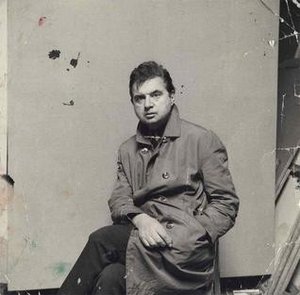
Francis Bacon
1909 - 1992 , Ireland
Quick Facts
- Artistic Movement Or Style: Expressionism, Cubism, Surrealism
- Artists Or Movements Influenced By This Artist: ['Post-War Expressionism']
- Artists Who Influenced This Artist:
- Pablo Picasso
- Egon Schiele
- Diego Velázquez
- Sergei Eisenstein
- Full Name: Francis Bacon
- Nationality: Irish/British
- Notable Artworks:
- Three Studies for Figures at the Base of a Crucifixion
- Study After Velázquez’s Portrait of Pope Innocent X
- Place Of Birth: Dublin, Ireland
- Date Of Birth: 1909
- Date Of Death: 1992