

 Preview
 Send
Send Share
Share
 Details
 Guide
Guide

 Download
 Similars
 X-Ray
X-Ray Diaporama
 Stats
StatsHombre con Perro


 Read More
Purchase a high-resolution, enhanced digital image, far superior to the online preview.
Each file is meticulously prepared by our in-house specialists using advanced tools and expert manual retouching. We ensure every image has exceptional clarity, precise color accuracy, and fine detail.
The final file is delivered via email within 72 hours, optimized for immediate use in professional, editorial, and print environments. This is the same quality trusted by top-tier design studios, publishers, and galleries.
Digital Image
Download a high-resolution file for personal display, printing, and creative projects. ( Switch to Print Buy Hand Made Painting)
Included in Every Digital Image Order
Expert Digital Delivery, Guaranteed
When you choose OriginalUniqueArt.com, you're not just getting an image - you're receiving a professionally enhanced digital artwork, crafted with precision and backed by a satisfaction guarantee. Here's everything that comes with your order, automatically:

Fast Email Delivery
Your high-resolution digital image file will be emailed to you within 72 hours of ordering - ready for immediate use.

AI-Enhanced Digital File
Your artwork is professionally optimized using advanced AI tools and manual editing, ensuring maximum detail, clarity, and color accuracy.

Free Lifetime Re-Delivery
Accidentally deleted or lost your file? No worries - we'll resend it to you anytime, free of charge.

No Import Fees - Ever
Enjoy your artwork instantly with zero customs, duties, or delivery fees - digital downloads are always tax-free.

Color Accuracy Guarantee
We ensure your digital image reflects the original colors as closely as possible using professional tools and color management.

100-Day Satisfaction Guarantee
If you're not satisfied with your digital image, we'll revise it or refund 100% within 100 days - no questions asked.

100% Money-Back Guarantee
Not satisfied? Get a full refund within 100 days of receiving your digital file - no questions asked.

Bulk Order Discounts
Buy 3 images, save 10% - Buy 5, save 15% - Buy 10+, save 20%. Great for creative projects, galleries, and agencies.
The Unsettling Core of Isolation
Francis Bacon’s *Homme con Perro* (Man with Dog) isn't merely a depiction of two canines; it’s a visceral plunge into the heart of human anxiety and existential dread. Painted in the stark, almost brutal monochrome of the late 1940s, the artwork immediately confronts the viewer with an atmosphere of profound unease – a feeling that permeates every distorted line and fragmented form. The composition itself is deliberately unbalanced, drawing our eye to the dominant, looming presence of the larger dog on the left, while the smaller canine seems trapped in a corner, radiating vulnerability. The faintly visible human figure, positioned in the upper right, appears detached, almost spectral – an observer rather than a participant in this primal drama. This deliberate ambiguity invites speculation about his role and emotional state, further amplifying the sense of isolation that dominates the scene. Bacon’s genius lies not in realistic representation but in capturing the *feeling* of psychological distress, a core tenet of his Expressionist style.A Study in Distortion and Gesture
Bacon's technique is deliberately raw and gestural, eschewing traditional academic precision for an intensely personal expression. Loose brushstrokes create a textured surface that seems to writhe with suppressed energy – the paint itself conveying a sense of urgency and turmoil. The forms are aggressively distorted, elongated, and fragmented, mirroring the psychological state of the subjects. The dogs aren’t rendered as familiar animals; they become monstrous, almost grotesque figures, their features exaggerated and unsettling. This distortion isn't accidental; it’s a deliberate strategy to bypass rational thought and tap directly into our primal emotions. The use of line is equally crucial – lines are not clean or defined but rather fluid and dynamic, suggesting movement, struggle, and an underlying tension. The overall effect is one of controlled chaos, mirroring the breakdown of order within the depicted scene.Echoes of Muybridge and a Broader Context
To fully appreciate *Homme con Perro*, it’s helpful to consider its historical context and influences. Bacon was deeply fascinated by Eadweard Muybridge's groundbreaking photographic studies of animal locomotion, particularly his 1887 series *Animal Locomotion*. The composition of the painting clearly draws inspiration from this work, capturing a moment of intense potential action – either attack or retreat – within the canine subjects. However, Bacon transcends mere imitation; he imbues the image with a far deeper emotional resonance. Furthermore, scholars have suggested connections to Giacomo Balla’s 1912 painting *Dinamismo di un cane al guinzaglio*, adding another layer of artistic lineage and highlighting Bacon's engagement with contemporary art movements. This layering of influences speaks to Bacon’s intellectual curiosity and his ability to synthesize disparate sources into a uniquely powerful visual language.Symbolism of Primal Instincts and Human Vulnerability
The symbolism within *Homme con Perro* is deliberately open to interpretation, yet certain themes consistently emerge. The dogs themselves can be seen as representations of primal instincts – aggression, fear, vulnerability – forces that lie beneath the surface of human consciousness. Their trapped position suggests a sense of confinement and repression, while the detached human figure embodies isolation and perhaps even a passive acceptance of this underlying turmoil. Bacon’s work frequently explores themes of mortality, loneliness, and the fragility of the human condition. *Homme con Perro* is not simply a painting of dogs; it's a potent meditation on the darker aspects of existence – a stark reminder of our inherent vulnerability and the anxieties that lurk within us all.A Reproduction for Reflection and Emotion
OriginalUniqueArt offers meticulously crafted, hand-painted reproductions of Francis Bacon’s *Homme con Perro*, capturing the artist's raw emotion and distinctive style with unparalleled fidelity. These reproductions are not merely copies; they are imbued with the same spirit of intensity and psychological depth as the original painting. Whether displayed in a private collection or incorporated into an interior design scheme, this artwork offers a powerful opportunity for contemplation and emotional engagement – a window into the turbulent world of one of art history’s most compelling figures.Questions & Answers
How strong are the colors of "Hombre con Perro"?
The colors of "Hombre con Perro" by Francis Bacon show a muted saturation with a monochromatic intensity.
Who created "Hombre con Perro" and what style is it in?
Behind "Hombre con Perro" stand Francis Bacon and the Expressionism movement.
Who is the artist behind "Hombre con Perro"?
"Hombre con Perro" is attributed to Francis Bacon.
Artist Biography
The Brutality of the Human Image
To look at a Francis Bacon canvas is to encounter a direct assault on the nervous system. He did not seek to decorate; he sought to capture the raw, often terrifying reality of existence through a distinctive and disturbing realism. While his contemporaries drifted toward the safety of abstraction, Bacon anchored himself in the human form, though he stripped that form of any dignity or comfort. His work functions as a visceral response to the mid-twentieth century, translating anxiety and physical vulnerability into smeared, violent colors and contorted limbs.
The power of his imagery stems from a refusal to look away from degradation. He utilized oils with a fluidity that allowed for the depiction of flesh that seems to be dissolving or bruising under pressure. By placing figures within geometric structures—transparent cages or architectural space-frames—he forced a sense of claustrophobia upon the viewer. These frames were not mere compositional tools; they were devices to concentrate the image and trap the subject in a state of permanent isolation.
A Life of Displacement and Design
Bacon’s path to the canvas was far from academic. Born in Dublin, Ireland, his early years were marked by instability and a difficult relationship with his parents. He moved through London, Berlin, and Paris, living a life that was often as turbulent as his later paintings. Before he was recognized as a painter, he worked as an interior designer and decorator. This period of his life produced tangible, structured objects:
- Royal Wilton rugs featuring abstract motifs.
- Cocktail shelves and room screens with geometric silhouettes.
- Calfskin pouffes and tubular steel furniture.
This background in design provided a structural foundation that would later manifest in his use of cubic, architectural framing. He was a self-taught artist who bypassed the traditional art school route, instead absorbing influences through direct observation and chance encounters. His transition from decorator to painter was catalyzed by seeing Picasso’s work in Paris, which revealed the possibilities of using organic, bone-like structures to distort the human image.
The Mechanics of Terror
Bacon’s visual language was built from a specific set of cinematic and classical references. He did not invent his horrors in a vacuum; he reconfigured existing imagery to suit a more primal purpose. The screaming face, a recurring motif, finds its roots in the visceral imagery of Sergei Eisenstein's film Battleship Potemkin. Similarly, his fascination with the distortion of the body was informed by the works of Picasso and the studies of motion by Eadweard Muybridge.
His most famous reinterpretations involved taking established authority and breaking it. In his series of works based on Velázquez’s Portrait of Pope Innocent X, he transformed a dignified papal figure into a nightmarish, screaming specter. He used the concept of the crucifixion not as a religious statement, but as an armature to hang sensations of suffering. This approach allowed him to explore universal themes of mortality and the human condition without the distraction of spiritual solace.
The Final Verdict
Bacon’s significance lies in his ability to confront the darker corners of the soul with brutal honesty. He rejected the polished beauty of traditional portraiture in favor of an unflinching portrayal of agony and isolation. His later works, while often utilizing lighter colors, maintained this core intensity, focusing on the psychological weight of his subjects, including his lover George Dyer. He remains a central figure because he provided a visual language for the twentieth century's deepest anxieties, ensuring that the image of the suffering human remains impossible to ignore.
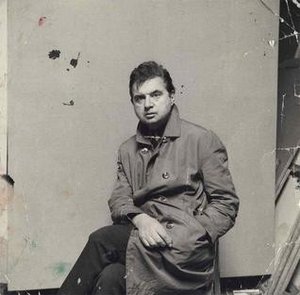
Francis Bacon
1909 - 1992 , Ireland
Quick Facts
- Artistic Movement Or Style: Expressionism, Cubism, Surrealism
- Artists Or Movements Influenced By This Artist: ['Post-War Expressionism']
- Artists Who Influenced This Artist:
- Pablo Picasso
- Egon Schiele
- Diego Velázquez
- Sergei Eisenstein
- Full Name: Francis Bacon
- Nationality: Irish/British
- Notable Artworks:
- Three Studies for Figures at the Base of a Crucifixion
- Study After Velázquez’s Portrait of Pope Innocent X
- Place Of Birth: Dublin, Ireland
- Date Of Birth: 1909
- Date Of Death: 1992