
 Preview
 Send
Send Share
Share
 Details
 Guide
Guide

 Download
 Similars
 X-Ray
X-Ray Diaporama
 Q&A
Q&A Stats
StatsDog


 Read More
Get a print-ready file that goes far beyond the web preview. Every digital image we sell comes from a high-resolution master in our stock database — usually 5,000 to 15,000 pixels wide — so you can print large, crop tightly, or reproduce fine detail with confidence.
No file leaves our studio untouched. A digital expert checks the colors against the original painting and corrects them if needed, then improves clarity and detail with professional retouching tools — always staying faithful to the artist's brushwork and style. The result is an image that looks like the painting, not like a filtered scan.
You approve before you're done: our expert sends the image by e-mail within 72 hours for your review. Not satisfied? Ask for improvements or corrections, or request a refund if the quality falls short.
This is the quality relied on by publishers, design studios, galleries and print shops.
Digital Image
Download a high-resolution file for personal display, printing, and creative projects. ( Switch to Print Buy Hand Made Painting)
Included in Every Digital Image Order
Expert Digital Delivery, Guaranteed
When you choose OriginalUniqueArt.com, you're not just getting an image - you're receiving a professionally enhanced digital artwork, crafted with precision and backed by a satisfaction guarantee. Here's everything that comes with your order, automatically:

Fast Email Delivery
Your high-resolution digital image file will be emailed to you within 72 hours of ordering - ready for immediate use.

AI-Enhanced Digital File
Your artwork is professionally optimized using advanced AI tools and manual editing, ensuring maximum detail, clarity, and color accuracy.

Free Lifetime Re-Delivery
Accidentally deleted or lost your file? No worries - we'll resend it to you anytime, free of charge.

No Import Fees - Ever
Enjoy your artwork instantly with zero customs, duties, or delivery fees - digital downloads are always tax-free.

Color Accuracy Guarantee
We ensure your digital image reflects the original colors as closely as possible using professional tools and color management.

100-Day Satisfaction Guarantee
If you're not satisfied with your digital image, we'll revise it or refund 100% within 100 days - no questions asked.

100% Money-Back Guarantee
Not satisfied? Get a full refund within 100 days of receiving your digital file - no questions asked.

Bulk Order Discounts
Buy 3 images, save 10% - Buy 5, save 15% - Buy 10+, save 20%. Great for creative projects, galleries, and agencies.
Subject and Composition
This striking artwork centers around a solitary dog, depicted in a raw and emotionally charged manner. The dog, rendered with expressive brushstrokes, appears contemplative, embodying themes of vulnerability, loneliness, and introspection. The composition places the animal within a geometric, almost architectural setting, emphasizing a stark contrast between organic form and rigid structure. The interplay of the figure against the abstract background invites viewers to explore deeper emotional and existential themes. The painting’s genesis lies in Francis Bacon's fascination with Muybridge’s photographs of galloping horses—a series that profoundly impacted his artistic vision. Inspired by these images, Bacon conceived of a dog as a symbol of primal instinct and human condition, mirroring the dynamism of the horse while simultaneously conveying a sense of isolation. He meticulously crafted the composition to heighten this duality, utilizing intersecting lines forming a grid pattern overlaid on areas of color—a deliberate stylistic choice that reflects the influence of abstract expressionism. The placement of the dog slightly off-center contributes to an imbalance that underscores its vulnerability and reinforces the overarching mood of melancholy.Stylistic Approach and Technique
Created in 1952, this piece exemplifies Francis Bacon’s signature style—an intense fusion of abstraction and figurative representation. The artist employs loose, energetic brushwork to evoke movement and life within the dog’s form, contrasting with the precise, textured red lines that form a grid-like framework. This technique, known as impasto, adds considerable tactile richness to the surface of the canvas, inviting viewers to engage with the artwork on a sensory level. The limited yet deliberate color palette—deep blues, blacks, muted whites, and reds—heightens the emotional resonance, emphasizing mood and atmosphere. Each hue is carefully considered to contribute to the overall narrative of unease and contemplation. The artist’s meticulous attention to detail extends beyond mere brushstrokes; he painstakingly layered textures and employed subtle gradations of color to create a sense of depth and dimensionality. Bacon deliberately avoided realistic representation, prioritizing emotional expression over visual accuracy—a hallmark of his artistic philosophy. The resulting image is unsettling yet undeniably captivating, reflecting the artist's profound understanding of human psychology.Historical Context and Artistic Significance
Produced during a pivotal period in Bacon’s career, this work reflects the post-war climate of existential uncertainty and emotional vulnerability. Bacon’s exploration of raw human and animal emotion aligns with the broader modernist movement, emphasizing individual introspection and psychological depth. The geometric elements and stark contrasts echo the influence of abstract expressionism, signaling a decisive break from traditional artistic conventions. Simultaneously, the subject’s vulnerability humanizes the abstracted forms, creating a powerful narrative about isolation and resilience—themes that resonate powerfully across time and culture. This painting stands as a testament to Bacon's unwavering commitment to confronting uncomfortable truths about the human condition. It embodies the spirit of his era—a period marked by disillusionment following World War II and a growing awareness of psychological complexities. Bacon’s work continues to inspire artists and critics alike, cementing his place among the most influential figures in 20th-century art.Symbolism and Emotional Impact
The solitary dog can symbolize a range of profound themes—loneliness, loyalty, or the primal human condition. Bacon's use of confinement-like geometric lines suggests feelings of entrapment or existential confinement, resonating with viewers on a visceral level. The subdued, moody color scheme amplifies a sense of melancholy and introspection, making this piece not just a visual statement but an emotional journey. It invites viewers to confront their own fears and anxieties—a courageous undertaking that underscores the artwork’s enduring power. Ultimately, ‘Dog,’ 1952 transcends mere depiction; it becomes a conduit for exploring fundamental questions about identity, existence, and suffering. Bacon's masterful manipulation of form and color compels contemplation, prompting viewers to consider their own relationship with vulnerability and resilience—a timeless invitation to engage in profound artistic reflection.Questions & Answers
What orientation does "Dog" by Francis Bacon have?
"Dog" by Francis Bacon is a portrait composition. The proportions are worth checking before choosing a print size.
Is "Dog" by Francis Bacon a bright or a dark artwork?
In terms of perceived brightness, "Dog" by Francis Bacon is shadow.
Is "Dog" held in the country of its creator?
No - the artwork is kept abroad. "Dog" is held in United States of America, while Francis Bacon was born in Ireland.
Artist Biography
The Brutality of the Human Image
To look at a Francis Bacon canvas is to encounter a direct assault on the nervous system. He did not seek to decorate; he sought to capture the raw, often terrifying reality of existence through a distinctive and disturbing realism. While his contemporaries drifted toward the safety of abstraction, Bacon anchored himself in the human form, though he stripped that form of any dignity or comfort. His work functions as a visceral response to the mid-twentieth century, translating anxiety and physical vulnerability into smeared, violent colors and contorted limbs.
The power of his imagery stems from a refusal to look away from degradation. He utilized oils with a fluidity that allowed for the depiction of flesh that seems to be dissolving or bruising under pressure. By placing figures within geometric structures—transparent cages or architectural space-frames—he forced a sense of claustrophobia upon the viewer. These frames were not mere compositional tools; they were devices to concentrate the image and trap the subject in a state of permanent isolation.
A Life of Displacement and Design
Bacon’s path to the canvas was far from academic. Born in Dublin, Ireland, his early years were marked by instability and a difficult relationship with his parents. He moved through London, Berlin, and Paris, living a life that was often as turbulent as his later paintings. Before he was recognized as a painter, he worked as an interior designer and decorator. This period of his life produced tangible, structured objects:
- Royal Wilton rugs featuring abstract motifs.
- Cocktail shelves and room screens with geometric silhouettes.
- Calfskin pouffes and tubular steel furniture.
This background in design provided a structural foundation that would later manifest in his use of cubic, architectural framing. He was a self-taught artist who bypassed the traditional art school route, instead absorbing influences through direct observation and chance encounters. His transition from decorator to painter was catalyzed by seeing Picasso’s work in Paris, which revealed the possibilities of using organic, bone-like structures to distort the human image.
The Mechanics of Terror
Bacon’s visual language was built from a specific set of cinematic and classical references. He did not invent his horrors in a vacuum; he reconfigured existing imagery to suit a more primal purpose. The screaming face, a recurring motif, finds its roots in the visceral imagery of Sergei Eisenstein's film Battleship Potemkin. Similarly, his fascination with the distortion of the body was informed by the works of Picasso and the studies of motion by Eadweard Muybridge.
His most famous reinterpretations involved taking established authority and breaking it. In his series of works based on Velázquez’s Portrait of Pope Innocent X, he transformed a dignified papal figure into a nightmarish, screaming specter. He used the concept of the crucifixion not as a religious statement, but as an armature to hang sensations of suffering. This approach allowed him to explore universal themes of mortality and the human condition without the distraction of spiritual solace.
The Final Verdict
Bacon’s significance lies in his ability to confront the darker corners of the soul with brutal honesty. He rejected the polished beauty of traditional portraiture in favor of an unflinching portrayal of agony and isolation. His later works, while often utilizing lighter colors, maintained this core intensity, focusing on the psychological weight of his subjects, including his lover George Dyer. He remains a central figure because he provided a visual language for the twentieth century's deepest anxieties, ensuring that the image of the suffering human remains impossible to ignore.
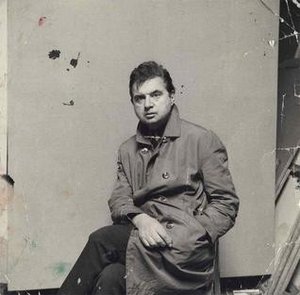
Francis Bacon
1909 - 1992 , Ireland
Quick Facts
- Artistic Movement Or Style: Expressionism, Cubism, Surrealism
- Artists Or Movements Influenced By This Artist: ['Post-War Expressionism']
- Artists Who Influenced This Artist:
- Pablo Picasso
- Egon Schiele
- Diego Velázquez
- Sergei Eisenstein
- Full Name: Francis Bacon
- Nationality: Irish/British
- Notable Artworks:
- Three Studies for Figures at the Base of a Crucifixion
- Study After Velázquez’s Portrait of Pope Innocent X
- Place Of Birth: Dublin, Ireland
- Date Of Birth: 1909
- Date Of Death: 1992