
 Preview
 Send
Send Share
Share
 Details
 Guide
Guide

 Download
 Similars
 X-Ray
X-Ray Diaporama
 Stats
StatsBacchanal
 Oil On Canvas
- WallArt
- Rococo Period
 1740
1740- Early Modern
 142.0 x 210.0 cm
 Gallerie dell'Accademia di Venezia
 Read More
Giclée / Art Print
Museum-quality giclée or canvas print with fast production and flexible finish options. ( Buy Hand Made Painting Switch to Digital Image)




P118B $10

P118H $10

P118W $10

P438Z $10

P508JH $12

P508YH $12

P805H $10

P805Z $10

P919BZ $10

P919G $10

P919XJ $10

P959ZH $10

P968JZ $12

W106C $8

W218G $10

W218JH $8

W218Y $10

W307PJ $10

W316G $10

W316PJ $8

W316Y $10

W398PJ $8

W4111J $10

W500HY $15

W500JH $15

W692G $12

W849H $8

W940BG $15

W953PJ $8




Pick from our preset sizes that match the artwork's original proportions.

Type the width and the height you need, to fit your frame or your wall. A print can only be cut, never made bigger than the picture, so a size with a different shape loses a part of the image. We send you a digital mockup to approve before we print anything. The picture shown on this page does not show the real cut — only the mockup does.
Worldwide Delivery () in 2 weeks instead of standard 4/5 weeks. (27 October)

Free Worldwide Express Shipping

High-Quality Linen Canvas

Full Shipping Insurance

Customs Tax Refund Guarantee

True Color Matching Guarantee

100-Day Return Policy (Defects Only)

100% Money-Back Guarantee

Bulk Discount Offer
 Glass option is only available in size under 110 CM

Bacchanal
Giclée / Art Print
Reproduction Size
-


Total Price
$ 81
Francesco Zuccarelli’s Bacchanal: A Symphony of Pastoral Elegance
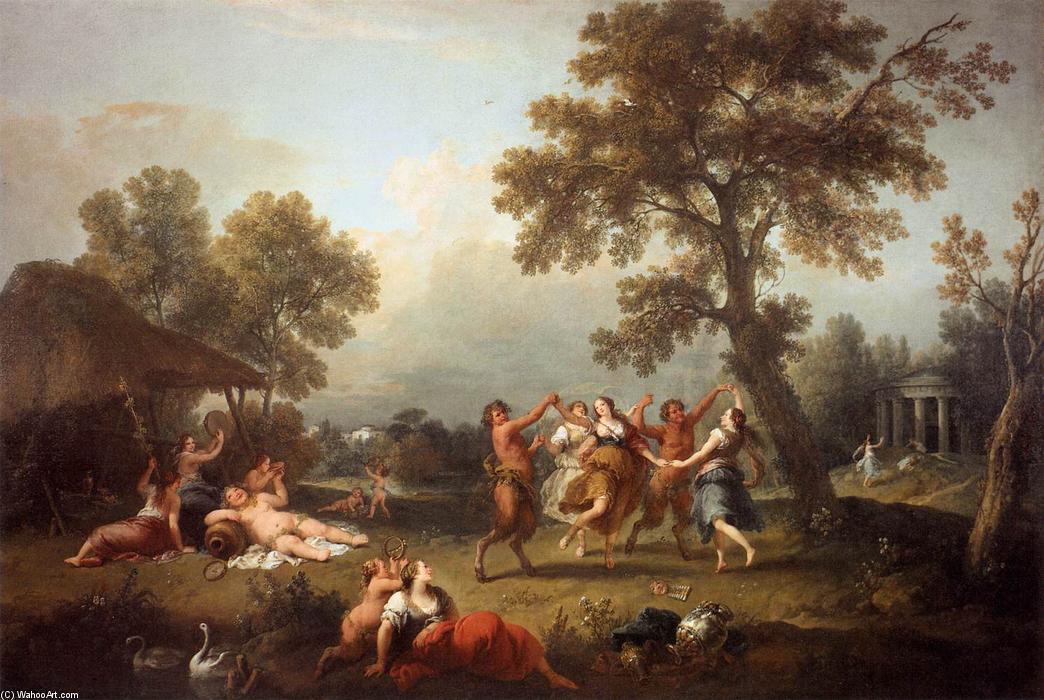
The Bacchanal by Francesco Zuccarelli stands as an emblem of the Rococo artistic movement, capturing not merely a scene but an entire ethos—one steeped in aristocratic indulgence and idealized beauty. Painted circa 1740-50, this oil on canvas masterpiece resides within the Gallerie dell’Accademia in Venice, Italy, offering visitors a glimpse into a period defined by opulent interiors and refined sensibilities. Zuccarelli's skill lies not just in depicting figures engaged in joyous revelry but in crafting an immersive experience that transports the viewer to a realm of pastoral serenity infused with vibrant color and masterful composition.Composition and Style: Balancing Chaos and Harmony
Zuccarelli’s approach distinguishes itself from the more dramatic Baroque tradition, prioritizing balance and grace over theatrical grandeur. The painting depicts a lively bacchanal—a celebration honoring Dionysus, the Greek god of wine and ecstasy—yet it avoids overwhelming visual sensation. A central group of figures dominates the canvas, their postures dynamic yet carefully arranged around a prominent architectural element: a classical structure reminiscent of Roman temples, subtly anchoring the scene in antiquity. The artist employs meticulous detailing to portray each participant’s attire and expression, conveying both physicality and emotion with remarkable precision. Notice how Zuccarelli utilizes light and shadow to sculpt forms, creating depth and enhancing the sense of movement—a hallmark of Rococo aesthetics.Color Palette and Technique: Embracing Pastel Radiance
The color palette is dominated by earthy tones – ochre, umber, Sienna – providing a grounding counterpoint to the splashes of vibrant hues adorning the figures’ clothing. Crimson reds, emerald greens, and sapphire blues punctuate the scene, symbolizing fertility, vitality, and divine inspiration. Zuccarelli's technique showcases exceptional brushwork, layering pigments with subtle gradations to achieve luminous surfaces that shimmer with reflected light. The artist skillfully blends colors on canvas, creating a velvety texture that contributes to the painting’s overall impression of luxurious softness. This meticulous attention to detail underscores Zuccarelli’s dedication to capturing not just what is seen but also how it feels—a testament to the transformative power of art.Historical Context: Venetian Aristocracy and Artistic Patronage
The Bacchanal reflects the cultural landscape of Venice during the mid-18th century, a city ruled by an aristocratic elite deeply invested in artistic patronage. Zuccarelli’s work exemplifies the Rococo style's fascination with idealized landscapes and mythological narratives—themes favored by Venetian noble families eager to express their status and sophistication. The painting aligns perfectly with broader European trends toward decorative art and emotional expression, signaling a shift away from Baroque solemnity towards a celebration of sensual pleasure and imaginative vision.Symbolism: Dionysian Ecstasy and Pastoral Tranquility
Beyond its visual splendor, Bacchanal is laden with symbolic significance. The bacchanalia itself represents the unrestrained pursuit of joy and indulgence—a deliberate rejection of Puritan morality—while simultaneously evoking images of Arcadia, the mythical pastoral paradise inhabited by shepherds and nymphs. The figures’ gestures convey a profound connection to nature and divine inspiration, mirroring the Rococo preoccupation with themes of beauty, harmony, and sensual experience. Zuccarelli's masterful depiction captures not only the outward spectacle of celebration but also its inner resonance—a reminder that art can transcend mere representation to communicate deeper truths about human emotion and spiritual aspiration.Legacy: Rediscovering Zuccarelli’s Vision
Francesco Zuccarelli’s reputation waned in the early 19th century, yet his work has experienced a resurgence of interest in recent decades, displayed prominently in museums worldwide. Bacchanal stands as a cornerstone of Rococo art history—a testament to Zuccarelli's artistic genius and his ability to distill the essence of an era into a single unforgettable image. Its enduring appeal lies in its exquisite beauty, balanced composition, and profound exploration of human emotion, continuing to inspire artists and collectors alike.Questions & Answers
Is a download available for "Bacchanal"?
"Bacchanal" by Francesco Zuccarelli can be downloaded from the artwork's Download page, as a high-resolution digital image download.
What is the luminance of "Bacchanal" by Francesco Zuccarelli?
"Bacchanal" by Francesco Zuccarelli has a gentle luminance luminance. Luminance describes how much light the colors appear to reflect.
What is the creation date of "Bacchanal" by Francesco Zuccarelli?
The creation of "Bacchanal" by Francesco Zuccarelli is dated 1740.
Artist Biography
Francesco Zuccarelli: A Life in Landscape
- Born: Pitigliano, Italy (1702)
- Died: 1788
- Movement: Late Baroque / Rococo
Giacomo Francesco Zuccarelli, known primarily as Francesco Zuccarelli, was a pivotal Italian artist renowned for his idyllic landscapes and Arcadian scenes. Born in Pitigliano, Tuscany, in 1702, he emerged as the most significant landscape painter from Venice during the mid-18th century. His work resonated deeply across Europe, particularly in England, where he spent considerable periods under royal patronage.
Early Training and Roman Influences
- Apprenticeship: Zuccarelli began his artistic journey as an apprentice to Giovanni Maria Morandi and Pietro Nelli in Rome, focusing initially on portraiture.
- Engravings & Frescoes: From 1728-1731, he dedicated himself largely to engraving the deteriorating frescoes of Giovanni da San Giovanni and Andrea del Sarto, demonstrating a keen eye for detail and classical influences.
- Paolo Anesi's Guidance: Luigi Lanzi noted that Paolo Anesi was instrumental in guiding Zuccarelli towards landscape painting, shaping his artistic direction.
His early works reveal the influence of Roman classicism and a developing interest in capturing the beauty of the Italian countryside.
Venetian Period and Rise to Prominence
- Arrival in Venice: Around 1732, Zuccarelli relocated to Venice, capitalizing on an opening in landscape painting.
- Distinctive Style: He developed a distinctive style characterized by a mellow palette, airy compositions, and figures brought to life with luminous tonal values—a departure from the typical Venetian colors of his predecessors.
- Patronage & Collaborations: Zuccarelli quickly gained patronage from influential figures like Marshal Schulenburg, Joseph Smith (British Consul), and Francesco Algarotti. He frequently collaborated with artists such as Antonio Visentini and Bernardo Bellotto. Notable collaborations include the creation of neo-Palladian architecture series and a set of Old Testament playing cards featuring hand-colored scenes.
- Royal Academy Membership: In 1768, he became a founding member of the Royal Academy of Arts in London, solidifying his reputation on an international stage.
This period marked Zuccarelli's ascent to fame, with his landscapes captivating audiences across Europe and establishing him as a leading figure in the Rococo movement.
Later Years, Decline & Renewed Appreciation
- Critical Reception: Despite initial acclaim, Zuccarelli’s reputation waned in the early 19th century as naturalism gained prominence. Critics like Turner offered tempered praise, acknowledging his figures' beauty while questioning his overall style.
- Michael Levey's Analysis: Art historian Michael Levey later attributed Zuccarelli's widespread appeal to the decorative nature of his work, particularly among English audiences.
- Modern Reassessment: Since the 1990s, Italian scholars have spearheaded a renewed appreciation for Zuccarelli’s contributions, highlighting his significance in landscape painting and showcasing his works in numerous exhibitions.
Today, Francesco Zuccarelli is recognized as a master of the Rococo period, celebrated for his idyllic landscapes that evoke a sense of tranquility and classical beauty. His legacy continues to inspire artists and captivate audiences worldwide.

Francesco Zuccarelli
1702 - 1788 , Italy
Quick Facts
- Full Name: Giacomo Francesco Zuccarelli
- Nationality: Italian
- Date Of Birth: 1702
- Date Of Death: 1788
- Place Of Birth: Pitigliano, Italy
- Notable Artworks:
- Capriccio with San Giorgio Maggiore
- Classical Landscape
- Landscape with Girls at the River
- Bacchanal
- Artistic Movement Or Style: Rococo, Baroque
- Artists Who Influenced This Artist:
- Paolo Anesi
- Claude Lorrain
- Andrea del Sarto
Related Articles

The Rococo Aesthetic: Opulence, Rebellion & the Pursuit of Pleasure in 18th-Century Art
Explore the opulent world of Rococo art! Discover its origins, key artists like Watteau & Boucher, and lasting influence on design. Expert insights for collectors & enthusiasts.

Pietro Longhi's Venetian Scenes: A Study of Rococo Society & Domestic Life
Explore the captivating world of Pietro Longhi's Venetian scenes! Discover insightful analysis of his Rococo masterpieces & social commentary on 18th-century life. Learn about this 'Venetian Hogarth' and his lasting artistic legacy.

The Allure of Elegance in Art: A Historical & Aesthetic Exploration of Refinement & Grace
Explore the exquisite world of Rococo art! Discover its history, masters (Watteau, Boucher & more), and defining elegance. Expert insights for collectors seeking museum-quality reproductions & custom portraits.

Rococo's Radiant Legacy: 10 Masterpieces for Your Home |
Indulge in the elegance of Rococo! Explore 10 masterpieces by Fragonard, Boucher & Watteau. Discover the stories behind these iconic paintings and bring timeless art to your home with museum-quality reproductions from .

Francesco Guardi: Venetian Light, Atmospheric Perspective & the Rococo to Neoclassical Transition
Explore the captivating world of Francesco Guardi, master of Venetian light and atmosphere. Discover his transition from Rococo to Neoclassicism, influence on Impressionism & investment potential with OriginalUniqueArt.


