Preview
 Send
Send Share
Share
 Details
 Guide
Guide

 Download
 Similars
 X-Ray
X-Ray Diaporama
 Stats
StatsThe Prophet Baruch
 Oil On Canvas
- WallArt
- Baroque
 1718
1718 205.0 x 265.0 cm
 Kunstpalast
 Read More
Giclée / Art Print
Museum-quality giclée or canvas print with fast production and flexible finish options. ( Buy Hand Made Painting Switch to Digital Image)




P118B $10

P118H $10

P118W $10

P438Z $10

P508JH $12

P508YH $12

P805H $10

P805Z $10

P919BZ $10

P919G $10

P919XJ $10

P959ZH $10

P968JZ $12

W106C $8

W218G $10

W218JH $8

W218Y $10

W307PJ $10

W316G $10

W316PJ $8

W316Y $10

W398PJ $8

W4111J $10

W500HY $15

W500JH $15

W692G $12

W849H $8

W940BG $15

W953PJ $8




Pick from our preset sizes that match the artwork's original proportions.

Type the width and the height you need, to fit your frame or your wall. A print can only be cut, never made bigger than the picture, so a size with a different shape loses a part of the image. We send you a digital mockup to approve before we print anything. The picture shown on this page does not show the real cut — only the mockup does.
Worldwide Delivery () in 2 weeks instead of standard 4/5 weeks. (27 October)

Free Worldwide Express Shipping

High-Quality Linen Canvas

Full Shipping Insurance

Customs Tax Refund Guarantee

True Color Matching Guarantee

100-Day Return Policy (Defects Only)

100% Money-Back Guarantee

Bulk Discount Offer
 Glass option is only available in size under 110 CM

The Prophet Baruch
Giclée / Art Print
Reproduction Size
-


Total Price
$ 81
A Moment Suspended in Contemplation
The painting, titled The Prophet Baruch, immediately draws the viewer into an atmosphere of profound stillness. We encounter a figure seated upon the ground, his posture speaking volumes without uttering a single word. With his head bowed into his hands, he embodies a moment of deep introspection or perhaps prayer. The subject is rendered with such palpable humanity that one feels they are witnessing a private communion between man and thought. He is clad in simple robes, and his long hair seems to cascade around him like a natural curtain, framing the quiet drama unfolding within this sacred space.
Mastery of Earth Tones and Texture
Technically, the work showcases an exquisite handling of paint that speaks to the skill of its creator. The artist has employed a palette dominated by rich earth tones—ochres, deep siennas, and warm browns—which combine to create an atmosphere that is both inviting and deeply meditative. Upon closer inspection, one can appreciate the intricate brushwork; it lends the entire surface a beautiful, textured quality, suggesting the passage of time and the weight of contemplation itself. The contrast between the soft folds of the drapery and the solidity of the table upon which his arm rests adds a wonderful tactile dimension to the visual experience.
Symbolism of Study and Reflection
The inclusion of the book in one hand, juxtaposed with the gesture of repose, suggests a profound engagement with sacred or scholarly texts. This is not merely a portrait; it is an allegory of wisdom sought through quietude. The Prophet Baruch becomes a universal symbol for the intellectual journey—the necessary retreat from the clamor of the world to find clarity within one's own mind. For the collector, this piece offers more than mere decoration; it offers a visual anchor for moments of personal reflection.
Historical Echoes and Enduring Appeal
Dating to 1718, this work carries the weight of the early eighteenth century, yet its themes transcend any specific era. While the artist's style connects it to grand traditions of religious and portraiture painting, its emotional resonance feels timeless. For those designing a space—be it a library, a study, or a quiet corner in a drawing-room—this reproduction serves as an immediate focal point. It whispers tales of devotion and deep thought, transforming any room into a sanctuary for the mind.
Questions & Answers
Is "The Prophet Baruch" by Francesco Trevisani a light or a dark artwork?
"The Prophet Baruch" by Francesco Trevisani is recorded as brilliant, with a luminous luminance.
Where can I find statistics about "The Prophet Baruch" by Francesco Trevisani?
The Stats page of "The Prophet Baruch" by Francesco Trevisani presents public visit statistics: monthly visits of this artwork, a comparison with the artist's most viewed works, and where its visitors come from.
What color leads the composition of "The Prophet Baruch" by Francesco Trevisani?
The color that stands out most in "The Prophet Baruch" is putty (#e0bba1). The dominant color is useful when matching an artwork to an interior.
Artist Biography
The Grace of the Barochetto
Francesco Trevisani stands as a luminous figure in the transition between the dramatic intensity of the late Baroque and the emerging elegance of the early Rococo, a period often referred to as barochetto. Born in Capodistria, Istria, his artistic journey was shaped by the rich traditions of both Venice and Rome. As the son of an architect, he first learned the fundamental principles of design through the guidance of his father, Antonio Trevisani. This early foundation in structure and composition would later allow him to master the complex, theatrical arrangements that define his most celebrated works.
His training was deeply rooted in the masters of his era, studying under figures such as Antonio Zanchi and Joseph Heintz the Younger. These influences provided him with a technical vocabulary that blended vigorous movement with a refined sensibility. As he moved through the artistic hubs of Venice and Rome, Trevisani developed a style that could capture both the profound sorrow of religious martyrdom and the tender, celestial grace of divine encounters. His ability to navigate these emotional extremes made him a sought-after painter for significant ecclesiastical and private commissions.
Mastery of Emotion and Light
The works of Trevisani are characterized by an unflinching commitment to emotional depth and a breathtaking use of light. In his religious compositions, the boundaries between the earthly and the divine often seem to dissolve. One can observe this in his depictions of sacred scenes, where the heavy, sacred silence of a moment is palpable. Whether portraying the lifeless body of Christ being borne by angels or the poignant devotion of saints, Trevis andani utilized a palette and brushwork that emphasized the spiritual fervor of the age.
His technical prowess is particularly evident in his ability to render texture and atmosphere. In works such as The Martyrdom of the Seven Sons of Saint Felicity, he weaves together complex narratives involving Roman emperors, pagan statues, and celestial messengers. Through meticulous detail, he directs the viewer's eye across the canvas, using light to highlight the agony of the martyrs and the hope offered by heavenly crowns. This mastery of narrative painting allowed him to create works that were not merely decorative but served as profound instruments of devotion.
Legacy and Artistic Significance
Throughout his long career, Trevisani’s influence was felt deeply within the Roman art scene, particularly through his connection to influential patrons like Cardinal Ottoboni. His masterpiece, the frescoes in San Silvestro in Capite, serves as a testament to his ability to transform architectural spaces with grand, sweeping narratives. His style, heavily influenced by Carlo Maratta, helped define the aesthetic of the late Baroque, bridging the gap between the heavy shadows of the previous century and the lighter, more airy compositions of the coming Rococo era.
The historical significance of Francesco Trevisani lies in his role as a bridge between eras. He maintained the grandeur and dramatic tension required by the Counter-Reformation while introducing a sweetness and grace that anticipated the next movement in European art. His ability to balance the monumental with the intimate ensures that his paintings remain powerful windows into the spiritual and artistic soul of the early eighteenth century.
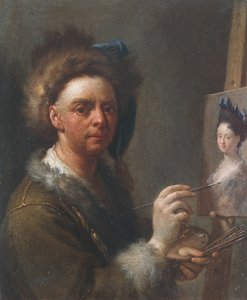
Francesco Trevisani
1656 - 1746 , Italy
Quick Facts
- Artistic Movement Or Style: Late Baroque or early Rococo
- Artists Who Influenced This Artist:
- Antonio Zanchi
- Joseph Heintz the Younger
- Carlo Maratta
- Full Name: Francesco Trevisani
- Nationality: Italian
- Notable Artworks:
- The Martyrdom of the Seven Sons of St Felicity
- Christ mort porté par des anges
- The Virgin presenting the Child to St. Anthony
- L'ENFANT JESUS DESIGNANT A LA VIERGE
- Place Of Birth: Pordenone, Italy
- Date Of Birth: 1656
- Date Of Death: 1746
Related Articles

The Enduring Power of Painting: A Historical & Contemporary Exploration of Form and Emotion
Explore the rich history & enduring techniques of oil painting with OriginalUniqueArt. Discover masterpieces, learn about art collecting, and find authentic handmade reproductions crafted by skilled artists.

The Dramatic Flourish: Exploring the Baroque Movement's Enduring Legacy in Art History
Explore the dramatic world of Baroque art! Discover iconic artists like Caravaggio & Rubens, defining techniques, and its lasting impact on art history. Expert insights for collectors & enthusiasts at OriginalUniqueArt.

The Enduring Legacy of Oil on Canvas: Technique, History & Aesthetic Impact
Explore the rich history & techniques of oil painting – from Renaissance masters to Impressionism. Discover pigments, layering methods, and why this timeless medium endures. Expert insights for artists & art enthusiasts.

Oil on Canvas: A Historical & Technical Exploration of a Timeless Artistic Medium
Explore the rich history & enduring techniques of oil painting on canvas. Discover the science behind its longevity, conservation practices, and contemporary relevance. Expert insights for art enthusiasts.

Baroque Drama: Bringing Opulence & Emotion into Contemporary Interiors
Explore the opulent world of Baroque interior design! Discover key elements, modern applications & how to bring dramatic elegance into your home with OriginalUniqueArt.com's authentic reproductions.