Preview
 Send
Send Share
Share
 Details
 Guide
Guide

 Download
 Similars
 X-Ray
X-Ray Diaporama
 Q&A
Q&A Stats
StatsArchitectural View

- 124.0 x 234.0 cm


 Read More
Giclée / Art Print
Museum-quality giclée or canvas print with fast production and flexible finish options. ( Buy Hand Made Painting Switch to Digital Image)




P118B $10

P118H $10

P118W $10

P438Z $10

P508JH $12

P508YH $12

P805H $10

P805Z $10

P919BZ $10

P919G $10

P919XJ $10

P959ZH $10

P968JZ $12

W106C $8

W218G $10

W218JH $8

W218Y $10

W307PJ $10

W316G $10

W316PJ $8

W316Y $10

W398PJ $8

W4111J $10

W500HY $15

W500JH $15

W692G $12

W849H $8

W940BG $15

W953PJ $8




Pick from our preset sizes that match the artwork's original proportions.

Type the width and the height you need, to fit your frame or your wall. A print can only be cut, never made bigger than the picture, so a size with a different shape loses a part of the image. We send you a digital mockup to approve before we print anything. The picture shown on this page does not show the real cut — only the mockup does.
Worldwide Delivery () in 2 weeks instead of standard 4/5 weeks. (7 November)

Free Worldwide Express Shipping

High-Quality Linen Canvas

Full Shipping Insurance

Customs Tax Refund Guarantee

True Color Matching Guarantee

100-Day Return Policy (Defects Only)

100% Money-Back Guarantee

Bulk Discount Offer
 Glass option is only available in size under 110 CM

Architectural View
Giclée / Art Print
Reproduction Size
-


Total Price
$ 81
A Window on Renaissance Grandeur: Francesco di Giorgio Martini’s “Architectural View”
The Staatliche Museen in Berlin houses a painting that transcends mere representation; it offers a meticulously crafted glimpse into the heart of Renaissance architectural thought – Francesco di Giorgio Martini's "Architectural View," completed around 1477. More than simply a depiction of a courtyard, this work is a profound meditation on space, perspective, and the burgeoning humanist ideals shaping Europe’s artistic landscape. Martini, a polymath whose talents spanned painting, sculpture, architecture, and engineering, imbued this piece with an intellectual rigor rarely found in contemporary art, making it a cornerstone of his legacy.
The scene unfolds within a classically inspired courtyard, a carefully orchestrated composition dominated by muted earth tones – ochres, siennas, and umbers – that evoke the weathered grandeur of ancient Rome. Columns, arches, and domes rise with an almost mathematical precision, each element contributing to a sense of ordered harmony. Martini’s mastery lies not just in his technical skill but in his ability to capture the *illusion* of depth and volume. The use of linear perspective draws the viewer's eye towards the central fountain or pool, creating a powerful focal point that anchors the entire composition. Notice how the diminishing size of objects in the distance – a subtle yet crucial element of Renaissance painting – reinforces this sense of spatial recession.
The Architect’s Vision: Martini and the Dawn of Perspective
Martini's "Architectural View" stands as a pivotal work, representing a significant departure from the prevailing artistic conventions of his time. While other artists were primarily focused on portraying realistic appearances, Martini was deeply invested in understanding and replicating the principles of linear perspective – a technique that had been developing for centuries but was only beginning to be fully embraced by Renaissance painters. This painting isn’t merely a representation of an existing space; it's a demonstration of how that space *could* be rendered on a two-dimensional surface, reflecting Martini’s own architectural theories.
The influence of Leon Battista Alberti and Filarete, prominent architects and theorists of the early 15th century, is evident in Martini’s approach. However, Martini pushed beyond their established methods, incorporating elements of his own innovative designs – particularly concerning staircase planning and the arrangement of spaces within a building. The meticulous detailing of the columns, arches, and domes speaks to a deep understanding of architectural construction, suggesting that Martini intended this painting to serve as both an artistic statement and a practical guide for aspiring architects.
Symbolism and the Ideal City
Beyond its technical brilliance, “Architectural View” is rich in symbolic meaning. The courtyard itself represents a microcosm of the ideal city – a carefully planned space designed for civic life, contemplation, and social interaction. The central fountain or pool, often associated with abundance and prosperity, further reinforces this theme. The muted color palette contributes to an atmosphere of timelessness and serenity, evoking a sense of classical antiquity while simultaneously suggesting the potential for future innovation.
Interestingly, Martini’s architectural treatise, “Trattato di architettura, ingegneria e arte militare,” reveals his fascination with creating an ‘ideal city,’ a concept deeply rooted in humanist philosophy. This painting can be seen as a visual manifestation of that vision – a carefully constructed representation of the principles governing harmonious urban design. The influence of this treatise is further evidenced by the inclusion of geometric patterns within the ceiling, echoing the mathematical precision underlying Martini’s architectural theories.
A Legacy in Reproduction: Bringing Renaissance Grandeur Home
Today, “Architectural View” remains a testament to Francesco di Giorgio Martini's extraordinary talent and intellectual curiosity. Reproductions by OriginalUniqueArt offer an exceptional opportunity to bring this masterpiece into your home or office, allowing you to appreciate its beauty and complexity in exquisite detail. The careful attention to color, texture, and perspective ensures that these reproductions capture the essence of Martini’s original vision, transporting you back to the heart of the Renaissance.
For those seeking a deeper understanding of this remarkable work, we encourage you to explore the supplementary resources provided: links to scholarly articles, online exhibitions, and detailed analyses of Martini's artistic techniques. Discovering the rich history and symbolism behind “Architectural View” is an enriching experience in itself – a journey into the mind of one of Renaissance Italy’s most innovative thinkers.
Questions & Answers
Which museum holds the original "Architectural View"?
"Architectural View" by Francesco di Giorgio Martini is on display at the Staatliche Museen zu Berlin, Berlin, Germany. The museum listing refers to the original work, not to reproductions.
What does the 1477 date of "Architectural View" correspond to in Francesco di Giorgio Martini's career?
"Architectural View", created in 1477, belongs to the Early Period of Francesco di Giorgio Martini's career.
What does "Architectural View" by Francesco di Giorgio Martini bring to an interior?
With its calm mood, "Architectural View" is suggested for a living room.
Artist Biography
The Renaissance Polymath: The Life and Vision of Francesco di Giorgio Martini
In the vibrant tapestry of the Italian Quattrocento, few figures loom as large or as multifaceted as Francesco di Giorgio Martini. A true homo universalis, his intellect spanned the boundaries between the ethereal beauty of fine art and the rigorous precision of engineering. Born in Siena in 1439, Martini emerged from a period of profound cultural transformation, where the shadows of the Middle Ages were being chased away by the light of humanism. His life was not merely a career in art, but a lifelong pursuit of understanding the underlying geometry of the universe, whether expressed through the delicate brushstroke of a Madonna or the fortified walls of an ideal city.
Martini’s artistic journey began under the watchful eye of Vecchietta, a master of the Sienese School whose style favored rhythmic, frieze-like compositions. While his early training instilled in him a deep respect for religious iconography and the graceful traditions of Siena, Francesco possessed an unquenchable thirst for innovation. He looked beyond the local traditions toward the burgeoning Florentine interest in linear perspective and classical antiquity. This intellectual curiosity allowed him to transcend the decorative nature of his predecessors, infusing his works with a newfound psychological depth and a sophisticated command of spatial relationships that would later echo the genius of Leonardo da Vinci.
A Synthesis of Spirit and Structure
The breadth of Martini’s creative output is nothing short of staggering. As a painter, he possessed a rare ability to marry the divine with the tangible. In masterpieces such as Madonna and Child with Saints and Angels, one observes a profound tenderness paired with a rigorous structural clarity. His religious works, including the monumental Coronation of the Virgin for the Siena Cathedral, demonstrate his capacity to synthesize classical grandeur with the emotive power required by sacred art. He did not merely depict holy figures; he placed them within a world that felt architecturally sound and physically present.
However, to view Martini solely through the lens of a painter is to miss the heartbeat of his true genius. His contributions to architecture and military engineering were equally transformative. Through his Trattato di architettura, he provided much more than mere technical drawings; he offered a visionary blueprint for the città ideale—the ideal city. His detailed illustrations and manuscripts reveal a mind obsessed with the harmony of proportion and the strategic necessity of defense. In these sketches, we see the seeds of modern urban planning, where beauty and utility exist in a delicate, calculated balance.
Legacy of an Architectural Visionary
The historical significance of Francesco di Giorgio Martini lies in his ability to bridge the gap between the artist's intuition and the engineer's logic. He was a man who saw no distinction between the grace of a sculpted limb and the strength of a stone bastion. His influence rippled through the Renaissance, shaping the way subsequent generations approached the concept of design as an integrated discipline. His life, which concluded in Siena in 1502, left behind a legacy that continues to resonate in the study of both art history and architectural theory.
To reflect on his enduring impact, one might consider the following pillars of his greatness:
- Mastery of Perspective: His role in transitioning Sienese art from decorative tradition to the spatial depth of the High Renaissance.
- Architectural Innovation: The development of theoretical frameworks for urban design and fortification that influenced centuries of engineering.
- Humanist Integration: The seamless blending of classical anatomical study with religious devotion and scientific inquiry.
- The Polymathic Ideal: Serving as a definitive model for the Renaissance creator, where art, science, and intellect are inseparable.

Francesco di Giorgio Martini
1439 - 1502 , Italy
Quick Facts
- Full Name: Francesco Maurizio di Giorgio Martini
- Nationality: Italian
- Date Of Birth: 1439
- Date Of Death: 1502
- Place Of Birth: Siena, Italy
- Notable Artworks:
- Nativity
- Coronation of the Virgin
- Artistic Movement Or Style: Renaissance
- Artists Who Influenced This Artist: ['Andrea del Verrocchio']
- Artists Or Movements Influenced By This Artist: ['Leonardo da Vinci']
Related Articles

Sandstone & Sunlight: 10 Masterpieces of Earth-Toned Art |
Journey through 10 iconic paintings bathed in 'sand' tones – from Van Gogh to Monet. Explore the stories, techniques & warm palettes of these timeless masterpieces. Find museum-quality art reproductions at and bring classic beauty home.

Earthy Hues & Masterpieces: Top 10 Paintings with 'Mushroom' Tones |
Explore 10 iconic paintings with captivating 'mushroom' tones! Discover Van Gogh, Monet & Rembrandt’s masterpieces—earthy palettes, rich history & artistic techniques. Find museum-quality art reproductions and curated decor ideas at
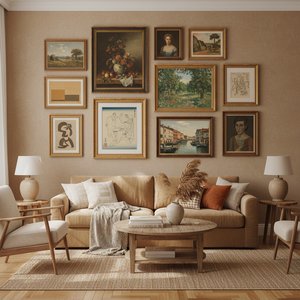
Tan Tones & Timeless Masterpieces: 10 Paintings for Elegant Home Decor
Explore 10 famous paintings dominated by captivating tan tones! From Renaissance portraits to Impressionist landscapes, discover art history's most serene masterpieces. Find museum-quality reproductions & elevate your home decor on .

Earthen Hues: Exploring the Psychological & Artistic Significance of Earth Tones
Explore the captivating world of earth tones! Discover their historical significance, psychological impact & artistic techniques. Find inspiration for your home decor and museum-quality reproductions at OriginalUniqueArt.

The Resonance of Earthly Tones: Exploring Nuance, History & Emotional Impact in Art
Explore the captivating world of earth tones in art! Discover historical context, emotional resonance & artistic techniques behind these timeless colors. Find inspiration for your home decor and museum-quality reproductions.