Preview
 Send
Send Share
Share
 Details

 Download
 Similars
 X-Ray
X-Ray Diaporama
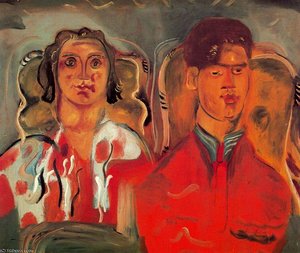
Untitled (528)
 Read More
Giclée / Art Print
Museum-quality giclée or canvas print with fast production and flexible finish options. ( Buy Hand Made Painting Buy Image)




































Pick from our preset sizes that match the artwork's original proportions.

You may enter your own dimensions to fit a specific frame or space. If your selected size does not match the original image's proportions, we will either crop the artwork or extend the image with a mirrored or solid-fill edge. A digital mockup will be sent for your approval before production begins.
Please note that the on-screen preview does not reflect the actual cropping or extension. Only the mockup will accurately show the final composition.
While custom sizes are available, we recommend selecting a dimension from the predefined list to preserve the original proportions.
Worldwide Delivery () in 2 weeks instead of standard 4/5 weeks. (15 August)

Free Worldwide Express Shipping

High-Quality Linen Canvas

Full Shipping Insurance

Customs Tax Refund Guarantee

True Color Matching Guarantee

60-Day Return Policy (Defects Only)

100% Money-Back Guarantee

Bulk Discount Offer
 Glass option is only available in size under 110 CM

Untitled (528)
Giclée / Art Print
Reproduction Size
-


Total Price
$ 81
Artist Biography
A New Zealand Visionary in the British Avant-Garde: The Life and Art of Frances Hodgkins
Frances Mary Hodgkins, born in Dunedin, New Zealand, in 1869, emerged as a pivotal figure bridging the artistic landscapes of her native country and the burgeoning modernist movement in Britain. Her journey was one of constant evolution, marked by a relentless pursuit of visual expression that ultimately positioned her as one of the most significant – yet often overlooked – artists of the early twentieth century. Growing up within an artistically inclined family—her father, William Mathew Hodgkins, was both a lawyer and an amateur painter—she received early encouragement to explore her creative inclinations alongside her sister, Isabel. This nurturing environment fostered a lifelong dedication to art, initially manifested in portraits and rural scenes that captured the essence of colonial New Zealand life. Her formal training began at Braemar House, followed by studies at the Dunedin School of Art and Design between 1895 and 1896, where she honed her skills under the guidance of Girolamo Nerli, whose influence is evident in her early figure studies and mastery of watercolor techniques. Even during these formative years, Hodgkins demonstrated a willingness to challenge conventional approaches, hinting at the innovative spirit that would define her later work.From New Zealand Roots to European Modernism
The turn of the century marked a turning point in Hodgkins’s career as she embarked on a journey to Europe in 1901, seeking further artistic development and exposure to new ideas. Initially settling in London, she soon began traveling extensively throughout France, the Netherlands, Italy, and even Morocco with fellow artist Dorothy Kate Richmond. This period of immersion in diverse cultures and artistic traditions proved transformative. Her early European works, like the watercolor “Fatima” exhibited at the Royal Academy of Arts in 1903—a landmark achievement as the first work by a New Zealander to be hung "on the line"—demonstrated her growing confidence and skill. A brief return to New Zealand between 1903 and 1906 only solidified her commitment to a life dedicated to art abroad, leading to a permanent relocation to London and later, extended periods in France. It was during these years that Hodgkins’s style began to undergo a dramatic shift, moving away from the representational constraints of Impressionism towards the bolder, more expressive forms of Post-Impressionism, Fauvism, and ultimately, Modernism. She embraced simplified shapes, vibrant color palettes, and increasingly abstracted compositions, reflecting the influence of artists like Henri Matisse and André Derain. Her dedication to her craft led her to teaching positions at Colarossi's Academy in Paris – where she became the first woman instructor – and the founding of a School for Watercolor, further establishing her as a respected figure within the artistic community.A Synthesis of Style: Themes and Techniques
Hodgkins’s mature work is characterized by a unique synthesis of genres and techniques. While landscapes, still lifes, and portraits remained central to her subject matter, she often blurred the boundaries between them, creating dynamic compositions that were both visually arresting and intellectually stimulating. She frequently incorporated elements of self-portraiture into her paintings, adding an intimate and personal dimension to her work. Her modernist approach is readily apparent in her abstracted forms, simplified shapes, and a profound emphasis on color values and relationships. Hodgkins wasn’t interested in merely replicating what she saw; rather, she sought to capture the essence of a scene or object through bold colors and unconventional perspectives. Her compositional techniques were equally innovative, experimenting with spatial arrangements to create a sense of depth and movement within her canvases. The vibrant color palette for which she became known wasn’t simply decorative—it was integral to conveying emotion and meaning. She masterfully manipulated hues and tones to evoke specific moods and atmospheres, transforming ordinary subjects into extraordinary visual experiences.Recognition and Legacy: A Lasting Impact
Despite facing challenges as a female artist in a male-dominated art world, Hodgkins achieved significant recognition during her lifetime. She held numerous solo exhibitions in London, most notably at the Claridge Gallery in 1928, which garnered critical acclaim. Her inclusion in the Seven and Five Society in 1929—a group of progressive British artists pushing the boundaries of modern art—further cemented her reputation as a leading figure in the avant-garde movement. The granting of a civil list pension in 1942 acknowledged her substantial contributions to the arts, providing financial security during her later years. A retrospective exhibition at London’s Lefevre Gallery in November 1946 served as a testament to her enduring legacy just months before her death in Dorchester, Dorset, in 1947. Upon her passing, she was widely regarded as one of Britain's leading artists. Her influence extended back to New Zealand, where she is now celebrated as one of the country’s most prestigious and influential painters. The publication of Myfanwy Evans’s study, “Frances Hodgkins,” in 1948 as part of the ‘Penguin Modern Painters’ series solidified her place within art historical discourse. Today, Hodgkins's work continues to inspire artists and captivate audiences with its unique blend of modernist innovation and deeply personal expression—a testament to a life dedicated to pushing the boundaries of artistic vision.
Frances Hodgkins
1869 - 1947 , New Zealand
Quick Facts
- Artistic Movement Or Style: Modernism, Post-Impressionism
- Artists Or Movements Influenced By This Artist:
- New Zealand artists
- British Modernism
- Artists Who Influenced This Artist:
- Matisse
- Derain
- Nerli
- Date Of Birth: 1869
- Date Of Death: 1947
- Full Name: Frances Hodgkins
- Nationality: New Zealander
- Notable Artworks:
- Untitled (146)
- A wet day on a wild coast
- Untitled (688)
- Place Of Birth (City And Country): Dunedin, New Zealand