
 Preview
 Send
Send Share
Share
 Details
 Guide
Guide

 Download
 Similars
 X-Ray
X-Ray Diaporama
 Q&A
Q&A Stats
StatsAnnunciation

- 176.0 x 170.0 cm


 Read More
Get a print-ready file that goes far beyond the web preview. Every digital image we sell comes from a high-resolution master in our stock database — usually 5,000 to 15,000 pixels wide — so you can print large, crop tightly, or reproduce fine detail with confidence.
No file leaves our studio untouched. A digital expert checks the colors against the original painting and corrects them if needed, then improves clarity and detail with professional retouching tools — always staying faithful to the artist's brushwork and style. The result is an image that looks like the painting, not like a filtered scan.
You approve before you're done: our expert sends the image by e-mail within 72 hours for your review. Not satisfied? Ask for improvements or corrections, or request a refund if the quality falls short.
This is the quality relied on by publishers, design studios, galleries and print shops.
Digital Image
Download a high-resolution file for personal display, printing, and creative projects. ( Switch to Print Buy Hand Made Painting)
Included in Every Digital Image Order
Expert Digital Delivery, Guaranteed
When you choose OriginalUniqueArt.com, you're not just getting an image - you're receiving a professionally enhanced digital artwork, crafted with precision and backed by a satisfaction guarantee. Here's everything that comes with your order, automatically:

Fast Email Delivery
Your high-resolution digital image file will be emailed to you within 72 hours of ordering - ready for immediate use.

AI-Enhanced Digital File
Your artwork is professionally optimized using advanced AI tools and manual editing, ensuring maximum detail, clarity, and color accuracy.

Free Lifetime Re-Delivery
Accidentally deleted or lost your file? No worries - we'll resend it to you anytime, free of charge.

No Import Fees - Ever
Enjoy your artwork instantly with zero customs, duties, or delivery fees - digital downloads are always tax-free.

Color Accuracy Guarantee
We ensure your digital image reflects the original colors as closely as possible using professional tools and color management.

100-Day Satisfaction Guarantee
If you're not satisfied with your digital image, we'll revise it or refund 100% within 100 days - no questions asked.

100% Money-Back Guarantee
Not satisfied? Get a full refund within 100 days of receiving your digital file - no questions asked.

Bulk Order Discounts
Buy 3 images, save 10% - Buy 5, save 15% - Buy 10+, save 20%. Great for creative projects, galleries, and agencies.
The Sacred Moment: An Exploration of Fra Bartolomeo's Annunciation
To gaze upon this depiction of the Annunciation is to step directly into the luminous heart of the Italian Renaissance. The scene, rendered with exquisite grace by Fra Bartolomeo in 1497, captures that breath-held instant when divine will intersects with human life. It is a moment steeped in profound theological weight, yet portrayed with such palpable tenderness that it feels both monumental and deeply intimate. The composition immediately draws the eye to the two central figures: one kneeling in reverent anticipation, the other standing as the messenger of heavenly grace. Fra Bartolomeo masterfully guides the viewer's gaze through their interaction, creating a visual narrative that speaks volumes without uttering a single word.
Symbolism Woven into Blue Drapery
The symbolism within this panel is rich and multilayered, inviting contemplation from every corner of the canvas. Notice the lily held delicately in one woman's hand; it has long been the quintessential emblem of purity and virginity, anchoring the narrative’s sacred core. The pervasive use of blue in their garments is not merely decorative; historically, deep blues often signified heavenly connection and nobility within Renaissance art. Beyond the figures themselves, the background elements contribute to this symbolic tapestry. Through the open doorway, a glimpse of nature—marked by the visible tree—suggests the world awaiting transformation. Furthermore, the inclusion of objects like the book and the handbag are not incidental details; they serve as visual signifiers of knowledge, readiness, and the transition from one state of being to another.
Mastery of Renaissance Technique
Fra Bartolomeo’s technique showcases a sophisticated understanding of High Renaissance ideals while retaining a personal touch. The handling of light across the figures' drapery is breathtaking; it seems to emanate from an unseen, divine source, giving the scene a soft, ethereal glow. His ability to balance detailed naturalism—visible in the careful rendering of the background architecture and foliage—with idealized, spiritual forms is remarkable. This painting exemplifies the period’s pursuit of perfect harmony between earthly representation and sublime spirituality. The composition feels balanced, yet dynamic, suggesting movement even in stillness.
An Echo for the Modern Collector
For those who appreciate art that speaks to enduring themes of faith, beauty, and divine mystery, this Annunciation offers unparalleled depth. Owning a reproduction of this work is not simply acquiring decoration; it is curating a piece of history and spirituality for your home or studio. The scale, 176 x 170 cm, allows the narrative to unfold grandly, making it a breathtaking focal point in any significant space. It invites quiet contemplation, transforming a room into a sanctuary where one can pause and reflect on moments of profound revelation.
Questions & Answers
Where can I see a preview of "Annunciation"?
The Preview page of "Annunciation" lets you preview the artwork before ordering.
Does "Annunciation" have an augmented reality preview?
"Annunciation" has an augmented reality preview: the artwork's AR Preview page shows it in your own space on a compatible device.
Which palette and lead color define "Annunciation"?
"Annunciation" by Fra Bartolomeo uses an earthy palette, with black (#141111) as the dominant color.
Artist Biography
Early Life and Artistic Formation in Florence
Born Baccio della Porta on March 28, 1472, in the Tuscan town of Savignano di Prato, Fra Bartolomeo’s early life was steeped in the vibrant artistic atmosphere of Renaissance Italy. The nickname “Baccio della Porta” itself—meaning “Kiss of the Gate”—hints at a humble beginning, his family dwelling near the Gate of San Pier Gattolini. His formal training began around 1483 or 1484 when he entered the workshop of Cosimo Rosselli, a well-regarded Florentine painter known for his expansive fresco cycles. This apprenticeship provided a crucial foundation in the technical skills and stylistic conventions of the period, exposing young Baccio to the burgeoning artistic innovations sweeping through Florence. It was during this formative time that he began to absorb the principles of perspective, composition, and color that would later define his own unique style. From 1490 or 1491, a significant collaboration with Mariotto Albertinelli further honed his skills; their partnership resulted in shared commissions and a fertile exchange of artistic ideas, solidifying Baccio’s position within the Florentine art scene.The Shadow of Savonarola and a Spiritual Awakening
The late 1490s marked a turning point in Fra Bartolomeo's life, profoundly influenced by the fiery sermons and moralistic teachings of Girolamo Savonarola. The Dominican friar’s denunciation of worldly vanities and perceived corruption within Florentine society resonated deeply with Baccio, leading him to question the purpose and value of artistic representation. This spiritual crisis culminated in a pivotal moment: in 1500, profoundly moved by Savonarola's message, he renounced painting altogether and entered the Dominican Convent of San Marco as a friar. His most famous work from this period, the portrait of Savonarola painted in 1498, stands as a powerful visual testament to the reformer’s influence. The intensity of Savonarola’s gaze and the stark simplicity of the composition reflect the austere religious climate of the time. For several years, Fra Bartolomeo dedicated himself entirely to religious life, seemingly abandoning his artistic pursuits. However, fate—and the needs of his order—would soon intervene.Return to the Canvas: High Renaissance Serenity and Raphael’s Influence
In 1504, at the behest of his superiors within the monastery, Fra Bartolomeo was asked to resume painting, becoming head of the San Marco workshop. This marked a remarkable return to artistic creation, but one transformed by his years of spiritual contemplation. His style began to evolve towards an idealized High Renaissance aesthetic, characterized by serene compositions, graceful figures, and a masterful use of light and shadow. The “Vision of St. Bernard” (1507), though now in fragile condition, exemplifies this new direction—its ethereal quality and harmonious balance reportedly captivated the young Raphael during his visit to Florence. A close friendship blossomed between the two artists, fostering a reciprocal exchange of ideas and techniques. Fra Bartolomeo eagerly absorbed Raphael’s knowledge of perspective, while imparting his own expertise in coloring and the delicate rendering of drapery. This collaboration proved pivotal in shaping both their artistic trajectories. His figures became more elegant, imbued with a sense of inner peace and spiritual grace, and he increasingly focused on capturing the subtle effects of light upon form.Legacy: A Pioneer of Landscape and Religious Devotion
Fra Bartolomeo’s contributions to Renaissance art extend beyond his religious paintings. He was also a pioneering figure in landscape art, creating some of the earliest pure landscape sketches from Italy—remarkable for their sensitive observation of nature and atmospheric effects. These drawings demonstrate an early interest in capturing the beauty of the natural world, foreshadowing later developments in landscape painting. Throughout his career, he produced numerous altarpieces for churches across Italy, including works commissioned in Venice, Lucca, and Besançon. His final work, a fresco of “Noli Me Tangere” (Do Not Touch Me) at Pian di Mugnone near Fiesole, stands as a poignant culmination of his artistic journey. Fra Bartolomeo’s influence on Raphael is undeniable, contributing to the development of High Renaissance art. He uniquely combined profound religious devotion with exceptional artistic skill, creating works that served both spiritual and aesthetic purposes. His career represents a crucial transition from the earlier Florentine style towards the idealized forms and balanced compositions characteristic of the High Renaissance. Fra Bartolomeo died in Florence on October 31, 1517, leaving behind a legacy of serene beauty, spiritual depth, and artistic innovation that continues to inspire awe and admiration today.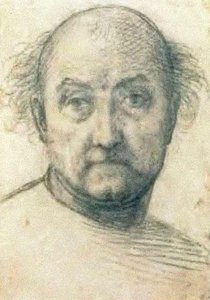
Fra Bartolomeo
1472 - 1517 , Italy
Quick Facts
- Full Name: Fra Bartolomeo
- Nationality: Italian
- Date Of Birth: 1472
- Date Of Death: 1517
- Place Of Birth: Prato, Italy
- Notable Artworks:
- Savonarola Portrait
- Vision of St. Bernard
- Worship of Venus
- God the Father
- Artistic Movement Or Style: High Renaissance
- Artists Who Influenced This Artist:
- Cosimo Rosselli
- Mariotto Albertinelli
- Raphael
- Artists Or Movements Influenced By This Artist:
- Raphael
- Mannerism