

 Preview
 Send
Send Share
Share
 Details
 Guide
Guide

 Download
 Similars
 X-Ray
X-Ray Diaporama
 Stats
StatsTríptico de Perugia 3


 Read More
Purchase a high-resolution, enhanced digital image, far superior to the online preview.
Each file is meticulously prepared by our in-house specialists using advanced tools and expert manual retouching. We ensure every image has exceptional clarity, precise color accuracy, and fine detail.
The final file is delivered via email within 72 hours, optimized for immediate use in professional, editorial, and print environments. This is the same quality trusted by top-tier design studios, publishers, and galleries.
Digital Image
Download a high-resolution file for personal display, printing, and creative projects. ( Switch to Print Buy Hand Made Painting)
Included in Every Digital Image Order
Expert Digital Delivery, Guaranteed
When you choose OriginalUniqueArt.com, you're not just getting an image - you're receiving a professionally enhanced digital artwork, crafted with precision and backed by a satisfaction guarantee. Here's everything that comes with your order, automatically:

Fast Email Delivery
Your high-resolution digital image file will be emailed to you within 72 hours of ordering - ready for immediate use.

AI-Enhanced Digital File
Your artwork is professionally optimized using advanced AI tools and manual editing, ensuring maximum detail, clarity, and color accuracy.

Free Lifetime Re-Delivery
Accidentally deleted or lost your file? No worries - we'll resend it to you anytime, free of charge.

No Import Fees - Ever
Enjoy your artwork instantly with zero customs, duties, or delivery fees - digital downloads are always tax-free.

Color Accuracy Guarantee
We ensure your digital image reflects the original colors as closely as possible using professional tools and color management.

100-Day Satisfaction Guarantee
If you're not satisfied with your digital image, we'll revise it or refund 100% within 100 days - no questions asked.

100% Money-Back Guarantee
Not satisfied? Get a full refund within 100 days of receiving your digital file - no questions asked.

Bulk Order Discounts
Buy 3 images, save 10% - Buy 5, save 15% - Buy 10+, save 20%. Great for creative projects, galleries, and agencies.
A Renaissance Dialogue: Saints Augustine & Jerome in Perugia
This exquisite gilded panel painting transports viewers to the heart of the Early Renaissance, offering a serene yet powerful depiction of Saints Augustine and Jerome. Likely created as part of a larger devotional work, perhaps an altarpiece, it embodies Fra Angelico’s unique ability to blend spiritual depth with artistic innovation. The composition immediately draws the eye upwards, emphasizing the divine realm through its vertical orientation and dramatic use of light against a shadowed background.Artistic Style & Technique: Divine Light and Measured Grace
Fra Angelico (Giovanni da Fiesole) was not merely a painter but a Dominican friar, and this deeply informs his artistic approach. His style marks a transition from the rigidity of Gothic art towards the emerging clarity and proportional accuracy of the Renaissance. While perspective is present, it’s employed with restraint – subtly flattened to maintain a symbolic resonance rather than strict realism. The architecture—characterized by pointed arches, delicate spires, and intricately framed windows—creates depth while simultaneously serving as a majestic setting for the saints. The technique is typical of the period: tempera or *fresco secco* applied over meticulously laid gold leaf. This gilding isn’t simply ornamentation; it transforms the scene into something ethereal, evoking the heavenly realm and underscoring the sacredness of the figures. The smooth, polished surface of the gold beautifully contrasts with the subtle brushstrokes visible beneath, revealing the artist's hand and adding a human touch to this divine representation.Symbolism & Iconography: Pillars of Christian Thought
The selection of Saints Augustine and Jerome is profoundly meaningful. Both are celebrated as Doctors of the Church – intellectual giants whose writings have shaped Christian theology for centuries. Saint Augustine, holding a scroll, embodies wisdom gained through scholarship and contemplation; his prolific works continue to influence philosophical thought today. Saint Jerome, resplendent in rich purple vestments, symbolizes penance and unwavering dedication to scripture. His translation of the Bible into Latin (the Vulgate) made it accessible to a wider audience, cementing his legacy as a champion of biblical study. The architectural setting itself can be interpreted symbolically – representing the Church as a divine city, a sanctuary for learning and faith.Historical Context & Fra Angelico’s Enduring Legacy
Born in 1395, Fra Angelico lived during a period of remarkable artistic and intellectual rebirth. Florence was at the epicenter of this Renaissance movement, fostering innovation across art, literature, and science. As a Dominican friar, Angelico believed that art should serve as a vehicle for spiritual contemplation, guiding viewers towards a deeper understanding of their faith. His later beatification in 1982 by Pope John Paul II underscores the enduring power and sanctity associated with his artistic output. He stands as a pivotal figure bridging the medieval and Renaissance worlds.Emotional Impact & Interior Design Considerations
This panel evokes feelings of solemnity, reverence, and opulent beauty. The rich gold leaf creates a warm glow, while the dramatic lighting focuses attention on the central figures, fostering an intimate connection. In an interior design context, this artwork – or a high-quality reproduction – would be ideally suited for spaces designed for quiet contemplation, such as libraries, studies, or meditation rooms.- The gold accents complement both warm and cool color palettes, adding a touch of historical elegance and spiritual depth.
- Its vertical format makes it ideal for hallways or above fireplaces, creating a striking focal point.
- Consider pairing with muted wall colors to allow the artwork’s luminosity to shine.
- The painting's serene quality lends itself well to spaces intended for relaxation and reflection.
Questions & Answers
Can I see an X-ray view of "Tríptico de Perugia 3" by Fra Angelico?
The X-Ray page of "Tríptico de Perugia 3" by Fra Angelico is an interactive viewer that lets you slide through eleven optical layers of the artwork's image, including an X-ray style view.
How many people view "Tríptico de Perugia 3"?
The Stats page of "Tríptico de Perugia 3" by Fra Angelico presents public visit statistics: monthly visits of this artwork, a comparison with the artist's most viewed works, and where its visitors come from.
What other names is Fra Angelico known by?
Fra Angelico is also known as Giovanni da Fiesole, Fra Giovanni, Fra Giovanni da Fiesole, Fra Giovanni Angelico, Beato Angelico.
From which era does "Tríptico de Perugia 3" date?
"Tríptico de Perugia 3" belongs to the Renaissance era.
How can I view "Tríptico de Perugia 3" by Fra Angelico as a slideshow?
The diaporama of "Tríptico de Perugia 3" can be watched on the artwork's Diaporama page.
What feeling does "Tríptico de Perugia 3" by Fra Angelico convey?
"Tríptico de Perugia 3" by Fra Angelico conveys a spiritual feeling within an overall serene mood.
What is the format of "Tríptico de Perugia 3"?
"Tríptico de Perugia 3" by Fra Angelico has a tall format. The format describes the proportions of the composition.
Which reproduction size is suggested for "Tríptico de Perugia 3" by Fra Angelico?
"Tríptico de Perugia 3" is recommended at a medium print size. Other sizes are available with the same proportions.
Artist Biography
Early Life and Spiritual Formation
Born Giovanni da Fiesole around 1395 in the Tuscan hills near Florence, Fra Angelico’s early life remains shrouded in a gentle obscurity that seems fitting for an artist whose work would become synonymous with ethereal beauty and devout spirituality. Little is known of his family or childhood, but it's believed he received a solid education, preparing him for a life beyond the humble origins of Rupesana. The pivotal moment arrived when the young Giovanni entered the Dominican Order at Fiesole, embracing a life of religious contemplation and service. It was within the walls of the monastery that he received the name Fra (Brother) Angelico, a moniker that would soon reflect not only his monastic vows but also the angelic quality inherent in his art. Initially tasked with illuminating manuscripts – a meticulous craft demanding precision and vibrant color – he honed skills that would later blossom into breathtaking frescoes and panel paintings. This early training instilled in him a profound respect for detail, a mastery of pigment, and an understanding of how to convey narrative through visual storytelling. The Dominican Order’s emphasis on theological study undoubtedly shaped his artistic vision, imbuing his work with a deep sense of faith and purpose.The Blossoming of a Unique Style
Fra Angelico's artistic development wasn’t born in isolation; he absorbed the currents of Florentine painting circulating at the time. The elegant linearity and decorative patterns of Lorenzo Monaco, a leading painter of the era, are evident in his early works. However, Fra Angelico didn’t merely imitate his predecessor. He began to synthesize these influences with a burgeoning naturalism, likely sparked by exposure to the groundbreaking frescoes of Masaccio. While Masaccio revolutionized painting with his dramatic use of perspective and realistic depiction of human form, Fra Angelico charted a different course. He embraced perspective not for its own sake, but as a means to create a more immersive spiritual experience. His figures, though graceful and often idealized, possess a quiet dignity and emotional resonance that transcends mere representation. Crucially, his art was inextricably linked to his faith; he viewed painting not as a profession, but as an act of prayer – a way to contemplate the divine and make it visible to others. This deeply held belief infused every brushstroke with reverence and sincerity.Masterpieces of Faith and Color
Fra Angelico’s artistic legacy is anchored by several monumental works that continue to inspire awe centuries later. The frescoes within the San Marco monastery in Florence are widely considered his masterpiece. Commissioned for the Dominican convent, these scenes from the life of Christ radiate a serene simplicity and emotional depth rarely encountered in Renaissance art. Each image – from the Annunciation to the Crucifixion – is imbued with a sense of quiet contemplation, inviting viewers into a personal encounter with the sacred narrative. Beyond San Marco, his *Perugia Altarpiece* showcases his evolving style, particularly in its delicate depiction of the Annunciation. The recurring theme of the Annunciation itself appears in numerous versions throughout his oeuvre, each rendered with ethereal beauty and symbolic richness. Works like *St. Lawrence Giving Alms* demonstrate his skill in narrative composition and his ability to portray human emotion with sensitivity and grace. His palette is characterized by bright, clear colors – blues, golds, and reds – that seem to glow from within, creating an atmosphere of otherworldly radiance.Legacy and Lasting Influence
Fra Angelico stands as a pivotal figure in the Early Renaissance, embodying the era’s fusion of religious devotion and artistic innovation. He wasn't simply a painter; he was a spiritual visionary who translated his faith into visual form. His work reflects the humanist ideals of the period, emphasizing human dignity and the potential for spiritual contemplation. Giorgio Vasari, the celebrated art historian, lauded Fra Angelico in his *Lives of the Artists*, proclaiming that no amount of praise could adequately capture the beauty of his creations. This recognition cemented his place within the canon of Western art. His influence extended far beyond his own time, inspiring generations of artists with his devotional style and masterful use of color. In 1982, Pope John Paul II officially recognized Fra Angelico’s holiness by beatifying him – a testament to the profound spiritual impact of his life and work. Today, his art continues to resonate with viewers around the world, offering a timeless message of faith, hope, and beauty.Where to Experience His Art
- Museo di San Marco, Florence: This museum houses the largest and most significant collection of Fra Angelico’s works, including the breathtaking frescoes from the monastery.
- The Louvre Museum (Paris): Several important paintings by Fra Angelico can be found within the Louvre's extensive collection.
- The National Gallery (London): The National Gallery boasts a selection of his works, offering visitors a glimpse into his artistic genius.
- Santa Maria sopra Minerva, Rome: This church contains frescoes by Fra Angelico and is the site where he was officially beatified.
- Numerous other museums worldwide also display examples of his art, allowing a broader appreciation for his enduring legacy.
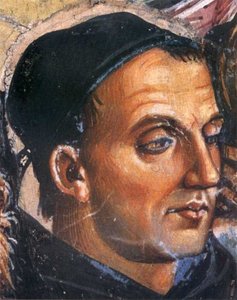
Fra Angelico
1395 - 1455 , Italy
Quick Facts
- Full Name: Fra Angelico
- Nationality: Italian
- Date Of Birth: 1395
- Date Of Death: 1455
- Place Of Birth: Rupesana, Italy
- Notable Artworks:
- San Marco Frescoes
- Perugia Altarpiece
- The Annunciation
- St. Lawrence Giving Alms
- Artistic Movement Or Style: Early Renaissance
- Artists Who Influenced This Artist:
- Lorenzo Monaco
- Masaccio
- Artists Or Movements Influenced By This Artist: ['Early Renaissance artists']