
 Send
Send Share
Share
 Details
 Guide
Guide

 Download
 Similars
 Diaporama
 Q&A
Q&A Stats
StatsAssumption (detail)


 Read More
Giclée / Art Print
Museum-quality giclée or canvas print with fast production and flexible finish options. ( Buy Hand Made Painting Switch to Digital Image)




































Pick from our preset sizes that match the artwork's original proportions.

Type the width and the height you need, to fit your frame or your wall. A print can only be cut, never made bigger than the picture, so a size with a different shape loses a part of the image. We send you a digital mockup to approve before we print anything. The picture shown on this page does not show the real cut — only the mockup does.
Worldwide Delivery () in 2 weeks instead of standard 4/5 weeks. (3 November)

Free Worldwide Express Shipping

High-Quality Linen Canvas

Full Shipping Insurance

Customs Tax Refund Guarantee

True Color Matching Guarantee

100-Day Return Policy (Defects Only)

100% Money-Back Guarantee

Bulk Discount Offer
 Glass option is only available in size under 110 CM

Assumption (detail)
Giclée / Art Print
Reproduction Size
-


Total Price
$ 81
A Window into the Renaissance Soul
In the delicate detail of Filippino Lippi’s Assumption, we are transported far beyond the confines of the modern world and into the vibrant, breathing heart of the late fifteenth century. This breathtaking fresco fragment serves as a portal to an era where the divine and the earthly were inextricably linked through the mastery of line and light. As one gazes upon the scene, there is an immediate sense of movement; a lively, rhythmic procession of figures and horses winds through a valley that feels both mythic and profoundly real. The composition captures a fleeting moment of medieval life, where the grandeur of a distant castle meets the humble, kinetic energy of travelers navigating a lush landscape. It is not merely a depiction of a journey, but an invitation to witness the very pulse of the High Renaissance.
The artistry of Lippi shines through in his sophisticated use of perspective and color, elements that define the transition from the early experimental years of his career to his mature, masterful style. The technique employed here showcases a remarkable ability to layer figures within a deep, atmospheric space, creating a sense of infinite depth that draws the eye toward the horizon. His brushwork—or rather, his masterful application of fresco pigment—utilizes a rich palette that breathes life into the horses' coats and the flowing garments of the travelers. The lighting is particularly evocative, casting soft shadows that define form while maintaining a luminous quality that suggests a sun-drenched afternoon in the Italian countryside. For the discerning collector or interior designer, this piece offers a profound sense of classical elegance and structural balance.
Symbolism and the Majesty of Detail
Beyond its surface beauty, the Assumption (detail) carries a weight of historical and symbolic significance that resonates with anyone captivated by the narrative power of art. As the son of Fra Filippo Lippi, Filippino was raised in the shadow of greatness, yet he carved out a unique identity characterized by a more dramatic and emotionally charged approach than his contemporaries. In this work, the interplay between the bustling human activity below and the monumental landscape above symbolizes the intersection of mortal struggle and divine order. The castle, standing sentinel in the background, represents stability and the enduring legacy of civilization, while the wandering figures embody the transient, beautiful nature of human existence.
For those looking to integrate such a masterpiece into a curated space, the emotional impact of this work is unparalleled. It brings an atmosphere of intellectual depth and historical prestige to any room, acting as a conversation piece that speaks of heritage, exploration, and the timeless pursuit of beauty. Whether displayed in a grand library or a contemporary living area, the Assumption detail provides a sophisticated focal point that inspires contemplation. Owning a high-quality reproduction of this fresco allows one to possess a fragment of history—a piece of the Renaissance spirit that continues to illuminate the modern world with its grace, complexity, and enduring vitality.
Questions & Answers
Who is the author of "Assumption (detail)", and in which movement?
Filippino Lippi created "Assumption (detail)" within the High Renaissance movement.
Is "Assumption (detail)" typical of what Filippino Lippi usually created?
"Assumption (detail)" depicts people, horses, castle, valley, landscape, medieval scene, while Filippino Lippi's recorded themes are high renaissance style, biblical figures, roman landscape, masterful perspective, renaissance fresco mastery. Comparing the two shows how the work relates to the artist's usual subjects.
Is there a slideshow for "Assumption (detail)" by Filippino Lippi?
"Assumption (detail)" by Filippino Lippi can be viewed as a slideshow on the artwork's Diaporama page.
Artist Biography
Early Life and Training
- Born: April 1457, Prato, Italy
- Died: April 1504
- Parents: Fra Filippo Lippi (painter) and Lucrezia Buti
- Filippino was the illegitimate son of a renowned painter.
- Early training under his father laid the foundation for his artistic career.
Artistic Career and Development
- Early Period (1475-1480): Initial works, such as Madonnas, showed a less refined style. These were initially attributed to an anonymous artist known as "amico di Sandro."
- Evolution (1480-1485): Development of a more personal and effective approach in works like the *Journeys of Tobias*.
- Maturity (1485-1504): Mastery of the High Renaissance style, exemplified by *The Apparition of Christ to the Virgin*.
Major Works and Collaborations
- Collaboration with Perugino, Ghirlandaio, and Botticelli on frescoes at Lorenzo de' Medici’s villa.
- Completion of Masaccio's unfinished decoration in the Brancacci Chapel alongside Masolino.
- Notable works include: *The Coronation of the Virgin*, *Tobias and the Angel*, *St Jerome*, and *Scene from the Life of St Thomas Aquinas*.
Influences and Artistic Style
- Early Influences: Sandro Botticelli, Fra Filippo Lippi.
- Style Characteristics: Animated form and line, warm colorism, detailed landscapes, expressive figures, and a blend of perspective geometry with intimate interiors.
- Roman Antiquities: Studies after Roman antiquities during his time in Rome influenced his work, incorporating an antique vocabulary into his art.
Historical Significance and Legacy
- A leading Florentine exponent of the tradition of great fresco cycles.
- His influence on the High Renaissance is undeniable.
- Works are found in museums worldwide, including the Uffizi Gallery in Florence.
- Known for bridging the gap between earlier Renaissance styles and the emerging High Renaissance aesthetic.
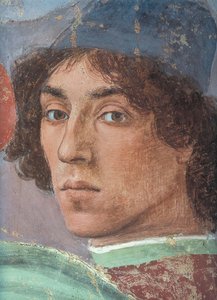
Filippino Lippi
1457 - 1504 , Italy
Quick Facts
- Full Name: Filippino Lippi
- Nationality: Italian
- Date Of Birth: 1457
- Date Of Death: 1504
- Place Of Birth: Prato, Italy
- Notable Artworks:
- The Coronation of the Virgin
- Tobias and the Angel
- Scene from the Life of St Thomas Aquinas
- St Jerome
- Artistic Movement Or Style: High Renaissance
- Artists Who Influenced This Artist:
- Fra Filippo Lippi
- Sandro Botticelli
- Artists Or Movements Influenced By This Artist: ['Raffaellino del Garbo']
Related Articles

Art That Lives With You: The Emotional Power of a Custom Interior Fresco
Discover the emotional power & timeless beauty of custom interior frescoes. Explore history, design tips & expert guidance from – creating lasting legacies.

The Enduring Legacy of Fresco Painting: Techniques, History & Contemporary Relevance
Explore the rich history & enduring artistry of fresco painting – from Giotto to Michelangelo! Discover techniques, conservation efforts, & modern applications. Learn how OriginalUniqueArt brings this timeless art form to your home.

High Medieval Art: 10 Masterpieces That Shaped an Era | OriginalUniqueArt
Journey through High Medieval Art! Explore 10 iconic masterpieces – from Giotto's frescoes to stunning Gothic cathedrals. Discover the stories behind these timeless paintings, sculptures & illuminated manuscripts. Find museum-quality art reproductions at OriginalUniqueArt.com.

The Enduring Legacy of Fresco: Technique, History & Artistic Expression Across Cultures
Explore the rich history & enduring legacy of fresco painting! Discover ancient techniques, Giotto's masterpieces, and modern applications. Expert insights for art lovers & professionals.

The Fresco as Family Legacy: Preserving Heritage Through Wall Art
Explore the rich history & enduring legacy of fresco painting. Discover how to preserve family heritage through stunning wall art. Expert insights & restoration guidance.


