

 Send
Send Share
Share
 Details
 Guide
Guide

 Download
 Similars
 Diaporama
 Stats
StatsAssumption (detail) (8)


 Read More
Purchase a high-resolution, enhanced digital image, far superior to the online preview.
Each file is meticulously prepared by our in-house specialists using advanced tools and expert manual retouching. We ensure every image has exceptional clarity, precise color accuracy, and fine detail.
The final file is delivered via email within 72 hours, optimized for immediate use in professional, editorial, and print environments. This is the same quality trusted by top-tier design studios, publishers, and galleries.
Digital Image
Download a high-resolution file for personal display, printing, and creative projects. ( Switch to Print Buy Hand Made Painting)
Included in Every Digital Image Order
Expert Digital Delivery, Guaranteed
When you choose OriginalUniqueArt.com, you're not just getting an image - you're receiving a professionally enhanced digital artwork, crafted with precision and backed by a satisfaction guarantee. Here's everything that comes with your order, automatically:

Fast Email Delivery
Your high-resolution digital image file will be emailed to you within 72 hours of ordering - ready for immediate use.

AI-Enhanced Digital File
Your artwork is professionally optimized using advanced AI tools and manual editing, ensuring maximum detail, clarity, and color accuracy.

Free Lifetime Re-Delivery
Accidentally deleted or lost your file? No worries - we'll resend it to you anytime, free of charge.

No Import Fees - Ever
Enjoy your artwork instantly with zero customs, duties, or delivery fees - digital downloads are always tax-free.

Color Accuracy Guarantee
We ensure your digital image reflects the original colors as closely as possible using professional tools and color management.

100-Day Satisfaction Guarantee
If you're not satisfied with your digital image, we'll revise it or refund 100% within 100 days - no questions asked.

100% Money-Back Guarantee
Not satisfied? Get a full refund within 100 days of receiving your digital file - no questions asked.

Bulk Order Discounts
Buy 3 images, save 10% - Buy 5, save 15% - Buy 10+, save 20%. Great for creative projects, galleries, and agencies.
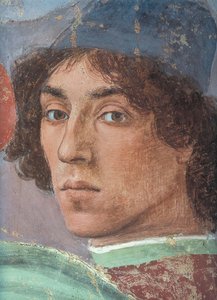
Filippino Lippi’s “Assumption (detail)”: A Renaissance Vision of Divine Grace
The fresco fragment known as “Assumption (detail)”, painted by Filippino Lippi in 1489, offers a breathtaking glimpse into the heart of early High Renaissance artistry. More than simply a depiction of a pivotal biblical event – the Virgin Mary’s ascent to heaven – it's a complex tapestry woven with theological symbolism, masterful technique, and an intensely human understanding of emotion. This particular section, part of a larger mural cycle intended for the Carafa Chapel in Rome, showcases Lippi’s signature dynamism and his profound engagement with both classical ideals and the burgeoning spirit of the Renaissance.
Lippi's artistic journey is crucial to appreciating this work. Born into an illegitimate lineage, he received his initial training under his father, Fra Filippo Lippi, a renowned painter in Florence. This early influence instilled within him a deep appreciation for narrative clarity and a vibrant use of color, qualities that would later be refined through collaborations with masters like Botticelli and Perugino. However, Filippino quickly developed his own distinctive style – one characterized by an almost theatrical quality, a heightened sense of movement, and a willingness to push the boundaries of perspective and spatial representation.
A Symphony of Line and Color: Technique and Composition
The fresco’s power lies not just in its subject matter but also in Lippi's extraordinary command of technique. He employs a layered approach to painting, building up surfaces with thin glazes of pigment – a hallmark of the *tempera* method favored by Florentine artists at the time. This creates a remarkable sense of texture and luminosity, particularly evident in the drapery of Mary’s robes, which appears both voluminous and incredibly delicate. The use of linear perspective is subtly employed to draw the viewer's eye into the background landscape, suggesting an immense depth and creating a powerful illusion of space.
Notice the deliberate fragmentation presented here – it’s not a complete fresco but a carefully selected section. This allows us to appreciate Lippi’s compositional choices with greater clarity. The figures are arranged in a pyramidal structure, drawing the eye upwards towards Mary at the apex. The architectural elements—columns and pilasters—are rendered with meticulous detail, grounding the scene in a believable, albeit idealized, setting. The dramatic lighting, originating from an unseen source above, casts strong shadows that emphasize volume and form, contributing to the overall sense of drama and reverence.
Symbolism and Spiritual Depth
Beyond its visual beauty, “Assumption (detail)” is rich in symbolic meaning. The setting sun in the background, a recurring motif in Lippi’s work, represents both the passage of time and the sacrifice of Christ. The cross, subtly incorporated into the composition, serves as a poignant reminder of the event's significance. Mary herself embodies humility and grace, her serene expression conveying a profound sense of acceptance and devotion. The angels surrounding her are not merely attendants but active participants in the divine drama, their gestures suggesting both celebration and reverence.
Furthermore, Lippi’s choice to depict this moment – the *Assumptio*, or taking up of Mary into heaven – was deeply rooted in contemporary theological debates. It reflected a growing belief that Mary's ascension represented not just her personal salvation but also the redemption of humanity. The fresco thus becomes a visual meditation on faith, sacrifice, and the promise of eternal life.
A Legacy of Innovation: Filippino Lippi’s Place in Art History
Filippino Lippi stands as a pivotal figure in the transition from Early to High Renaissance art. His work demonstrates a willingness to experiment with perspective, color, and composition, pushing the boundaries of artistic convention while retaining a deep respect for classical ideals. “Assumption (detail)” is a testament to his genius – a vibrant, emotionally resonant masterpiece that continues to captivate viewers centuries after its creation. Reproductions offer an accessible way to experience this extraordinary work, bringing its beauty and spiritual depth into any space.
Artist Biography
Early Life and Training
- Born: April 1457, Prato, Italy
- Died: April 1504
- Parents: Fra Filippo Lippi (painter) and Lucrezia Buti
- Filippino was the illegitimate son of a renowned painter.
- Early training under his father laid the foundation for his artistic career.
Artistic Career and Development
- Early Period (1475-1480): Initial works, such as Madonnas, showed a less refined style. These were initially attributed to an anonymous artist known as "amico di Sandro."
- Evolution (1480-1485): Development of a more personal and effective approach in works like the *Journeys of Tobias*.
- Maturity (1485-1504): Mastery of the High Renaissance style, exemplified by *The Apparition of Christ to the Virgin*.
Major Works and Collaborations
- Collaboration with Perugino, Ghirlandaio, and Botticelli on frescoes at Lorenzo de' Medici’s villa.
- Completion of Masaccio's unfinished decoration in the Brancacci Chapel alongside Masolino.
- Notable works include: *The Coronation of the Virgin*, *Tobias and the Angel*, *St Jerome*, and *Scene from the Life of St Thomas Aquinas*.
Influences and Artistic Style
- Early Influences: Sandro Botticelli, Fra Filippo Lippi.
- Style Characteristics: Animated form and line, warm colorism, detailed landscapes, expressive figures, and a blend of perspective geometry with intimate interiors.
- Roman Antiquities: Studies after Roman antiquities during his time in Rome influenced his work, incorporating an antique vocabulary into his art.
Historical Significance and Legacy
- A leading Florentine exponent of the tradition of great fresco cycles.
- His influence on the High Renaissance is undeniable.
- Works are found in museums worldwide, including the Uffizi Gallery in Florence.
- Known for bridging the gap between earlier Renaissance styles and the emerging High Renaissance aesthetic.
Filippino Lippi
1457 - 1504 , Italy
Quick Facts
- Artistic Movement Or Style: High Renaissance
- Artists Or Movements Influenced By This Artist: ['Raffaellino del Garbo']
- Artists Who Influenced This Artist:
- Fra Filippo Lippi
- Sandro Botticelli
- Date Of Birth: April 1457
- Date Of Death: April 1504
- Full Name: Filippino Lippi
- Nationality: Italian
- Notable Artworks:
- The Coronation of the Virgin
- Tobias and the Angel
- Scene from the Life of St Thomas Aquinas
- St Jerome
- Place Of Birth: Prato, Italy