Preview
 Send
Send Share
Share
 Details

 Download
 Similars
 X-Ray
X-Ray Diaporama
Claude Debussy

 Read More
Giclée / Art Print
Museum-quality giclée or canvas print with fast production and flexible finish options. ( Buy Hand Made Painting Buy Image)




































Pick from our preset sizes that match the artwork's original proportions.

You may enter your own dimensions to fit a specific frame or space. If your selected size does not match the original image's proportions, we will either crop the artwork or extend the image with a mirrored or solid-fill edge. A digital mockup will be sent for your approval before production begins.
Please note that the on-screen preview does not reflect the actual cropping or extension. Only the mockup will accurately show the final composition.
While custom sizes are available, we recommend selecting a dimension from the predefined list to preserve the original proportions.
Worldwide Delivery () in 2 weeks instead of standard 4/5 weeks. (24 August)

Free Worldwide Express Shipping

High-Quality Linen Canvas

Full Shipping Insurance

Customs Tax Refund Guarantee

True Color Matching Guarantee

60-Day Return Policy (Defects Only)

100% Money-Back Guarantee

Bulk Discount Offer
 Glass option is only available in size under 110 CM

Claude Debussy
Giclée / Art Print
Reproduction Size
-


Total Price
$ 81
Collectible Description
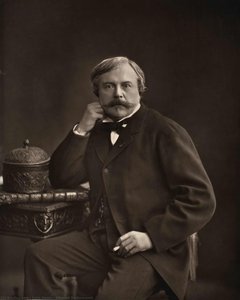
A Glimpse into Genius: Felix Nadar's Portrait of Claude Debussy
This striking vintage photograph captures the renowned composer Claude Debussy in 1908, immortalized by the celebrated photographer Félix Nadar. More than just a likeness, this portrait offers a window into the soul of a musical innovator and reflects the burgeoning field of photography at the turn of the century. The image presents Debussy in a three-quarter view, his gaze directly engaging the viewer, creating an immediate sense of intimacy and connection. The blurred background emphasizes the subject's presence, drawing attention to his contemplative expression and refined attire – hallmarks of a man deeply immersed in artistic creation.The Art of Portraiture & Nadar’s Distinctive Style
Félix Nadar was a pioneer in portrait photography, known for his ability to capture not just physical features but also the psychological depth of his subjects. He rejected the ornate backdrops common at the time, opting instead for natural light and a focus on the sitter's character. This photograph exemplifies that approach; the soft, diffused lighting models Debussy’s face gently, highlighting subtle nuances in expression while avoiding harsh shadows. The grainy texture characteristic of the wet collodion process used—a prevalent photographic technique during this era—adds to the image’s vintage charm and authenticity. Nadar's skill lies in his ability to convey a sense of quiet intensity through careful composition and lighting, revealing a glimpse into Debussy’s inner world. The photograph was likely printed on albumen paper, further contributing to its historical significance and aesthetic appeal.Debussy: Composer & Cultural Icon
Claude Debussy (1862-1918) stands as one of the most influential composers of the late 19th and early 20th centuries, a key figure in the Impressionist movement in music. His innovative harmonies and evocative melodies broke from traditional Romantic conventions, paving the way for modern musical expression. This portrait, taken at the height of his career, reflects Debussy’s status as a cultural icon. The formal attire—a well-tailored suit and collar—underscores his respectability and artistic seriousness within Parisian society. The photograph serves not only as a visual record but also as a symbolic representation of an era marked by significant shifts in art, music, and culture.Symbolism & Emotional Resonance
Debussy’s serious expression conveys a sense of profound contemplation, hinting at the complex creative process behind his groundbreaking compositions. The direct gaze establishes a connection with the viewer, inviting us to consider the thoughts and emotions that fueled his musical genius. The monochromatic palette—shades of brown and grey—contributes to a mood of quiet introspection and timeless elegance. This photograph transcends a simple portrait; it is an evocative study of a brilliant mind at work, capturing a moment in time when artistic boundaries were being redefined. It’s a powerful reminder of the enduring legacy of both Debussy's music and Nadar's photographic artistry.Artist Biography
Félix Nadar: A Pioneer of Photography
Early Life and Beginnings
- Born: Gaspard-Félix Tournachon on April 5, 1820, in Paris (though some sources suggest Lyon).
- His father, Victor Tournachon, was a printer and bookseller.
- Initially studied medicine but abandoned it due to financial constraints after his father’s death.
- Nadar, as he became known, began his career as a caricaturist and novelist, contributing to various newspapers.
From Caricature to Photography
- Began experimenting with photography around 1853.
- Opened his first photographic studio in 1854 at 113 rue St. Lazare, later moving to 35 Boulevard des Capucines in 1860.
- Quickly gained recognition for his striking and psychologically insightful portraits.
- Rejection of Convention: Nadar eschewed the opulent backdrops common in portraiture, preferring natural light and a focus on the sitter’s personality.
Pioneering Aerial Photography
- In 1858, Nadar became the first person to take aerial photographs using balloons.
- Overcame technical challenges related to developing photographic plates at altitude by inventing a gas-proof cotton cover for his balloon baskets.
- Also pioneered artificial lighting in photography, notably within the Paris Catacombs.
- Le Géant: Commissioned the construction of a massive balloon named “Le Géant” (The Giant) in 1863, inspiring Jules Verne’s *Five Weeks in a Balloon*.
Major Achievements and Influences
- Portraiture: Photographed numerous prominent figures including Victor Hugo, Charles Baudelaire, Sarah Bernhardt, and Gustave Courbet.
- Established the world’s first airmail service during the Siege of Paris (1870-71) using balloon flights.
- Hosted the first Impressionist exhibition in his studio in 1874, providing a crucial platform for emerging artists.
- Published what is considered the first photo-interview in 1886, featuring chemist Michel Eugène Chevreul.
Later Life and Legacy
- Moved his studio to Marseille from 1895 to 1909.
- Died on March 20, 1910, in Paris and is buried in Père Lachaise Cemetery.
- His son, Paul Nadar, continued the studio’s operations after his death.
- Quand j’étais photographe: Published a memoir reflecting on his life and work, offering valuable insights into 19th-century photography.
- Historical Significance: Nadar's innovative techniques and artistic vision profoundly impacted the development of photography as an art form. His portraits remain iconic representations of Parisian intellectual and artistic circles.
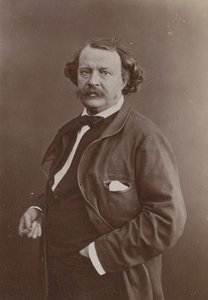
Félix Nadar
1820 - 1910
Quick Facts
- Birth Date: April 5, 1820
- Death Date: March 20, 1910
- Influenced: ['Jules Verne']
- Movement:
- Photography
- Caricature
- Impressionism (associated)
- Name: Félix Nadar
- Nationality: French
- Notable Works:
- Portraits of Baudelaire, Hugo, Delacroix
- Aerial Photography
- Photo-interview with Chevreul
Related Articles

Beyond the Portrait: Félix Nadar & the Psychological Depths of 19th-Century Photography
Explore the revolutionary photography of Félix Nadar – pioneer of portraiture, aerial imaging & psychological depth. Discover his iconic portraits of Baudelaire, Hugo & more. A deep dive into 19th-century art history.
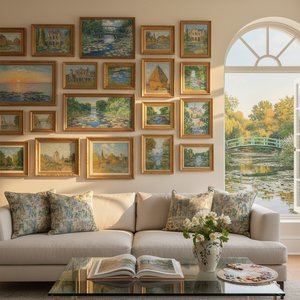
Monet's Masterpieces: 25 Iconic Artworks to Transform Your Home
Journey through 25 iconic Claude Monet masterpieces! Explore Impressionism’s beauty, from Water Lilies to Rouen Cathedral. Discover stunning art reproductions & curated decor ideas – explore the full collection online at OriginalUniqueArt.com.

Pictorialism: A Search for Artistic Photography's Soul – Aesthetics, Techniques & Legacy
Explore the captivating world of Pictorialism – a pivotal movement that transformed photography into fine art. Discover key artists like Stieglitz & Käsebier, techniques, and collecting tips from experts.

Beyond the Lens: Photography's Enduring Influence on Modern & Contemporary Art
Explore photography's pivotal role in shaping modern & contemporary art. Discover key movements, influential artists like Stieglitz, and expert collecting advice from OriginalUniqueArt.

Monochrome Visions: Exploring the Aesthetic & Historical Significance of Black & White Photography
Explore the rich history & artistic power of black and white photography. From early techniques to iconic masters like Ansel Adams, discover why monochrome continues to captivate art lovers today. Expert insights for collectors.