Preview
 Send
Send Share
Share
 Details

 Download
 Similars
 X-Ray
X-Ray Diaporama
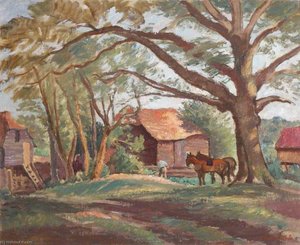
Woods
 51.0 x 41.0 cm
 Darlington Library
 Read More
Giclée / Art Print
Museum-quality giclée or canvas print with fast production and flexible finish options. ( Buy Hand Made Painting Buy Image)




































Pick from our preset sizes that match the artwork's original proportions.

You may enter your own dimensions to fit a specific frame or space. If your selected size does not match the original image's proportions, we will either crop the artwork or extend the image with a mirrored or solid-fill edge. A digital mockup will be sent for your approval before production begins.
Please note that the on-screen preview does not reflect the actual cropping or extension. Only the mockup will accurately show the final composition.
While custom sizes are available, we recommend selecting a dimension from the predefined list to preserve the original proportions.
Worldwide Delivery () in 2 weeks instead of standard 4/5 weeks. (23 August)

Free Worldwide Express Shipping

High-Quality Linen Canvas

Full Shipping Insurance

Customs Tax Refund Guarantee

True Color Matching Guarantee

60-Day Return Policy (Defects Only)

100% Money-Back Guarantee

Bulk Discount Offer
 Glass option is only available in size under 110 CM

Woods
Giclée / Art Print
Reproduction Size
-


Total Price
$ 81
Artist Biography
The Quiet Mastery of Ethelbert White
Ethelbert White, born in the Middlesex town of Isleworth in 1891, remains a profound yet understated figure in the tapestry of early twentieth-century British art. His journey was one of remarkable versatility, moving between the delicate precision of wood engraving and the expansive, atmospheric realms of oil and watercolour. Trained at the St John’s Wood Art School under the guidance of Leonard Walker, White developed a technical foundation that allowed him to navigate various mediums with an effortless grace. While many of his contemporaries sought the loud provocations of pure abstraction, White found his true calling in the quietude of the natural world, capturing the subtle shifts of light and the serene essence of the English landscape.
His early career was marked by a daring engagement with the avant-garde. In 1913, alongside luminaries such as Mark Gertler and C R W Nevinson, White embraced the energetic spirit of the Futurist movement. This period of experimentation, which included a bold collaborative depiction of Hampstead Heath for the AAA exhibition, showcased a willingness to challenge traditional boundaries and explore new visual languages. Yet, even amidst these modernistic explorations, the seeds of his later, more contemplative style were already being sown. His work began to reflect the structural influences of Cézanne, blending a modernist sense of composition with an enduring reverence for the organic forms of nature.
A Legacy in Line and Light
Beyond his canvases, White carved a significant niche in the history of British printmaking. In 1920, he transitioned into the intricate world of wood engraving, a move that would redefine much of his artistic output. As a founding member of the English Wood Engraving Society in 1925, he became a central figure in a movement that championed the modern style advocated by Noel Rooke. His engravings were noted for their unusual scale and their ability to translate complex textures into stark, beautiful contrasts. One of his most celebrated achievements in this medium was his illustration for Richard Jefferies' The Story of My Heart in 1923, a work that critics often cite as a landmark in the publication of modern wood-engraved books in Britain.
As his career progressed, White’s focus drifted back toward the expansive beauty of landscapes, though he never lost the precision learned from his printmaking years. His paintings—ranging from the lush, verdant Early Spring to the tranquil Woods—are characterized by a masterful command of tonal gradations and a restrained colour palette. He possessed a rare ability to convey deep emotion through subtle atmospheric effects, a quality that drew comparisons to the celebrated Paul Nash. Whether capturing the rugged coastlines of Cornwall or the soft light of an English garden, his work remains an invitation to pause and observe the quiet majesty of the earth.
Throughout his life, White’s presence in the British art establishment was both steady and respected. His memberships in prestigious organizations such as the following reflect his standing among the era's most significant creators:
- The London Group: Where he connected with modernist ideals and social commentary.
- The Royal Watercolour Society: A testament to his mastery of fluid, luminous mediums.
- The New English Art Club: Highlighting his place within the influential artistic circles of his time.
- The Society of Wood Engravers: Marking his vital contribution to the revival of printmaking.
By the time of his passing in 1972, Ethelbert White had left behind a body of work that serves as a bridge between the experimental fervor of the early twentieth century and a timeless, classical appreciation for the natural landscape. His ability to find the extraordinary within the ordinary continues to resonate, offering a sense of peace and a profound connection to the enduring beauty of the world around us.

ethelbert white
1891 - 1972
Quick Facts
- Artistic Movement Or Style: London Group
- Artists Or Movements Influenced By This Artist: ['Paul Nash']
- Artists Who Influenced This Artist:
- Leonard Walker
- Mark Gertler
- Date Of Death: 1972
- Full Name: Ethelbert White
- Nationality: British
- Notable Artworks:
- Pastoral Scene
- Chromatic Absence
- Place Of Birth: Isleworth, Middlesex