() ·

A painting made for you, by hand

old hut

Hand Made Oil Reproduction

Hand-painted oil on canvas in your size and frame, made to order by our artists. ( Switch to Print Switch to Digital Image)

Collectible Description

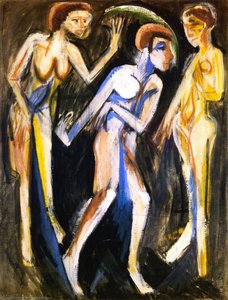
Experience the jarring emotional intensity of Ernst Ludwig Kirchner's Old Hut, a 1913 German Expressionist masterpiece defined by distorted forms and vibrant colors that invites you to explore this iconic vision.

Artist Biography

A leader of German Expressionism and Die Brücke, Kirchner captured urban life. Discover his bold and emotive masterpieces today.

from ·

Chapter 1

How large should it be?

Slide to change the size; the picture on the left shows the frame at its real width. The proportions of the original are kept.

Standard
custom
CM
INCH

Pick from our preset sizes that match the artwork's original proportions.

width
height

Type the width and the height you need, to fit your frame or your wall. This is hand-painted, so for a size with a different shape the artist can paint a bit more around the picture, or cut a bit — you choose. We send you a digital mockup to approve before the painting starts. The picture shown on this page does not show the real result — only the mockup does.

Chapter 2

How should it arrive?

Choose the edges of the stretched canvas

Choose your frame

Corner sample of the WhiteWrap canvas edge finish, stretched on solid wood bars
White $1
Corner sample of the BlurSideWrap canvas edge finish, stretched on solid wood bars
Blurside $1
Corner sample of the ExtendedWrap canvas edge finish, stretched on solid wood bars
Extended $1
Corner sample of the P118B picture frame: moulded polystyrene, 5 cm wide and 3 cm thick
P118B $10
Corner sample of the P118H picture frame: moulded polystyrene, 5 cm wide and 3 cm thick
P118H $10
Corner sample of the P118W picture frame: moulded polystyrene, 5 cm wide and 3 cm thick
P118W $10
Corner sample of the P438Z picture frame: moulded polystyrene, 5.5 cm wide and 3.5 cm thick
P438Z $10
Corner sample of the P508JH picture frame: moulded polystyrene, 7 cm wide and 3.5 cm thick
P508JH $12
Corner sample of the P508YH picture frame: moulded polystyrene, 7 cm wide and 3.5 cm thick
P508YH $12
Corner sample of the P805H picture frame: moulded polystyrene, 5 cm wide and 3.5 cm thick
P805H $10
Corner sample of the P805Z picture frame: moulded polystyrene, 5 cm wide and 3.5 cm thick
P805Z $10
Corner sample of the P919BZ picture frame: moulded polystyrene, 7 cm wide and 3.5 cm thick
P919BZ $10
Corner sample of the P919G picture frame: moulded polystyrene, 7 cm wide and 3.5 cm thick
P919G $10
Corner sample of the P919XJ picture frame: moulded polystyrene, 7 cm wide and 3.5 cm thick
P919XJ $10
Corner sample of the P959ZH picture frame: moulded polystyrene, 5 cm wide and 3 cm thick
P959ZH $10
Corner sample of the P968JZ picture frame: moulded polystyrene, 6 cm wide and 4 cm thick
P968JZ $12
Corner sample of the W106C picture frame: solid wood, 5 cm wide and 3 cm thick
W106C $8
Corner sample of the W218G picture frame: solid wood, 5 cm wide and 3 cm thick
W218G $10
Corner sample of the W218JH picture frame: solid wood, 5 cm wide and 3 cm thick
W218JH $8
Corner sample of the W218Y picture frame: solid wood, 5 cm wide and 3 cm thick
W218Y $10
Corner sample of the W307PJ picture frame: solid wood, 6 cm wide and 3 cm thick
W307PJ $10
Corner sample of the W316G picture frame: solid wood, 6 cm wide and 3 cm thick
W316G $10
Corner sample of the W316PJ picture frame: solid wood, 6 cm wide and 3 cm thick
W316PJ $8
Corner sample of the W316Y picture frame: solid wood, 6 cm wide and 3 cm thick
W316Y $10
Corner sample of the W398PJ picture frame: solid wood, 5 cm wide and 3 cm thick
W398PJ $8
Corner sample of the W4111J picture frame: solid wood, 6.5 cm wide and 3.5 cm thick
W4111J $10
Corner sample of the W500HY picture frame: solid wood, 7 cm wide and 5 cm thick
W500HY $15
Corner sample of the W500JH picture frame: solid wood, 7 cm wide and 5 cm thick
W500JH $15
Corner sample of the W692G picture frame: solid wood, 8 cm wide and 4 cm thick
W692G $12
Corner sample of the W849H picture frame: solid wood, 5 cm wide and 3 cm thick
W849H $8
Corner sample of the W940BG picture frame: solid wood, 7.5 cm wide and 4.5 cm thick
W940BG $15
Corner sample of the W953PJ picture frame: solid wood, 6 cm wide and 3.5 cm thick
W953PJ $8
Corner sample of the H24-GOLD picture frame: carved wood with gesso, 10 cm wide and 6 cm thick
H24-GOLD $30
Corner sample of the H24-SILVER picture frame: carved wood with gesso, 10 cm wide and 6 cm thick
H24-SILVER $30
Corner sample of the H36-GOLD picture frame: carved wood with gesso, 15 cm wide and 6.5 cm thick
H36-GOLD $45
Corner sample of the H36-SILVER picture frame: carved wood with gesso, 15 cm wide and 6.5 cm thick
H36-SILVER $45
Frame preview
Framed

Moulding: . Overall size with the frame: .

Chapter 3

Who paints it, and should anything change?

Examples of what can be changed: Replace face with customer photo; Add pet (e.g., replace cat with dog); Include hidden message in background; Change background landscape or elements.
After order, OriginalUniqueArt.com team will email client for instructions and provide a mockup preview

Worldwide Delivery () in 3/4 weeks instead of standard 5 weeks. (9 November). No compromise on quality.

Chapter 4

The finishing touches

A nameplate, as in a museum?

Engraved Bronze Plaque Details

This elegant plaque features the artist's name and the title of the artwork, finely engraved for a timeless presentation.

It is made from bronze with a refined, elegant finish. The text is precisely laser-engraved for a sharp and permanent result. Measuring 9x2 cm, the plaque is compact yet easy to read. It's built to be durable and scratch-resistant, offering a professional, museum-quality look. Mounting is simple thanks to the included adhesive backing.

Transparent Acrylic Plaque Details

The plaque includes essential engraved details such as the artist's name, the title of the artwork, the date it was created, the type of media used-like oil on canvas or watercolor-a brief description of the piece, and a QR code that links to the complete artwork information.

It is crafted from clear acrylic, offering a sleek, modern appearance. The text is UV-engraved in black to ensure strong visual contrast. With a size of 10x15 cm, it ensures optimal readability. It comes equipped with two metal hooks for secure wall mounting. The plaque is designed to be weather-resistant, making it suitable for various environments, and it includes interactive features that work seamlessly with smartphone scanning.

Black Acrylic Plaque Details

This elegant plaque includes engraved information such as the artist's name, the title of the artwork, the date it was created, the type of media used (like oil on canvas or watercolor), a short description of the artwork, and a QR code for quick access to more information.

The plaque itself is made from refined black acrylic with a premium finish. The text is laser-engraved in white for high contrast and readability. Its size is 10x15 cm, designed to be easy to read. It comes with two metal hooks for professional mounting. The design is sleek and fits any interior style. It is also weather-resistant and durable, with built-in digital integration for mobile compatibility.

A protective varnish?

When do you need it?

Chapter 5

Your painting, as you ordered it

old hut

Reproduction Medium

Reproduction Size

-

Elite Senior Artist

More detail, finesse, and extra production time

-

Reproduction Frame

-

-

For artworks or reproductions larger than 105 cm (approximately 41 inches) on any side, the frame will be shipped as a kit, disassembled. This method ensures safe delivery and prevents damage during transport.

Professional assembly required - this is not a DIY product.
The kit must be assembled and the canvas stretched by an experienced professional framer, using wood glue (not supplied), a canvas stretching plier and clamps to hold the bars square while the glue dries. Incorrect assembly or uneven canvas tension can permanently damage the artwork and is not covered by our warranty.

  • All solid wood bars are included, precisely cut to size.

  • Assembled with the screws provided, plus wood glue for the corner joints, which is not supplied and must be sourced by your framer.

  • Professional tools are required and not included: a canvas stretching plier (tensioner) and clamps to hold the bars square while the glue dries.

Important:
The corner joints require wood glue, the bars must be held with clamps until the glue is fully dry, and tightening the canvas on the assembled frame requires a canvas stretching plier. None of these are included in the kit. Please arrange an experienced professional framer before ordering this size.

Nameplate

-

-

Protective Varnish

Glossy Varnish (enhances colors, protects against light/moisture)

-

Customize My Artwork

Examples of what can be changed: Replace face with customer photo; Add pet (e.g., replace cat with dog); Include hidden message in background; Change background landscape or elements.

-

Urgent

Worldwide Delivery () in 3/4 weeks instead of standard 5 weeks. (9 November). No compromise on quality.

-

Express Shipping

Worldwide Delivery () in 5 weeks. (16 November).

Included

Total Price

$ 325

Total Price $ 325

Glass option is only available in size under 110 CM

Included with every order

  • Free Worldwide Express Shipping
  • High-Quality Linen Canvas
  • Full Shipping Insurance
  • Customs Tax Refund Guarantee
  • True Color Matching Guarantee
  • 100-Day Return Policy (Defects Only)
  • 100% Money-Back Guarantee
  • Bulk Discount Offer

A Fragmented Vision of Isolation: Analyzing Ernst Ludwig Kirchner’s “Old Hut”

Kirchner's "Old Hut," painted in 1913, stands as a cornerstone of German Expressionism—a movement defined by its fervent embrace of emotion and rejection of objective representation. More than just a depiction of a simple dwelling, it embodies the anxieties simmering beneath the surface of Europe at the cusp of World War I, reflecting Kirchner’s own psychological turmoil and his profound engagement with the burgeoning modernist impulse. The artwork immediately confronts the viewer with a jarring visual experience—a chaotic interior bathed in artificial light, dominated by angular forms and unsettling color combinations that speak to a deeper sense of unease.
  • Composition & Perspective: The painting’s asymmetrical arrangement draws the eye upwards into a compressed space, devoid of traditional perspective. Diagonal lines crisscross the canvas, generating instability and mirroring the fractured emotional landscape depicted within. This deliberate distortion serves not merely as stylistic choice but as a crucial element in conveying Kirchner's subjective perception of reality.
  • Color Palette & Texture: Kirchner employs a deliberately dissonant color palette—bold swathes of blues, yellows, reds, and purples clash violently against each other. The thick impasto technique contributes to the artwork’s palpable energy, emphasizing brushstrokes and creating a tactile surface that amplifies the emotional impact. These colors aren't chosen for their beauty but rather for their ability to provoke visceral responses.
  • Formal Elements: Simplified geometric shapes—rectangles, triangles, and trapezoids—dominate the composition, stripping away naturalistic detail in favor of abstracted forms. This stylistic simplification underscores Kirchner’s desire to bypass representational conventions and communicate directly with the viewer's subconscious mind.

Style & Technique: Echoes of Die Brücke

“Old Hut” firmly establishes Kirchner within the influential Die Brücke group—a collective dedicated to exploring psychological themes through expressive painting. Like his fellow artists, Kirchner prioritized conveying emotion over accurate depiction, mirroring the turbulent spirit of the era. The technique—characterized by impasto application and visible brushstrokes—is deliberately confrontational, reflecting the Expressionist preoccupation with capturing inner turmoil and rejecting academic idealism. This stylistic commitment aligns perfectly with the group’s manifesto: “We want to break away from everything that is stale and conventional.”

Symbolism & Emotional Resonance

Beyond its formal qualities, "Old Hut" resonates deeply with symbolic meaning. The claustrophobic space represents psychological confinement—a metaphor for the anxieties of a society grappling with impending conflict. The jarring colors symbolize emotional intensity and discordance, mirroring Kirchner’s own struggles with mental health. Ultimately, the artwork invites contemplation on themes of isolation, vulnerability, and the human condition—themes that continue to resonate powerfully with audiences today. It's a testament to Kirchner’s ability to transform visual experience into profound psychological insight.

Historical Context & Legacy

Painted in 1913, “Old Hut” captures the zeitgeist of pre-war Germany—a period marked by social unrest and intellectual ferment. Kirchner's work anticipates the horrors of World War I and reflects a broader disillusionment with bourgeois values. However, its enduring significance lies not merely in its historical context but also in its pioneering role as an exemplar of Expressionist aesthetics. “Old Hut” remains a seminal artwork—a powerful reminder that art can serve as a conduit for emotional truth and psychological exploration.

Questions & Answers

What is "old hut" about?

The subjects of "old hut" are urban landscape, interior space, distortion, color palette, impasto texture, psychological anxiety, geometric forms.

Where can I see a preview of "old hut"?

The Preview page of "old hut" lets you preview the artwork before ordering.

Which room is "old hut" by Ernst Ludwig Kirchner recommended for?

The recommended space for "old hut" by Ernst Ludwig Kirchner is a living room. The suggestion can of course be adapted to your interior.

More about this painting

Preview AR preview Switch to Print Switch to Digital Image Send
Details Guide Add to favorites Download Similars X-Ray Diaporama Q&A Stats

In numbers

  • 29frames to choose from
  • standard sizes, in its own proportions
  • 5weeks to paint and deliver it
Ernst Ludwig Kirchner

Ernst Ludwig Kirchner

1880 - 1938, Germany

Quick facts about Ernst Ludwig Kirchner

  • Artistic Movement Or Style: German Expressionism
  • Artists Or Movements Influenced By This Artist:
    • Expressionist artists
    • Modern artists
  • Artists Who Influenced This Artist:
    • Albrecht Dürer
    • Vincent van Gogh
    • Edvard Munch
  • Full Name: Ernst Ludwig Kirchner
  • Nationality: German
  • Notable Artworks:
    • Street, Dresden
    • Street, Berlin
    • Bathers at Moritzburg
    • The Red Tower at Halle
    • Self Portrait with Cat
  • Place Of Birth: Aschaffenburg, Germany
  • Date Of Birth: 1880
  • Date Of Death: 1938

Artist Biography

Early Life, Family and Artistic Training

Ernst Ludwig Kirchner was born on 6 May 1880 in Aschaffenburg, Germany. His early years were marked by the frequent movements of his family, dictated by the career of his father, Ernst Kirchner, a chemical technician in the paper industry. This transient existence saw the family living in Frankfurt/Main from 1886, following a period spent in Perlen near Lucerne, Switzerland, between 1887 and 1889. As a child, he was a keen observer of his surroundings, often watching the activity of the local train station from his bedroom window.

The path toward his professional life was not a direct one. While his parents initially hoped for a more socially conventional career for their son, Kirchner’s interests leaned toward the visual. After obtaining his school-leaving certificate in 1901, he enrolled at the university in Dresden to study architecture. This academic pursuit provided a foundation of technical discipline, yet his true inclinations lay elsewhere. He spent much of his time in artistic courses, focusing on the fundamentals of freehand, life drawing, and composition. These studies provided the essential training that would eventually allow him to move beyond academic tradition.

The Founding of Die Brücke

In 1905, Kirchner sought a departure from the rigid constraints of academic tradition. He joined forces with Fritz Bleyl, Erich Heckel, and Karl Schmidt-Rottluff to form the artists' collective known as Die Brücke. This group functioned as a bridge between the classical past and a new, visceral way of seeing. They gathered in Dresden, driven by a shared desire to express the raw realities of modern existence through a radical simplification of form and the use of unmixed, glowing colors. The studio became a space for intense experimentation, where the boundaries of social and artistic convention were constantly tested.

The collective's energy was intense but ultimately fleeting. By 27 May 1913, the group disbanded, marking the end of their formal collaboration. Even as these original bonds dissolved, Kirchner's commitment to establishing new artistic spaces continued. In Berlin, he co-founded the MUIM Institute alongside Max Pechstein, further cementing his position within the shifting landscape of German modernism. His life remained a series of attempts to find authenticity in an increasingly fragmented society.

Technique and Artistic Style

Kirchner’s visual language was defined by a restless, jagged energy. He moved away from the polished finish of academic tradition, opting instead for bold brushstrokes that remained visible on the surface. His approach to color was rarely concerned with the natural world; instead, he employed non-naturalistic hues to provoke an immediate emotional response. These jarring color palettes often clashed, creating a sense of tension that mirrored the psychological weight of his subjects. In his woodcuts, this intensity was further distilled through a physical, aggressive process. He carved into the woodblocks with dynamic black lines, leaving the marks of his labor to create a stark, rhythmic contrast between light and shadow.

The spatial logic of his compositions often felt unsettled. He utilized a fractured perspective that rejected the stability of traditional depth, opting for a skewed view that suggested movement and disorientation. This distortion extended to the human form itself; figures and objects were frequently elongated or shaped in ways that prioritized subjective feeling over anatomical accuracy. This stylistic choice allowed him to capture the frantic, often anonymous pulse of modern life. Whether depicting the quietude of a landscape or the chaos of a city street, his work remained anchored in this tension between the seen world and the internal experience.

Key Works and Notable Paintings

His early explorations often sought to capture the tension between the natural world and the encroaching modern era. In 1907, he produced Landscape with houses and man, a work that moved beyond simple rural depiction to embody the anxieties of a changing Germany. This piece utilized a fractured perspective and a jarring palette to create an unsettling vista. Such experiments in distortion and color became hallmarks of his approach to the subject matter of his surroundings.

As the urban landscape began to dominate his vision, his work took on a more frenetic, psychological quality. His 1913 oil painting, Street, Berlin, captures the chaos of city life through a busy scene where two women occupy the central foreground. The figures are rendered with a sense of identity that contrasts against the undifferentiated mass of men in the background. This period of intense observation continued into his later years, even as his personal circumstances shifted. In 1919, he painted Self Portrait with Cat, a work characterized by thick impasto brushstrokes and a striking palette of red, yellow, and blue. This piece, along with his 1919 oil painting Der Maler, Selbstporträt, reveals a man confronting his own vulnerability through a piercing, intense gaze.

His later output continued to reflect a restless energy, even when the subject matter turned toward the landscape. Die Amselfuh, dated 1923, utilized bold brushstrokes and vibrant colors to depict a scene of exploration and adventure. His ability to translate internal turmoil into external form remained a constant throughout his career.

Later Years and Personal Struggles

The turbulence of the early 20th century eventually breached the sanctuary of Kirchner’s studio. During the First World War, he volunteered for army service, but the experience proved deeply fracturing. He suffered a severe mental breakdown and was subsequently discharged from service. This period of instability marked a shift in his internal landscape, as the psychological weight of the era began to manifest in his personal well-being.

The political climate in Germany grew increasingly hostile toward his aesthetic. In 1937, the Nazi regime branded his work as "degenerate." This designation led to a systematic campaign against his output; more than 600 of his works were either sold or destroyed by the state. The erasure of his artistic presence was both a professional and personal catastrophe. Seeking refuge from this persecution, he moved to Davos, Switzerland. However, the pressures of exile and declining health proved insurmountable. On 15 June 1938, Kirchner took his own life in Davos.

Legacy and Artistic Influence

Kirchner remains a central figure of the German Expressionist movement, a presence that helped define the visual language of a transformative era. His reach extended far beyond the borders of Europe; his work provided one of the first presentations of the European avant-garde to an American audience, introducing a new, jagged sensibility to the continent. This exposure helped shift the trajectory of modern art, moving it away from academic tradition and toward a more subjective, psychological reality.

The influence of his approach persists in the way contemporary art practices navigate the complexities of the human psyche. By prioritizing emotional truth over literal representation, he opened doors for subsequent generations to use color and form as tools for internal exploration. His ability to translate the tension of modern existence into a visual medium ensured that his impact would be felt long after the era of the Die Brücke had passed.

Where to See His Works Today

The physical presence of Kirchner’s vision is scattered across several major institutions, reflecting the international reach of his influence. In Germany, the Brücke-Museum in Berlin maintains a significant collection of his work, preserving the spirit of the collective he helped found. The Museum Folkwang in Essen also holds several of his paintings, including works like Leipziger Straße with Electric Tram and Lighthouse on Fehmarn. These pieces offer a direct encounter with the fractured perspectives and intense color palettes that defined his career.

His reach extends into the collections of Munich, where the Staatsgalerie Moderner Kunst houses his paintings. For those traveling across the Atlantic, the Hammer Museum in Los Angeles holds works such as Hoffmann and Wife. These various repositories ensure that his exploration of urban tension and the human form remains accessible to a global audience. To see his work in person is to witness the restless energy of the early twentieth century through his specific, unyielding lens.

Quick Facts

  • Influences: Dürer
  • Artist: Ernst Ludwig Kirchner
  • Movement: German Expressionism
  • Title: Old Hut
  • Location: Private Collection

Art Quiz

There is only one correct answer for each question.

Question 1:
What artistic movement is Ernst Ludwig Kirchner’s ‘Old Hut’ primarily associated with?
Question 2:
The painting utilizes a dominant color palette characterized by:
Question 3:
Kirchner’s technique of applying paint thickly onto the canvas is known as:
Question 4:
What stylistic element contributes to the feeling of instability and unease conveyed in ‘Old Hut’?
Question 5:
The painting's imagery suggests a psychological exploration of themes related to: