Preview
 Send
Send Share
Share
 Details
 Guide
Guide

 Download
 Similars
 X-Ray
X-Ray Diaporama
 Q&A
Q&A Stats
StatsWashington Bridge, Harlem River


 Read More
Giclée / Art Print
Museum-quality giclée or canvas print with fast production and flexible finish options. ( Buy Hand Made Painting Switch to Digital Image)




P118B $10

P118H $10

P118W $10

P438Z $10

P508JH $12

P508YH $12

P805H $10

P805Z $10

P919BZ $10

P919G $10

P919XJ $10

P959ZH $10

P968JZ $12

W106C $8

W218G $10

W218JH $8

W218Y $10

W307PJ $10

W316G $10

W316PJ $8

W316Y $10

W398PJ $8

W4111J $10

W500HY $15

W500JH $15

W692G $12

W849H $8

W940BG $15

W953PJ $8




Pick from our preset sizes that match the artwork's original proportions.

Type the width and the height you need, to fit your frame or your wall. A print can only be cut, never made bigger than the picture, so a size with a different shape loses a part of the image. We send you a digital mockup to approve before we print anything. The picture shown on this page does not show the real cut — only the mockup does.
Worldwide Delivery () in 2 weeks instead of standard 4/5 weeks. (5 November)

Free Worldwide Express Shipping

High-Quality Linen Canvas

Full Shipping Insurance

Customs Tax Refund Guarantee

True Color Matching Guarantee

100-Day Return Policy (Defects Only)

100% Money-Back Guarantee

Bulk Discount Offer
 Glass option is only available in size under 110 CM

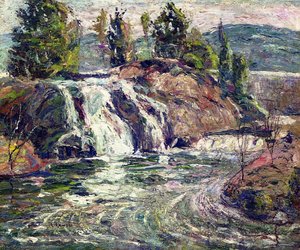
Washington Bridge, Harlem River
Giclée / Art Print
Reproduction Size
-


Total Price
$ 81
A Moment Suspended in Light
The river flows with a quiet, heavy grace under an overcast sky, its surface catching the soft, diffused light of a day caught between shadows. In this view of the Harlem River, the water moves through a landscape where the boundaries between earth and air seem to blur. The Washington Bridge rises in the distance, its golden hue acting as a steady anchor amidst the shifting greens and browns of the foreground. Trees and rocks cling to the riverbanks, rendered with thick, mosaic-like strokes that give the scene a palpable texture. There is a sense of stillness here, as if the wind has momentarily ceased its movement, leaving only the slow pulse of the water and the hazy expanse of the sky above.
The atmosphere feels heavy with moisture, suggesting a cool, damp afternoon where the light does not strike so much as it settles. Every brushstroke contributes to this sense of weight and depth, building layers of color that mimic the way light filters through a mist. The composition draws the eye upward from the dark, organic shapes of the shoreline toward the structural presence of the bridge, creating a silent dialogue between the natural world and the hand of man.
The Language of Impressionism
The technique relies on visible, broken strokes that reject precise lines in favor of pure sensation. This approach captures the ephemeral quality of the atmosphere, using color to suggest form rather than hard outlines. Muted greens and deep browns ground the foreground, while the sky and water reflect a palette of cool tones, punctuated by the warmth of the bridge. The way the paint sits upon the canvas creates a rugged, tactile surface that mirrors the uneven textures of the riverbank itself.
This method reflects the influence of the Impressionist movement, where the goal is to record a fleeting impression of light and weather. By prioritizing the subjective experience of the scene, the work captures the way the eye perceives a landscape in flux. The bridge, though a massive feat of engineering, becomes part of the natural rhythm of the river, its presence softened by the hazy, atmospheric perspective that pushes the distant hills into a soft, blue-tinted blur.
Connections Between Nature and Progress
There is a quiet tension held within this landscape, a subtle meeting point between the wildness of the river and the encroaching reach of urban life. The bridge acts as a physical link between two shores, but symbolically, it represents the intersection of civilization and the natural environment. As the early 20th century brings rapid change to the surrounding landscape, this painting captures a sense of peace that feels fragile, as if the tranquility of the Harlem River is being observed in a rare moment of respite from the expansion of the city.
The emotional weight of the piece lies in this very stillness. It invites a slow, contemplative gaze, encouraging anyone who looks to find a sense of calm within the textured layers of paint. The scene does not demand attention through loud colors or dramatic action; instead, it offers a quiet space for reflection, where the simple beauty of light hitting water and stone remains the central focus.
Questions & Answers
How do I download the image of "Washington Bridge, Harlem River" by Ernest Lawson?
A download is available for "Washington Bridge, Harlem River": the artwork's Download page offers a high-resolution digital image download.
Is "Washington Bridge, Harlem River" free of copyright?
Regarding copyright, "Washington Bridge, Harlem River" is in the public domain - its copyright has expired.
From which era does "Washington Bridge, Harlem River" date?
The historical period of "Washington Bridge, Harlem River" by Ernest Lawson is Modern. This classification situates the work in art history.
Artist Biography
early life and training
ernest lawson, a prominent figure in the american impressionist movement, was born on march 22, 1873, in halifax, nova scotia, canada. in 1888, he moved to the united states, settling in kansas city, and later, in 1891, he made his way to new york, where he enrolled in classes at the art students league. under the tutelage of john twachtman, lawson was introduced to impressionism, which would significantly influence his formative years.artistic development and influences
lawson's style, characterized by a blend of impressionism and realism, was shaped by his interactions with various artists. he studied at the académie julian in paris in 1893, where he met jean-joseph benjamin-constant and jean-paul laurens. his plein air painting experiences in southern france and moret-sur-loing, where he encountered alfred sisley, an english impressionist, further enriched his artistic perspective.the eight and notable exhibitions
in 1908, lawson joined the eight, a group of artists protesting the narrow tastes and restrictive exhibition policies of the national academy of design. this association led to a pivotal exhibition at the macbeth galleries in new york, which garnered significant media attention and sparked debate about the diversity of style and subject matter in american art.- city suburbs, one of lawson's notable works, is now part of the phillips collection in washington, d.c., showcasing his unique blend of impressionism and realism. (view at OriginalUniqueArt)
- another piece, approaching storm, also in the phillips collection, demonstrates lawson's mastery of capturing the essence of american landscapes. (view at OriginalUniqueArt)
- for more on ernest lawson and his contributions to american impressionism, visit his page on OriginalUniqueArt.
legacy and impact
lawson's understated yet vibrant style, described by art critic james gibbons huneker as originating from a "palette of crushed jewels," has left an indelible mark on american art. his participation in the eight and his unique artistic approach have made him a notable figure in the history of impressionism. key points: * born: march 22, 1873, halifax, nova scotia, canada * died: december 18, 1939 * notable works: city suburbs, approaching storm * influences: john twachtman, jean-joseph benjamin-constant, alfred sisley * association: the eight * style: blend of impressionism and realism
Ernest Lawson
1873 - 1939 , Canada
Quick Facts
- Full Name: Ernest Lawson
- Nationality: Canadian-American
- Date Of Birth: 1873
- Date Of Death: 1939
- Place Of Birth: Halifax, Canada
- Notable Artworks:
- City suburbs
- Approaching storm
- Artistic Movement Or Style: Impressionism & Realism
- Artists Who Influenced This Artist:
- John Twachtman
- Alfred Sisley
- Artists Or Movements Influenced By This Artist: ['The Eight']
Related Articles

Frederick Childe Hassam: American Impressionism's Chronicler of Light & Modern Life
Explore the captivating world of Frederick Childe Hassam, a pioneer of American Impressionism. Discover his iconic paintings capturing light, urban life & coastal beauty. Learn about his legacy and influence on American art history.
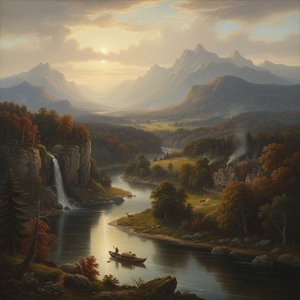
Capturing the American Spirit: A Journey Through Iconic Landscapes and the Legacy of the Hudson River School
Explore the profound beauty of American art history. From the Hudson River School to iconic landscapes, discover a curated journey through the masterpieces that defined a nation's spirit and the enduring legacy of American Romanticism.
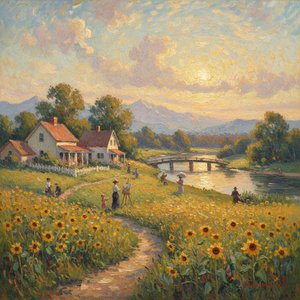
Capturing a Nation's Light: Exploring the American Impressionist Movement
Explore the captivating world of American Impressionism! Discover key artists, techniques & its lasting impact on art history. Find museum-quality reproductions and expert guidance at OriginalUniqueArt.
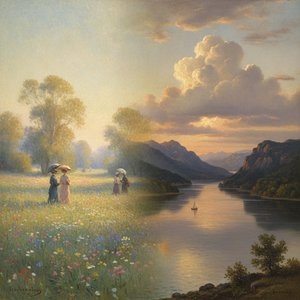
Capturing the Light: A Journey Through the Soul of American Impressionism and the Hudson River School
Explore the luminous beauty of American Impressionism and the Hudson River School. Discover a curated journey through light, landscape, and history, celebrating the enduring legacy of masters through exquisite, hand-painted oil reproductions for the discerning art lover.
Ernest Lawson: A Pioneer of American Impressionism & His Vision of the Rural Landscape
Explore the life & art of Ernest Lawson, a pivotal figure in American Impressionism. Discover his evocative landscapes, influences, and lasting legacy with OriginalUniqueArt.