Preview
 Send
Send Share
Share
 Details
 Guide
Guide

 Download
 Similars
 X-Ray
X-Ray Diaporama
 Stats
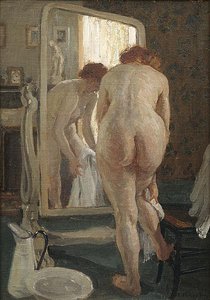
StatsThe Cabbage Patch
 1889
1889 61.0 x 100.0 cm
 Read More
Hand Made Oil Reproduction
Hand-painted oil on canvas in your size and frame, made to order by our artists. ( Switch to Print Switch to Digital Image)




































Pick from our preset sizes that match the artwork's original proportions.

Type the width and the height you need, to fit your frame or your wall. This is hand-painted, so for a size with a different shape the artist can paint a bit more around the picture, or cut a bit — you choose. We send you a digital mockup to approve before the painting starts. The picture shown on this page does not show the real result — only the mockup does.
After order, OriginalUniqueArt.com team will email client for instructions and provide a mockup preview
Worldwide Delivery () in 3/4 weeks instead of standard 5 weeks. (23 October). No compromise on quality.

Free Worldwide Express Shipping

High-Quality Linen Canvas

Full Shipping Insurance

Customs Tax Refund Guarantee

True Color Matching Guarantee

100-Day Return Policy (Defects Only)

100% Money-Back Guarantee

Bulk Discount Offer
 Glass option is only available in size under 110 CM

The Cabbage Patch
Reproduction Medium
Reproduction Size
-


Total Price
$ 300
Artist Biography
A Vision of Light and Leisure
Emanuel Phillips Fox stands as a luminous figure in the history of Australian art, a painter whose brush captured the ephemeral beauty of light and the quiet elegance of modern life. Born in Melbourne, Victoria, his artistic journey was one of profound movement, bridging the landscapes of Australia and the vibrant studios of Europe. As an Impressionist, Fox possessed a rare ability to translate the atmosphere of a moment onto canvas, creating scenes that feel less like static images and even more like breathing memories. His work often centers on the serene, capturing figures immersed in nature or the gentle rhythms of daily leisure, rendered with a mastery of color and light that evokes a sense of profound tranquility.
The development of his style was deeply influenced by his time spent abroad. After studying at the National Gallery of Victoria Art School, Fox traveled to Paris in 1886, where he remained in Europe for several years. This period of immersion in the heart of the Impressionist movement allowed him to absorb the techniques of light and shadow that would become hallmarks of his oeuvre. Upon returning to Melbourne, he became a pivotal figure in the second phase of the Heidelberg School, bringing a sophisticated, European sensibility to the Australian Impressionist tradition. His ability to blend the structural elements of composition with the fluid, atmospheric qualities of light allowed him to lead a new era of artistic expression in his homeland.
Mastery of the Impressionist Spirit
The essence of Fox’s artistry lies in his capacity to find the extraordinary within the ordinary. His paintings frequently feature women in contemplative or relaxed poses, often set against lush, sun-drenched backgrounds. Whether it is a figure reading a book beneath the shade of a tree or people gathered near the water's edge, there is an unmistakable sense of harmony and balance in his work. He utilized oil on canvas to build textures that mimic the natural world, from the delicate petals of flowers to the shimmering surface of a river.
His technical achievements are characterized by several key elements:
- Luminous Landscapes: A profound ability to capture the specific quality of light, creating depth and dimensionality through subtle shifts in tone.
- Atmospheric Composition: The use of nature—such as climbing vines, trees, and water—to frame subjects and create a sense of immersive environment.
- Capturing the Moment: A focus on scenes of relaxation and leisure that convey a peaceful, almost dreamlike atmosphere.
Through his dedication to the Impressionist style, Emanuel Phillips Fox left an indelible mark on the Australian art canon. His legacy is not merely found in the beauty of his individual works, but in his role as a bridge between continents, bringing the light of Paris to the landscapes of Victoria and forever altering the trajectory of Australian painting.

Emanuel Phillips Fox
1865 - 1915 , Australia
Quick Facts
- Artistic Movement Or Style: Australian Impressionist
- Full Name: Emanuel Phillips Fox
- Nationality: Australian
- Notable Artworks:
- The Ferry
- Nasturtiums
- Heidelberg
- Place Of Birth: Fitzroy, Australia
- Date Of Birth: 1865
- Date Of Death: 1915