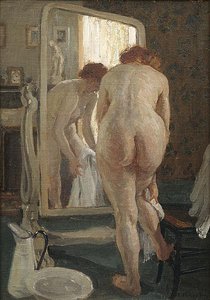
Preview
 Send
Send Share
Share
 Details
 Guide
Guide

 Download
 Similars
 X-Ray
X-Ray Diaporama
 Stats
StatsIna Gregory
 Charcoal
- WallArt
- Impressionism
 1895
1895- 19th Century
 76.0 x 58.0 cm
 National Portrait Gallery
 Read More
Giclée / Art Print
Museum-quality giclée or canvas print with fast production and flexible finish options. ( Buy Hand Made Painting Switch to Digital Image)




P118B $10

P118H $10

P118W $10

P438Z $10

P508JH $12

P508YH $12

P805H $10

P805Z $10

P919BZ $10

P919G $10

P919XJ $10

P959ZH $10

P968JZ $12

W106C $8

W218G $10

W218JH $8

W218Y $10

W307PJ $10

W316G $10

W316PJ $8

W316Y $10

W398PJ $8

W4111J $10

W500HY $15

W500JH $15

W692G $12

W849H $8

W940BG $15

W953PJ $8




Pick from our preset sizes that match the artwork's original proportions.

Type the width and the height you need, to fit your frame or your wall. A print can only be cut, never made bigger than the picture, so a size with a different shape loses a part of the image. We send you a digital mockup to approve before we print anything. The picture shown on this page does not show the real cut — only the mockup does.
Worldwide Delivery () in 2 weeks instead of standard 4/5 weeks. (22 October)

Free Worldwide Express Shipping

High-Quality Linen Canvas

Full Shipping Insurance

Customs Tax Refund Guarantee

True Color Matching Guarantee

100-Day Return Policy (Defects Only)

100% Money-Back Guarantee

Bulk Discount Offer
 Glass option is only available in size under 110 CM

Ina Gregory
Giclée / Art Print
Reproduction Size
-


Total Price
$ 81
A Visionary Gaze: The Intimate Portrait of Ina Gregory
In the delicate, charcoal-etched lines of this 1895 portrait, we encounter a moment of profound stillness captured by the hand of an artist deeply connected to the Australian Impressionist movement. The subject, Georgina Alice ‘Ina’ Gregory, is presented not merely as a figure, but as a study in introspection. Her eyes, softly closed, suggest a retreat from the external world into a realm of internal thought or spiritual contemplation. This sense of quietude is amplified by the sketch-like quality of the medium, where the soft smudging of charcoal creates a dreamlike atmosphere, blurring the boundaries between the physical form and the ephemeral nature of memory.
The composition draws the viewer into an intimate encounter with the subject’s features. The artist utilizes a masterful play of light and shadow to define the delicate contours of her face, from the subtle curve of her nose to the gentle weight of her closed eyelids. Her long, flowing hair cascades down the side of her face, adding a rhythmic, organic texture that contrasts beautifully with the smooth, luminous skin depicted in the highlights. There is a palpable sense of depth achieved through the gaze—though her eyes are shut, the direction of her head implies a longing or a looking toward an unseen horizon, inviting the observer to wonder what visions dance behind those closed lids.
Historically, this piece serves as a poignant window into the late 19th-century art scene in Melbourne. Created during a period when Gregory was honing her craft under the guidance of masters like Emanuel Phillips Fox, the drawing reflects the burgeoning influence of tonalism and the emotional depth sought by the Victorian Artists’ Society. The work transcends simple portraiture; it embodies the era's fascination with the psychological interior. For the collector or interior designer, this artwork offers more than just aesthetic beauty; it provides a soulful focal point that commands attention through its understated elegance and profound emotional resonance.
Integrating such a piece into a curated space brings an air of intellectual sophistication and timelessness. Whether placed in a sunlit study or a quiet corner of a contemporary living room, the monochrome palette and evocative textures of this drawing harmonize with both classical and modern decor. It is a work that rewards prolonged observation, offering new layers of meaning with every glance—a perfect acquisition for those who value art that speaks to the enduring beauty of the human spirit and the quiet power of introspection.
Questions & Answers
What is the emotional tone of "Ina Gregory" by Emanuel Phillips Fox?
The emotional tone recorded for "Ina Gregory" by Emanuel Phillips Fox is reflective. It summarizes the feeling the work expresses.
How do I preview a reproduction of "Ina Gregory" by Emanuel Phillips Fox?
A preview of "Ina Gregory" by Emanuel Phillips Fox is available on the artwork's Preview page.
Which palette and lead color define "Ina Gregory"?
The color identity of "Ina Gregory" by Emanuel Phillips Fox: a neutrals palette, dominated by putty (#e8ddcc).
Artist Biography
A Vision of Light and Leisure
Emanuel Phillips Fox stands as a luminous figure in the history of Australian art, a painter whose brush captured the ephemeral beauty of light and the quiet elegance of modern life. Born in Melbourne, Victoria, his artistic journey was one of profound movement, bridging the landscapes of Australia and the vibrant studios of Europe. As an Impressionist, Fox possessed a rare ability to translate the atmosphere of a moment onto canvas, creating scenes that feel less like static images and even more like breathing memories. His work often centers on the serene, capturing figures immersed in nature or the gentle rhythms of daily leisure, rendered with a mastery of color and light that evokes a sense of profound tranquility.
The development of his style was deeply influenced by his time spent abroad. After studying at the National Gallery of Victoria Art School, Fox traveled to Paris in 1886, where he remained in Europe for several years. This period of immersion in the heart of the Impressionist movement allowed him to absorb the techniques of light and shadow that would become hallmarks of his oeuvre. Upon returning to Melbourne, he became a pivotal figure in the second phase of the Heidelberg School, bringing a sophisticated, European sensibility to the Australian Impressionist tradition. His ability to blend the structural elements of composition with the fluid, atmospheric qualities of light allowed him to lead a new era of artistic expression in his homeland.
Mastery of the Impressionist Spirit
The essence of Fox’s artistry lies in his capacity to find the extraordinary within the ordinary. His paintings frequently feature women in contemplative or relaxed poses, often set against lush, sun-drenched backgrounds. Whether it is a figure reading a book beneath the shade of a tree or people gathered near the water's edge, there is an unmistakable sense of harmony and balance in his work. He utilized oil on canvas to build textures that mimic the natural world, from the delicate petals of flowers to the shimmering surface of a river.
His technical achievements are characterized by several key elements:
- Luminous Landscapes: A profound ability to capture the specific quality of light, creating depth and dimensionality through subtle shifts in tone.
- Atmospheric Composition: The use of nature—such as climbing vines, trees, and water—to frame subjects and create a sense of immersive environment.
- Capturing the Moment: A focus on scenes of relaxation and leisure that convey a peaceful, almost dreamlike atmosphere.
Through his dedication to the Impressionist style, Emanuel Phillips Fox left an indelible mark on the Australian art canon. His legacy is not merely found in the beauty of his individual works, but in his role as a bridge between continents, bringing the light of Paris to the landscapes of Victoria and forever altering the trajectory of Australian painting.

Emanuel Phillips Fox
1865 - 1915 , Australia
Quick Facts
- Artistic Movement Or Style: Australian Impressionist
- Full Name: Emanuel Phillips Fox
- Nationality: Australian
- Notable Artworks:
- The Ferry
- Nasturtiums
- Heidelberg
- Place Of Birth: Fitzroy, Australia
- Date Of Birth: 1865
- Date Of Death: 1915
Related Articles

F.A.Q.: Textured Prints – Achieving the Oil Painting Look & Feel for the Elite Collector
Discover how OriginalUniqueArt.com's textured prints authentically replicate the look & feel of original oil paintings. Expert artists, premium materials, and a commitment to quality for discerning collectors. Explore our FAQ.
Charcoal & Canvas: 10 Masterpieces of Shadow & Light |
Explore 10 iconic paintings dominated by charcoal tones – from Rembrandt's dramatic chiaroscuro to Goya’s expressive portraits. Discover the stories behind these masterpieces & find museum-quality art reproductions for your home at .
Charcoal Art Mastery: A Visual Journey Through Raw Power, Deep Shadows, and Expressive Texture
Master the raw power of charcoal art. Explore professional techniques in chiaroscuro, texture, and shadow to elevate your sketches from simple lines to high-impact, expressive masterpieces. A visual guide for art students seeking technical precision and emotional depth.

Mastering Charcoal: The Definitive Expert Guide to Capturing Profound Depth, Texture, and Shadow
Elevate your artistry with this definitive expert guide to mastering charcoal. Designed for art students, learn professional techniques for capturing profound depth, intricate textures, and dramatic shadows through advanced blending and chiaroscuro methods.
The Tactile Canvas: Exploring Texture as Subject, Materiality & Meaning in Art History
Explore the rich history of texture in art! Discover how artists from Van Gogh to contemporary masters use materiality & technique to create captivating tactile experiences. Deepen your art appreciation with OriginalUniqueArt.