

 Preview
 Send
Send Share
Share
 Details
 Guide
Guide

 Download
 Similars
 X-Ray
X-Ray Diaporama
 Stats
StatsChurch at Ericeira
 Oil On Canvas
- WallArt
- Expressionism
 127.0 x 127.0 cm
 The Fleming Collection
 Read More
Giclée / Art Print
Museum-quality giclée or canvas print with fast production and flexible finish options. ( Buy Hand Made Painting Switch to Digital Image)




P118B $10

P118H $10

P118W $10

P438Z $10

P508JH $12

P508YH $12

P805H $10

P805Z $10

P919BZ $10

P919G $10

P919XJ $10

P959ZH $10

P968JZ $12

W106C $8

W218G $10

W218JH $8

W218Y $10

W307PJ $10

W316G $10

W316PJ $8

W316Y $10

W398PJ $8

W4111J $10

W500HY $15

W500JH $15

W692G $12

W849H $8

W940BG $15

W953PJ $8




Pick from our preset sizes that match the artwork's original proportions.

You may enter your own dimensions to fit a specific frame or space. If your selected size does not match the original image's proportions, we will either crop the artwork or extend the image with a mirrored or solid-fill edge. A digital mockup will be sent for your approval before production begins.
Please note that the on-screen preview does not reflect the actual cropping or extension. Only the mockup will accurately show the final composition.
While custom sizes are available, we recommend selecting a dimension from the predefined list to preserve the original proportions.
Worldwide Delivery () in 2 weeks instead of standard 4/5 weeks. (25 September)

Free Worldwide Express Shipping

High-Quality Linen Canvas

Full Shipping Insurance

Customs Tax Refund Guarantee

True Color Matching Guarantee

100-Day Return Policy (Defects Only)

100% Money-Back Guarantee

Bulk Discount Offer
 Glass option is only available in size under 110 CM

Church at Ericeira
Giclée / Art Print
Reproduction Size
-


Total Price
$ 81
Church at Ericeira – Elizabeth Violet Blackadder
Elizabeth Violet Blackadder’s “Church at Ericeira” stands as a testament to her unwavering dedication to capturing the essence of landscape and emotion through meticulous observation and expressive brushwork. Completed in 1969, this oil painting resides within The Fleming Collection in London, offering visitors a glimpse into the artistic sensibilities of a Scottish icon. ### Subject Matter & Composition The artwork depicts a serene coastal scene dominated by a whitewashed church building perched atop a gently sloping hillside overlooking the Atlantic Ocean. Blackadder’s keen eye for detail translates into a remarkably accurate representation of Ericeira, Portugal – a region known for its dramatic cliffs and vibrant fishing culture. The composition prioritizes the central structure, emphasizing its importance as both architectural form and symbolic focal point. Surrounding it are sparse vegetation—olive trees and shrubs—further grounding the scene in its natural environment. Despite the simplified perspective, Blackadder skillfully conveys depth through layering of colors and textures, creating a palpable sense of atmosphere. ### Style & Technique – Expressionism’s Delicate Touch “Church at Ericeira” embodies the spirit of expressionist painting, albeit tempered by Blackadder's characteristic restraint. Loose brushstrokes dominate the canvas, eschewing precise realism in favor of conveying feeling and mood. The artist employs a technique characterized by thick impasto—heavy application of paint—creating palpable textural surfaces that invite tactile engagement. Color plays a crucial role in establishing the artwork’s emotional resonance; bold hues of blues and whites capture the grandeur of the sky and the purity of the building, while subtle greens and yellows hint at the verdant landscape below. The artist's masterful use of color contributes to an overall impression of melancholy beauty—a contemplative reflection on faith and solitude amidst the vastness of nature. ### Historical Context & Influences Blackadder’s artistic journey was profoundly shaped by her formative years at Edinburgh College of Art, where she studied under William Gillies – a figure whose influence extended beyond mere stylistic imitation; Gillies championed a humanist approach to art, emphasizing empathy and sensitivity toward the human condition. This ethos is evident in Blackadder's work, which consistently explores themes of quiet contemplation and connection with the natural world—a response to the burgeoning modernist movement that sought to liberate artistic expression from academic conventions. The painting’s creation coincided with Blackadder’s extensive travels throughout Europe, America and Japan – experiences that undoubtedly enriched her visual vocabulary and informed her artistic vision. ### Symbolism & Emotional Impact Beyond its aesthetic qualities, “Church at Ericeira” carries symbolic weight. The church itself represents faith—a beacon of solace and spiritual contemplation—while the expansive sky evokes feelings of awe and melancholy—acknowledging the insignificance of human existence against the backdrop of cosmic grandeur. Blackadder’s ability to distill complex emotions into a single image speaks to her profound understanding of the human psyche. Ultimately, this artwork invites viewers to pause, reflect, and appreciate the beauty inherent in simplicity—a timeless message conveyed with remarkable grace and conviction.Artist Biography
A Life Immersed in Observation: The World of Elizabeth Blackadder
Dame Elizabeth Violet Blackadder, a name synonymous with delicate observation and quiet beauty, stands as one of Scotland’s most celebrated artists. Born in Falkirk in 1931 and passing away in 2021, her life was a testament to the power of sustained focus and a deep connection to the natural world. From an early age, Blackadder demonstrated a keen eye for detail, nurtured by a mother who prioritized her education and encouraged her burgeoning artistic talents. This dedication led her to Edinburgh College of Art in 1949, where she flourished under the tutelage of William Gillies, whose influence would remain palpable throughout her career. The seeds of her lifelong fascination with botanical forms were sown during these formative years; even as a teenager, she meticulously collected and cataloged local flowers, pressing them and labeling each specimen with its Latin name – a practice that foreshadowed the exquisite precision of her later floral paintings. This early dedication to study was coupled with a solitary childhood, fostered by an avid love for reading, which allowed her inner world to blossom alongside her artistic skills.From Byzantine Echoes to Scottish Landscapes
Blackadder’s artistic journey wasn't confined by geographical boundaries. Scholarships afforded her the opportunity to travel extensively throughout Europe – Yugoslavia, Greece, and Italy – immersing herself in classical and Byzantine art. These experiences profoundly shaped her aesthetic sensibility, instilling a sense of reverence for form and color that would characterize her work. While initially drawn to landscapes, particularly those encountered during travels through France, Spain, Portugal, and Scotland, Blackadder gradually gravitated towards still life as her primary mode of expression. However, even within this genre, she wasn’t interested in mere replication; rather, she sought to capture the *essence* of her subjects – the subtle interplay of light and shadow, the delicate textures, and the inherent poetry of everyday objects. The influence of Henri Matisse became apparent during a period spent in France, prompting Blackadder to embrace a lighter, more vibrant palette. Later journeys to Japan in the 1980s introduced new perspectives, inspiring her to explore Eastern techniques and philosophies, particularly the Zen concept of *ma* – empty space – which found expression in the carefully considered arrangements within her compositions.A Master of Multiple Mediums
Blackadder’s artistic versatility extended beyond painting. She was a prolific printmaker, working with master printers at Glasgow Print Studio from 1985 until around 2014 to create etchings, screenprints, lithographs and woodcuts. These prints often echoed the themes found in her paintings – cats, flowers, and scenes inspired by her travels – but allowed for a different kind of exploration, emphasizing line and texture in new ways. Her mastery across mediums wasn’t about diversification; it was about finding the most effective means to convey her artistic vision. Whether working with oils, watercolors, or printmaking techniques, Blackadder maintained an unwavering commitment to precision and detail. This dedication earned her numerous accolades throughout her career, including becoming the first woman elected to both the Royal Scottish Academy and the Royal Academy of Arts – a testament to her groundbreaking achievements and lasting impact on the art world.Cats, Flowers, and a Legacy of Quiet Observation
While Blackadder’s oeuvre encompassed portraits and landscapes, she is perhaps best known for her intimate depictions of flowers and cats. These subjects weren't chosen arbitrarily; they represented a deeply personal connection to the beauty and tranquility of domestic life. Her floral paintings are not simply botanical studies but rather celebrations of color, form, and texture – each petal rendered with meticulous care and arranged in compositions that evoke a sense of harmony and grace. Similarly, her cats aren’t merely pets but become characters within her visual narratives, their personalities subtly revealed through posture and expression. White Still Life, Easter, which won the Guthrie Award in 1962, exemplifies her early style – a delicate balance between abstraction and representation. Later works, such as paintings inspired by her travels to Japan, demonstrate a growing confidence in color and composition. Throughout her career, Blackadder’s work remained remarkably consistent in its focus on observation and refinement. Her ability to find beauty in the ordinary, to elevate everyday objects to the level of art, is what truly sets her apart.A Lasting Impression
Elizabeth Blackadder's influence extends far beyond the canvas. Her work can be found in prestigious collections worldwide – from the Tate Gallery and the Scottish National Gallery of Modern Art to the Museum of Modern Art in New York – and has even graced a series of Royal Mail stamps, bringing her art into the homes of countless people. In 2012, she was honored with the commission to paint the official Christmas card for Scotland’s First Minister, Alex Salmond. More than just an artist, Blackadder was a cultural icon, a symbol of Scottish artistic excellence and a champion of quiet contemplation in a world often dominated by noise and distraction. Her legacy lies not only in her beautiful paintings but also in her unwavering dedication to her craft and her ability to inspire generations of artists with her profound sensitivity and enduring vision.
Elizabeth Violet Blackadder
1931 - 2021 , United Kingdom
Quick Facts
- Artistic Movement Or Style: Still life, Landscape
- Artists Who Influenced This Artist:
- William Gillies
- Henri Matisse
- Date Of Birth: September 24, 1931
- Date Of Death: August 23, 2021
- Full Name: Elizabeth Violet Blackadder
- Nationality: Scottish
- Notable Artworks:
- Church at Ericeira
- White Still Life, Easter
- Bridge over the Arnor
- Place Of Birth: Falkirk, UK
Related Articles

Evocations of Place: A Historical Journey Through Landscape Art
Explore the rich history of landscape art with OriginalUniqueArt. Discover renowned artists, movements like Impressionism & tonalism, and expert guidance for collecting timeless pieces. Find your perfect serene escape today!

Evocations of Place: A Historical Journey Through Landscape Art
Explore the rich history of landscape art with OriginalUniqueArt. Discover renowned artists, movements like Impressionism & Romanticism, and expert guidance for collecting timeless pieces. Find your perfect serene escape today!
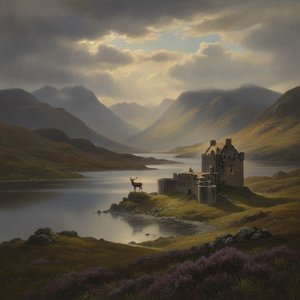
Capturing the Highlands: A Guide to Iconic Scottish Landscape Paintings and the Romantic Tradition
Explore the profound beauty of the Scottish Highlands through the lens of Romanticism. Discover the history, technique, and atmospheric mastery behind iconic landscape paintings from the Old Masters to museum-quality oil reproductions for collectors.

Beyond Reality: Capturing Emotion Through the Soul of Expressionist Landscapes
Explore the profound emotional depth of Expressionist landscapes. Discover how masters use color, texture, and light to transcend reality, capturing the raw essence of nature through an art-historical lens for the true connoisseur.

Romantic Landscapes: 10 Masterpieces for Your Home | OriginalUniqueArt
Journey through 10 Romantic landscape masterpieces by Friedrich, Turner & Cole. Explore emotional art, sublime nature scenes & iconic 19th-century paintings. Find museum-quality reproductions for your home at OriginalUniqueArt.com – discover the full collection online!


