Preview
 Send
Send Share
Share
 Details

 Download
 Similars
 X-Ray
X-Ray Diaporama
 Stats
StatsSelf-Portrait
 Acrylic On Paper
- Baroque
 1664
1664 21.0 x 17.0 cm
 National Museums Liverpool
 Read More
Hand Made Oil Reproduction
Hand-painted oil on canvas in your size and frame, made to order by our artists. ( Switch to Print Switch to Digital Image)




P118B $10

P118H $10

P118W $10

P438Z $10

P508JH $12

P508YH $12

P805H $10

P805Z $10

P919BZ $10

P919G $10

P919XJ $10

P959ZH $10

P968JZ $12

W106C $8

W218G $10

W218JH $8

W218Y $10

W307PJ $10

W316G $10

W316PJ $8

W316Y $10

W398PJ $8

W4111J $10

W500HY $15

W500JH $15

W692G $12

W849H $8

W940BG $15

W953PJ $8




Pick from our preset sizes that match the artwork's original proportions.

You may enter your own dimensions to fit a specific frame or space. If your selected size does not match the original image's proportions, we will either crop the artwork or extend the painting with additional hand-painted elements. A digital mockup will be sent for your approval before production begins.
Please note that the on-screen preview does not reflect the actual cropping or extension. Only the mockup will accurately show the final composition.
While custom sizes are available, we recommend selecting a dimension from the predefined list to preserve the original proportions.
After order, OriginalUniqueArt.com team will email client for instructions and provide a mockup preview
Worldwide Delivery () in 3/4 weeks instead of standard 5 weeks. (12 September). No compromise on quality.

Free Worldwide Express Shipping

High-Quality Linen Canvas

Full Shipping Insurance

Customs Tax Refund Guarantee

True Color Matching Guarantee

100-Day Return Policy (Defects Only)

100% Money-Back Guarantee

Bulk Discount Offer
 Glass option is only available in size under 110 CM

Self-Portrait
Reproduction Medium
Reproduction Size
-


Total Price
$ 300
A Glimpse of Genius: Elisabetta Sirani’s ‘Self-Portrait’ – A Renaissance Revelation
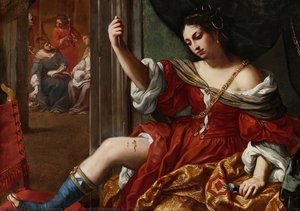
The charcoal whispers from Elisabetta Sirani's 1664 “Self-Portrait” are more than mere lines on paper; they’re a poignant invitation into the heart and mind of a remarkably talented, yet tragically short-lived, artist. This intimate study, housed within an ornate gilded frame, transcends its humble dimensions – measuring just 21 x 17 centimeters – to reveal a profound depth of emotion and technical mastery that speaks volumes about the burgeoning artistic landscape of 17th-century Bologna. It’s a work not simply *of* a woman, but *by* a woman, boldly asserting her presence within a world largely dominated by male figures.
Sirani's story is inextricably linked to the vibrant and fiercely competitive art scene of her time. Born into an artistic family – her father, Giovanni Andrea Sirani, was himself a respected painter and teacher – she inherited not only technical skill but also a pioneering spirit. Bologna, then a hub for artistic innovation, offered a relative openness to female artists, a circumstance that allowed Sirani to establish herself as one of the era’s most celebrated figures. The portrait itself feels like a deliberate act of self-definition, a conscious assertion of her identity and talent in an environment where women were often relegated to secondary roles.
The Language of Light and Line: Technique and Style
The immediate impression is one of meticulous detail, achieved through a masterful deployment of hatching and cross-hatching – techniques borrowed from the Renaissance masters but imbued with Sirani’s unique sensibility. The artist doesn't simply *draw* her face; she builds it up layer by layer, creating a remarkable sense of volume and texture. Notice how the subtle variations in tone suggest the play of light on skin, the delicate curve of a cheekbone, or the shadowed recesses beneath an eye. This isn’t merely a likeness; it's a carefully constructed illusion of reality.
The choice of red chalk – a favored medium for portraiture at the time – contributes to the work’s subdued palette and velvety texture. The muted browns and beiges create a sense of intimacy, drawing the viewer into the subject’s gaze. Sirani's use of light is particularly noteworthy; it’s not dramatic or theatrical but rather soft and diffused, illuminating the face with a gentle warmth that emphasizes her features and invites contemplation. The composition itself – centered within the frame, with the head occupying most of the vertical space – reinforces this sense of intimacy and directness.
Symbolism and Emotional Resonance
Beyond its technical brilliance, “Self-Portrait” is rich in symbolic meaning. The direct gaze of the subject—a deliberate choice—conveys a remarkable confidence and perhaps even a touch of introspection. She isn’t passively presenting herself; she's engaging with the viewer, inviting them to share in her thoughts and feelings. The slightly off-center placement of her eyes adds to this sense of immediacy and connection.
The frame itself – an ornate gilded border – serves as a powerful reminder of the formality and status associated with portraiture during the Renaissance. It elevates the subject, transforming her into a figure worthy of admiration and respect. However, within this formal setting, Sirani subtly challenges conventions by presenting herself not as a demure model but as an active participant in the act of creation – a painter at work, surrounded by her tools and materials.
A Legacy Preserved: Historical Context and Enduring Appeal
Elisabetta Sirani’s life was tragically cut short at the age of 27, adding a poignant layer to this already compelling portrait. The circumstances surrounding her death – rumored poisoning—have fueled speculation and intrigue for centuries. Regardless of the truth behind her demise, her legacy as one of the most accomplished female artists of the Baroque period endures. Her story is not just about artistic talent; it’s about resilience, determination, and a pioneering spirit that paved the way for future generations of women in the arts.
Today, “Self-Portrait” stands as a testament to Sirani's genius – a captivating glimpse into the mind and soul of an extraordinary artist. Its intimate scale belies its profound emotional depth, offering viewers a rare opportunity to connect with a remarkable woman who defied societal expectations and left an indelible mark on the history of art.
Artist Biography
A Life in Baroque Bologna
Elisabetta Sirani was a luminous figure in the 17th-century art world, a testament to talent and determination flourishing amidst the societal constraints of her time. Born in Bologna in January 1638, she rose to prominence as one of the most celebrated painters of the Italian Baroque period—a remarkable feat for any artist, but particularly extraordinary for a woman navigating a profession overwhelmingly dominated by men. Her story is not merely that of an artistic prodigy; it’s a narrative interwoven with entrepreneurial spirit, familial dedication, and a progressive vision that extended to establishing opportunities for other women in the arts.Artistic Roots and Early Development
Elisabetta's artistic journey began within the vibrant atmosphere of her family home. Her father, Giovanni Andrea Sirani, was himself a respected painter and art merchant, deeply connected to the Bolognese school—a tradition profoundly influenced by the legacy of Guido Reni. While some accounts suggest initial hesitation on her father’s part regarding fully embracing Elisabetta as a pupil, fearing she might surpass his own skill, it quickly became evident that her talent was exceptional. She absorbed and mastered his techniques with astonishing speed, developing a distinctive style that blended the grace and idealism of Reni with an emerging dynamism all her own. Giovanni Andrea had been a student and close collaborator of Guido Reni, ensuring that this master’s influence permeated the family studio. This connection to Reni was crucial; it instilled in Elisabetta a mastery of light and shadow, elegant compositions, and a refined sense of form that would characterize much of her work. Beyond technical skill, she received a broad education encompassing classical mythology and biblical narratives—essential foundations for an artist working within the religious and mythological traditions of the Baroque era.A Prolific Career and Innovative Style
Despite a tragically short career – she died at just 27 years old in August 1665 – Elisabetta Sirani produced an astonishing body of work. Over 120 paintings, countless drawings, and numerous etchings attest to her relentless creativity and productivity. This output wasn’t simply the result of innate talent; it was fueled by necessity. By 1654, with her father incapacitated by gout, Elisabetta assumed responsibility for managing the family workshop, becoming the primary breadwinner for her parents and siblings. She skillfully balanced artistic creation with the demands of running a business—accepting commissions for portraits, religious scenes, and mythological subjects while simultaneously teaching students in her studio. Her style was characterized by dynamic compositions, vibrant colors, and an ability to capture emotion and movement with remarkable skill. Contemporaries like Carlo Cesare Malvasia praised her “originality of composition,” her distinctive drawing style, and the speed with which she worked—a testament to both her technical prowess and her artistic vision. She wasn’t merely replicating existing styles; she was forging a new path, infusing traditional subjects with a fresh energy and emotional depth.Legacy and Lasting Significance
Elisabetta Sirani cultivated a devoted following during her lifetime, becoming arguably more famous than both her father and sisters. She was often hailed as the “diva” of Bolognese painting—the female reincarnation of Guido Reni himself. Her sudden death at such a young age, initially shrouded in suspicion due to accusations of poisoning by a maidservant (though these charges were later dropped), only amplified public fascination with her life and work. The most likely cause was peritonitis resulting from a ruptured peptic ulcer, exacerbated by the stresses of managing her household and workshop. Her elaborate funeral—complete with an enormous catafalque adorned with a life-sized sculpture and orations composed in her honor—underscored the high esteem in which she was held by her contemporaries. Beyond her artistic achievements, Elisabetta’s most enduring legacy lies in her commitment to empowering other women artists. She established an academy for female artists in Bologna, providing them with opportunities for training and professional development at a time when such avenues were largely closed to them. This act of defiance against societal norms cemented her place as a pioneer—a champion of gender equality within the art world. Today, Elisabetta Sirani’s contributions are increasingly recognized, solidifying her position as a significant figure in Baroque art history and an inspiration for generations of artists to come. Her story serves as a powerful reminder that talent knows no gender and that determination can overcome even the most formidable barriers.Key Works
- Judith with the Head of Holofernes: A dramatic depiction of the biblical heroine, showcasing Sirani’s mastery of chiaroscuro and emotional intensity.
- Self-Portrait: An intimate and revealing portrayal of the artist herself, offering a glimpse into her personality and artistic confidence.
- Study for the Baptism of Christ: A dynamic sketch demonstrating Sirani’s skill in capturing movement and anatomical detail.
- Portia Wounding Her Thigh: An unusual and compelling interpretation of a Shakespearean scene, highlighting Sirani’s willingness to tackle complex narratives.
- The Virgin Crowned by Christ Child with Roses: A tender and devotional image showcasing Sirani's ability to convey warmth and intimacy in her religious paintings.

Elisabetta Sirani
1638 - 1665 , Italy
Quick Facts
- Artistic Movement Or Style: Baroque painting
- Artists Who Influenced This Artist: ['Guido Reni']
- Date Of Birth: January 1638
- Date Of Death: August 1665
- Full Name: Elisabetta Sirani
- Nationality: Italian
- Notable Artworks:
- Judith with Holofernes
- Self-Portrait
- Baptism of Christ
- Portia Wounding Thigh
- Virgin Crowned Roses
- Place Of Birth: Bologna, Italy
Related Articles

The Dramatic Flourish: Exploring the Baroque Movement's Enduring Legacy in Art History
Explore the dramatic world of Baroque art! Discover iconic artists like Caravaggio & Rubens, defining techniques, and its lasting impact on art history. Expert insights for collectors & enthusiasts at OriginalUniqueArt.

Baroque Classicism: Reconciling Drama & Order in 17th-Century Art
Explore the captivating world of Baroque Classicism! Discover its history, key artists like Caravaggio & Rubens, and defining characteristics. Expert insights & high-quality reproductions at OriginalUniqueArt.
Decoding Baroque Grandeur: A Guide to the Drama and Emotion of 17th-Century Art
Explore the breathtaking drama of 17th-century Baroque art. Our expert guide decodes the use of chiaroscuro, emotional intensity, and historical grandeur to help you appreciate and curate timeless masterpieces for your collection.

Baroque Masterpieces: 10 Paintings That Defined an Era |
Journey through the drama & grandeur of Baroque art! Explore 10 masterpieces by Caravaggio, Rembrandt, Rubens & more. Discover stunning oil paintings, rich colors & timeless stories. Find museum-quality reproductions at .

Baroque Classicism: The Grandeur of Order and Drama in 17th-Century Art History
Explore the profound elegance of Baroque Classicism. Discover how 17th-century masters synthesized dramatic emotion with classical order through the lens of the Counter-Reformation and the works of legends like Carlo Maratta and Andrea Sacchi.