
 Preview
 Send
Send Share
Share
 Details

 Download
 Similars
 X-Ray
X-Ray Diaporama
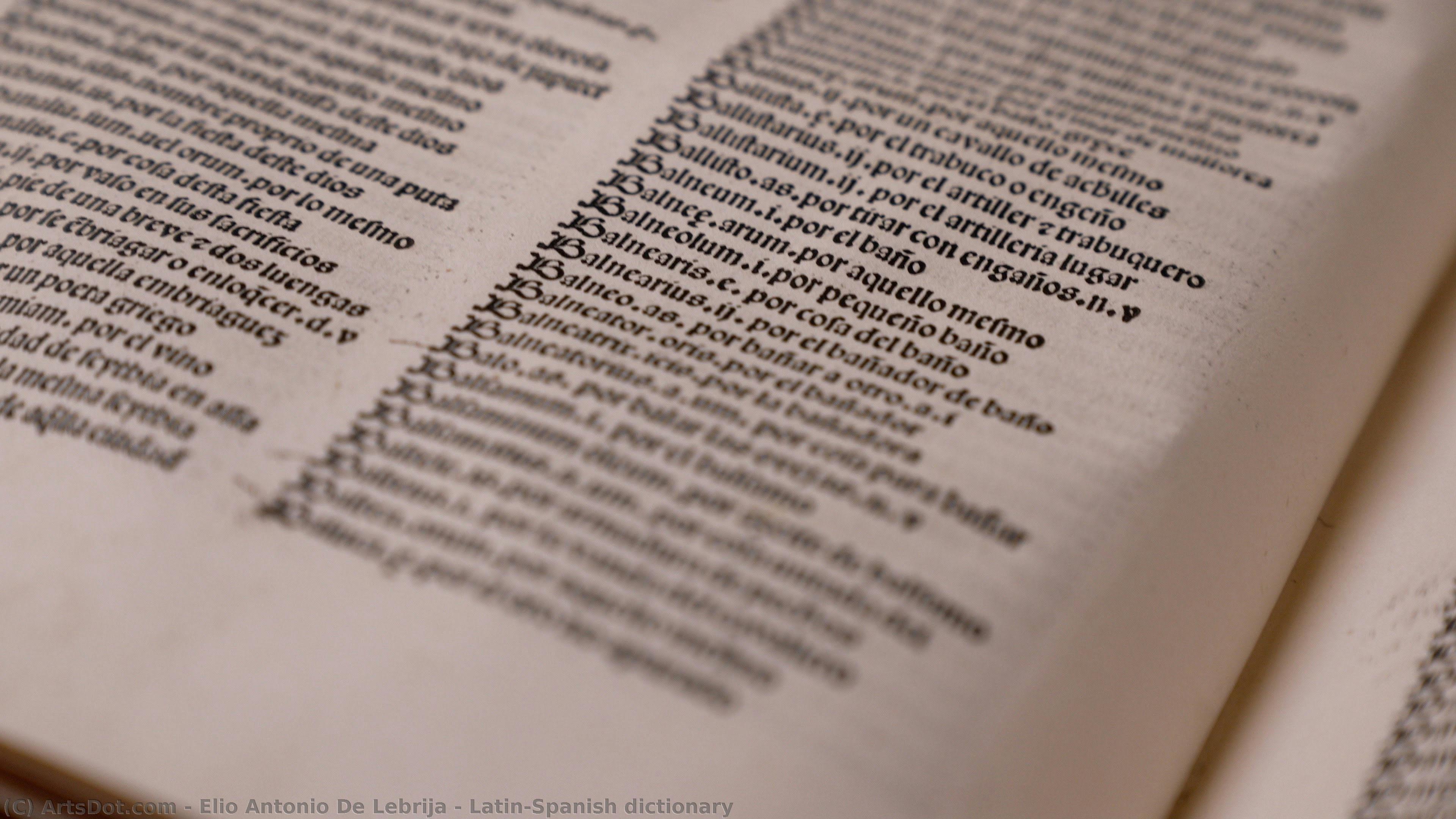
Latin-Spanish dictionary

 Read More
Purchase a high-resolution, enhanced digital image, far superior to the online preview.
Each file is meticulously prepared by our in-house specialists using advanced tools and expert manual retouching. We ensure every image has exceptional clarity, precise color accuracy, and fine detail.
The final file is delivered via email within 72 hours, optimized for immediate use in professional, editorial, and print environments. This is the same quality trusted by top-tier design studios, publishers, and galleries.
Digital Image
Download a high-resolution file for personal display, printing, and creative projects. ( Buy Print Buy Hand Made Painting)
Included in Every Digital Image Order
Expert Digital Delivery, Guaranteed
When you choose OriginalUniqueArt.com, you're not just getting an image - you're receiving a professionally enhanced digital artwork, crafted with precision and backed by a satisfaction guarantee. Here's everything that comes with your order, automatically:

Fast Email Delivery
Your high-resolution digital image file will be emailed to you within 72 hours of ordering - ready for immediate use.

AI-Enhanced Digital File
Your artwork is professionally optimized using advanced AI tools and manual editing, ensuring maximum detail, clarity, and color accuracy.

Free Lifetime Re-Delivery
Accidentally deleted or lost your file? No worries - we'll resend it to you anytime, free of charge.

No Import Fees - Ever
Enjoy your artwork instantly with zero customs, duties, or delivery fees - digital downloads are always tax-free.

Color Accuracy Guarantee
We ensure your digital image reflects the original colors as closely as possible using professional tools and color management.

60-Day Satisfaction Guarantee
If you're not satisfied with your digital image, we'll revise it or refund 100% within 60 days - no questions asked.

100% Money-Back Guarantee
Not satisfied? Get a full refund within 60 days of receiving your digital file - no questions asked.

Bulk Order Discounts
Buy 3 images, save 10% - Buy 5, save 15% - Buy 10+, save 20%. Great for creative projects, galleries, and agencies.
Artist Biography
A Pioneer of Spanish Linguistics: The Life and Legacy of Elio Antonio de Nebrija
Born in the sun-drenched lands of Lebrija, Spain, in 1444, *Elio Antonio de Nebrija*, also known as Antonio de Nebrija, emerged as a monumental figure not merely within Spanish literary history but as a foundational architect of modern linguistics. His life unfolded during a period of immense transformation for the Iberian Peninsula—the culmination of the Reconquista and the dawn of a new era under the Catholic Monarchs. This dynamic context profoundly shaped his intellectual pursuits, driving him to codify and elevate the Castilian language from a vernacular tongue to a vehicle of national identity and scholarly prestige. Nebrija wasn’t simply observing linguistic evolution; he was actively steering it, recognizing the power inherent in a standardized and understood language. His dedication stemmed not just from academic curiosity but from a deep-seated belief that language held the key to cultural cohesion and intellectual advancement.From Salamanca to Bologna: The Shaping of a Humanist
Nebrija’s early education laid the groundwork for his future achievements, beginning in Salamanca where he immersed himself in classical studies. However, it was his subsequent journey to Italy—specifically, the University of Bologna—that truly ignited his intellectual fervor. This exposure to Italian Humanism proved transformative. He delved into the intricacies of Latin and classical literature, absorbing the Renaissance spirit that emphasized human potential and a return to ancient wisdom. The vibrant intellectual atmosphere of Bologna fostered in him a critical approach to knowledge and a passion for linguistic precision. Upon returning to Spain, he secured a professorship at the University of Salamanca, a position that provided both stability and a platform to disseminate his burgeoning ideas. Teaching Latin, Greek, and Hebrew allowed him not only to share his expertise but also to observe firsthand the challenges faced by students grappling with language acquisition—a challenge that would ultimately inspire his most significant work.The *Gramática de la Lengua Castellana*: A Landmark Achievement
The year 1492 resonates throughout history for many reasons, including Christopher Columbus’s voyage to the Americas. However, within Spain, it also marked the publication of Nebrija's magnum opus: the *Gramática de la lengua castellana* (Grammar of the Castilian Language). This was not merely a descriptive analysis of existing linguistic patterns; it was a deliberate attempt to establish rules and norms for correct usage, effectively standardizing the language. It stands as the first grammar written for a Romance language—a groundbreaking achievement that set a precedent for linguistic scholarship across Europe. Nebrija understood that a unified language would foster a stronger sense of national identity, particularly crucial during a period of political consolidation. The *Gramática* wasn’t simply an academic exercise; it was a nation-building project, subtly but powerfully shaping the cultural landscape of Spain. His work established norms that resonated through generations of writers and scholars, influencing the very evolution of modern Spanish.Beyond Grammar: Lexicography and Enduring Influence
Nebrija’s contributions extended far beyond his seminal grammar. He also produced a *Vocabulario en Romance y Latín* (Vocabulary in Romance and Latin), an early bilingual dictionary that facilitated learning and cross-referencing between the two languages, proving invaluable to scholars and translators. Furthermore, his *Introductiones Latinae*, a textbook designed for teaching Latin, gained widespread popularity throughout Europe, demonstrating the reach of his pedagogical influence. He was not confined to linguistic pursuits alone; Nebrija’s intellectual curiosity led him to write on diverse subjects including medicine, law, and theology—a testament to his broad humanist interests. Today, he is rightfully regarded as the “father of Spanish linguistics,” a title earned through his pioneering work in codifying and standardizing the language. His legacy continues to inspire linguists and historians alike, solidifying his place as a key figure not only in the development of the Spanish language but also in the broader history of European intellectual thought. His impact on Spain’s literary and intellectual traditions is immeasurable, fostering a sense of linguistic unity and pride that endures to this day.A Lasting Testament
- Early Life & Education: Born in Lebrija, Spain (1444), Nebrija received his initial education in Salamanca before pursuing advanced studies at the University of Bologna.
- Key Work: *Gramática de la Lengua Castellana* (1492): This groundbreaking work was the first grammar dedicated to a Romance language, establishing rules and norms for Castilian Spanish.
- Other Contributions: Nebrija authored a Spanish-Latin dictionary (*Vocabulario en Romance y Latín*) and *Introductiones Latinae*, a widely used Latin textbook.
- Humanist Scholar: His interests extended beyond linguistics to encompass medicine, law, and theology, reflecting the breadth of Renaissance Humanism.
- Historical Significance: Nebrija is considered the "father of Spanish linguistics" for his pivotal role in standardizing the language and fostering a sense of national identity.

elio antonio de lebrija
1444 - 1522 , Spain
Quick Facts
- Artistic Movement Or Style: Humanism, Linguistics
- Artists Or Movements Influenced By This Artist:
- Spanish linguistics
- European scholarship
- Artists Who Influenced This Artist: ['Classical literature']
- Date Of Birth: 1444
- Date Of Death: 1522
- Full Name: Elio Antonio de Nebrija
- Nationality: Spanish
- Notable Artworks:
- Gramática de la lengua castellana
- Vocabulario en Romance y Latín
- Introductiones Latinae
- Place Of Birth: Lebrija, Spain

